
elitarotstrickingly.com
Above all things, know thyself!
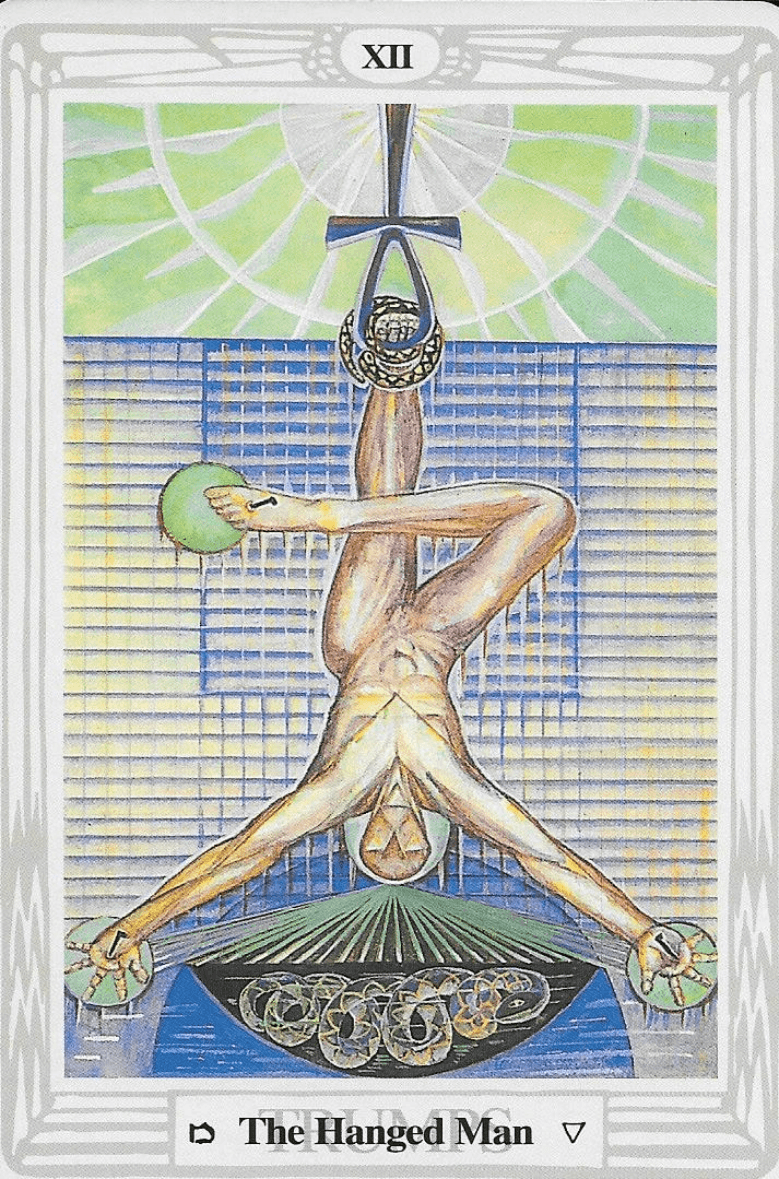
Thoth- ATU XII-The Hanged Man
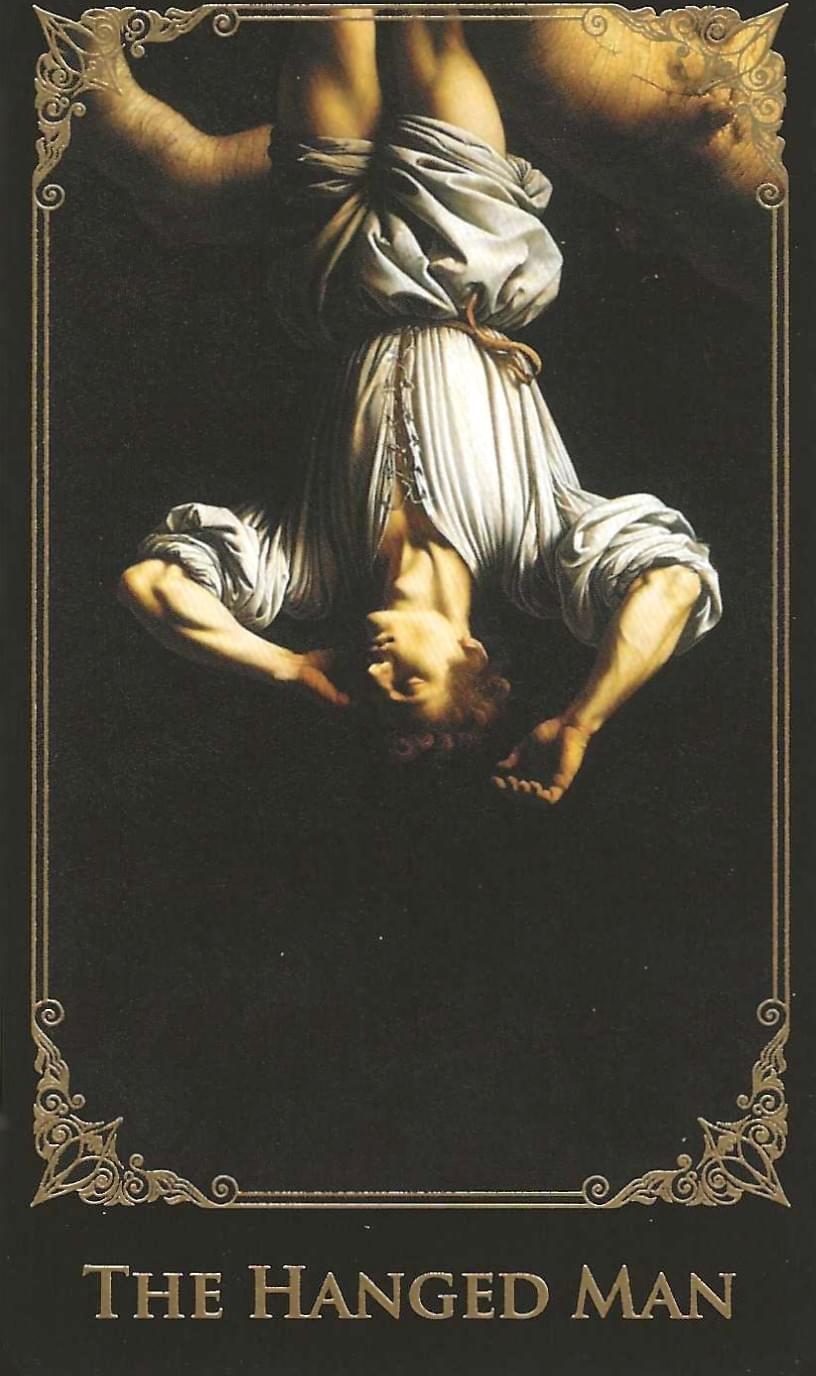
The Baroque Tarot-Key 12- The Hanged Man

Thoth Tarot ATU XII — The Hanged Man
The Spirit of the Mighty Waters: Mem, Baptism, Reversal, and the Maternal Sea of Consciousness
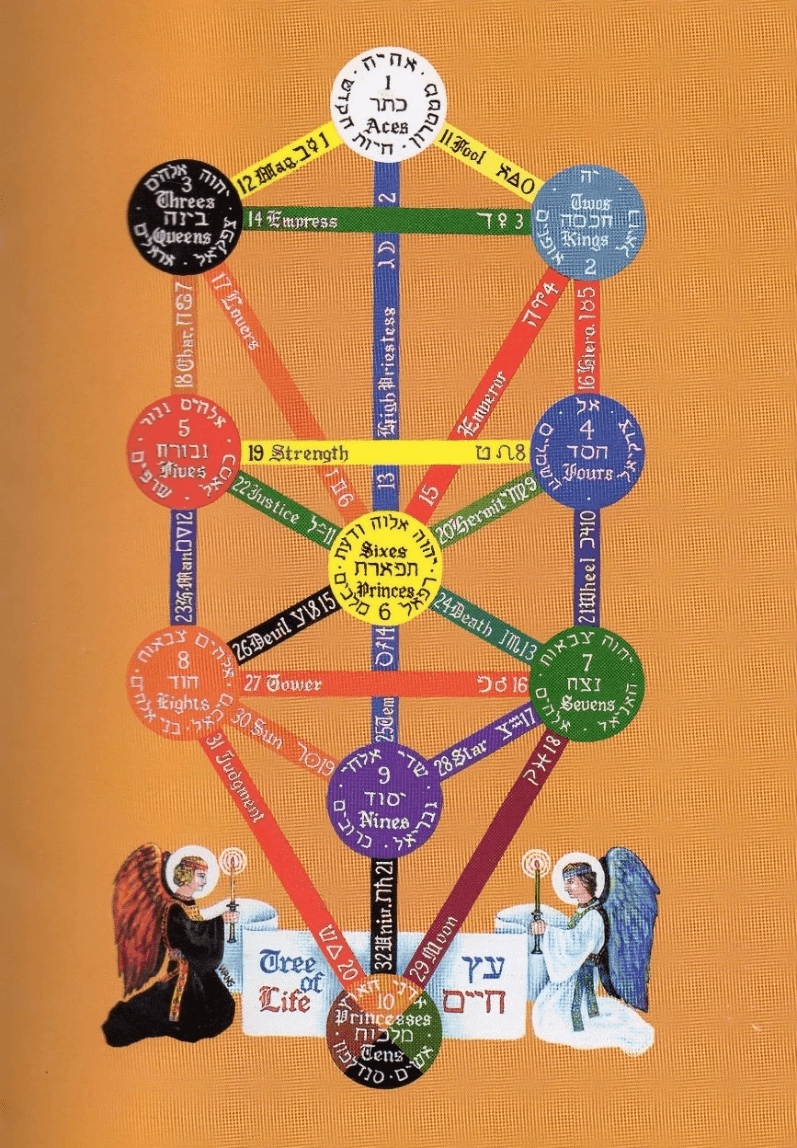
The Thoth Tarot ATU XII, The Hanged Man, is one of the most mysterious and “baffling” images in the Major Arcana. Its severity is not accidental. This card is attributed to the Hebrew letter Mem, meaning Water, and to the 23rd Path on the Western Hermetic Qabalistic Tree of Life. This Path connects Hod, the Sephirah of Splendor and intellect, with Geburah, the Sephirah of Severity, power, and spiritual correction.
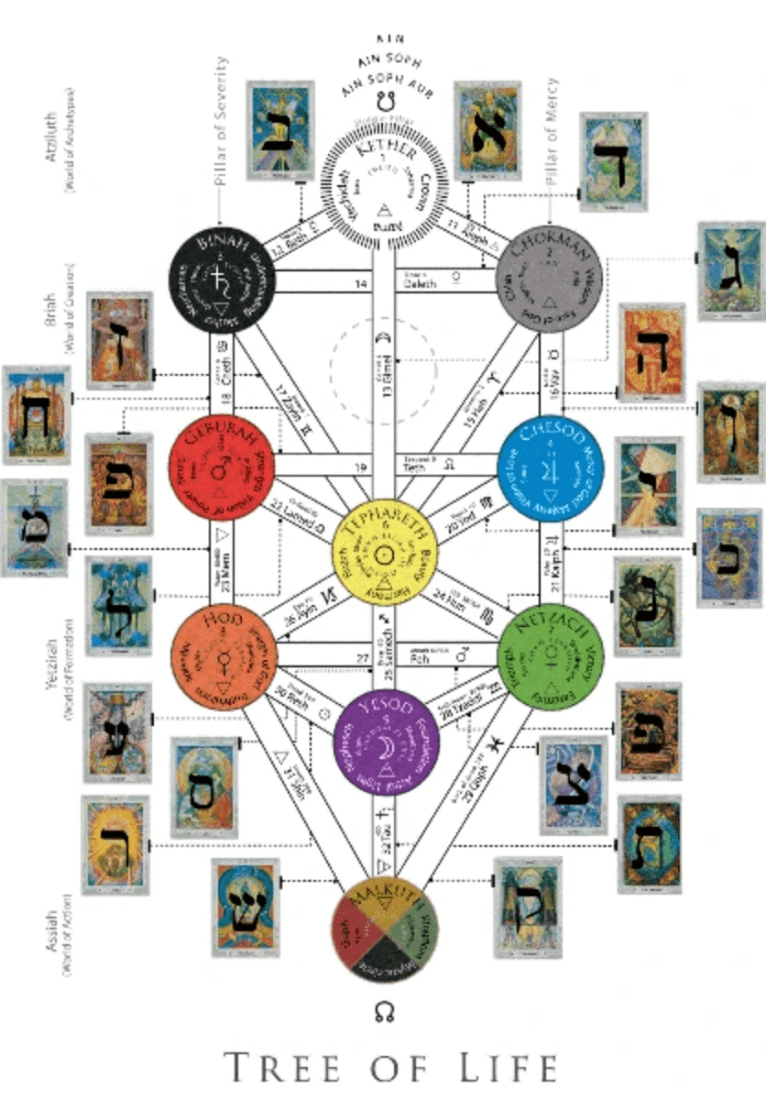
Unlike the earlier paths that directly link the Personality to the Higher Self, the Path of Mem operates through a profound reversal of perception. It is not a path of conquest, but of surrender. It is not the triumph of ego, but the baptism of the personality in the deep Maternal Waters of consciousness.
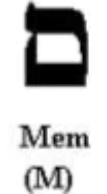
Mem is one of the three Mother Letters of the Hebrew alphabet. These three letters represent three great initiatory baptisms:
Aleph, attributed to Air, is the baptism of breath and Spirit.
Mem, attributed to Water, is the baptism of consciousness, emotion, intuition, and the astral current.
Shin, attributed to Fire, is the baptism of Spirit through purification and transmutation.
Of these three, Mem is central and pivotal, for it represents the Water of Consciousness itself — the Alchemical First Principle, the fluidic substance of Mind, the reflective and wave-like medium through which Spirit becomes image, symbol, emotion, and eventually manifestation.
Consciousness as the Alchemical First Principle
In Western Hermetic Qabalah and Alchemy, consciousness is not merely a product of the brain. It is the First Principle — the primal Thinking Substance from which all forms arise. The ancients compared this principle to Water because consciousness behaves like water: it flows, reflects, adapts, receives impressions, carries waves, and forms images upon its surface.
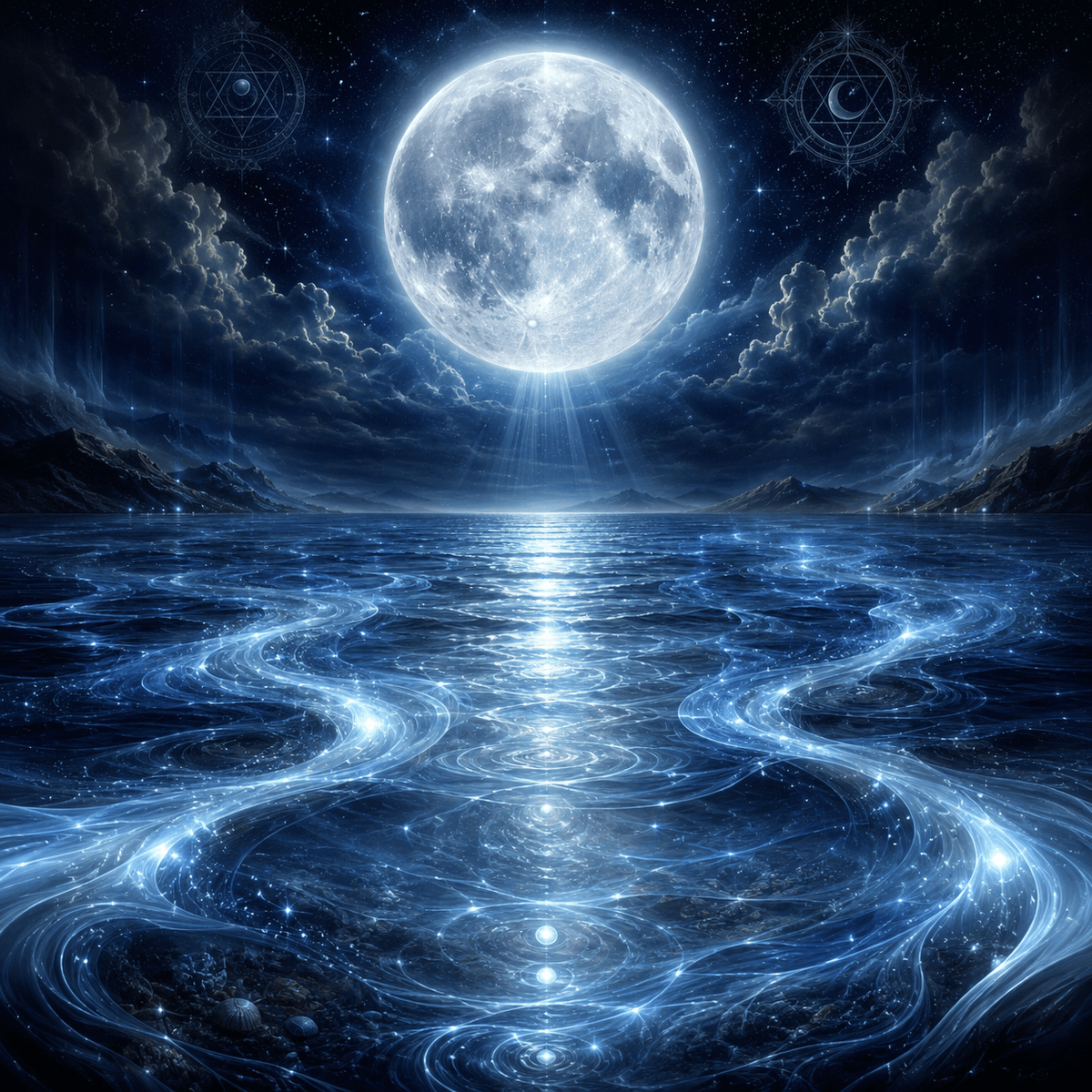
This is not ordinary physical water. It is Astral Water, the Liquid Light of the inner worlds. It is the substance of the World of Yetzirah, the formative realm where images, desires, symbols, dreams, and intentions take shape before they descend into Malkuth as physical experience.
This Astral Fluid is first contacted by the upward-traveling aspirant through Yesod, the ninth Sephirah, the Lunar Foundation. Yesod is the mirror of the subconscious mind. It is the dream-field upon which material manifestation is woven. It receives impressions from the higher Sephiroth and reflects them downward into the physical world.
Thus, consciousness as Astral Water is both mutable and stable. It is fluid in motion, yet foundational in function. It underlies every Sephirah and Path because every form of experience must first arise as an image in consciousness.
Jung and the Waters of the Collective Unconscious
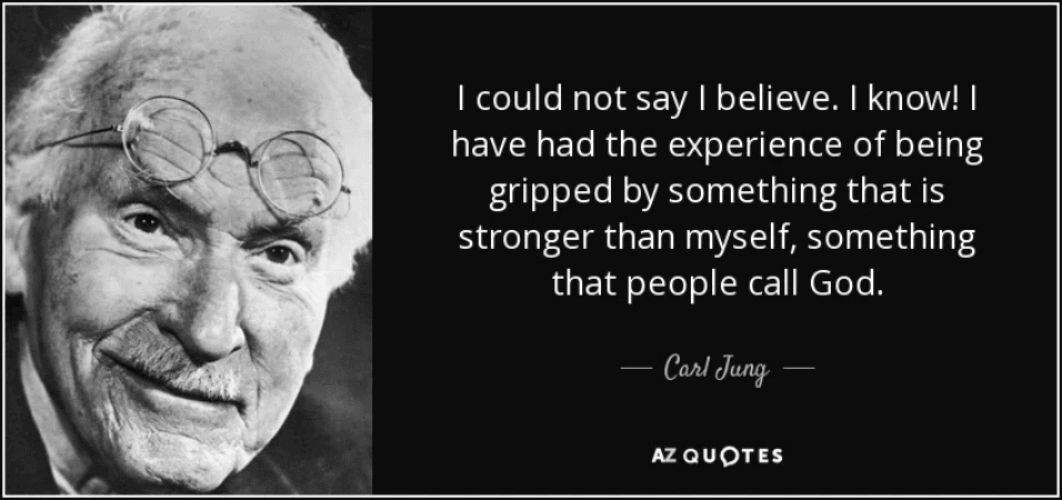
Carl Jung gave modern psychological language to this ancient Hermetic doctrine when he described the Collective Unconscious as a vast psychic sea. He wrote of it as a boundless realm in which ordinary distinctions dissolve: no inside or outside, no above or below, no mine or thine, no good or bad in the personal moral sense.
This is the Water of Mem.
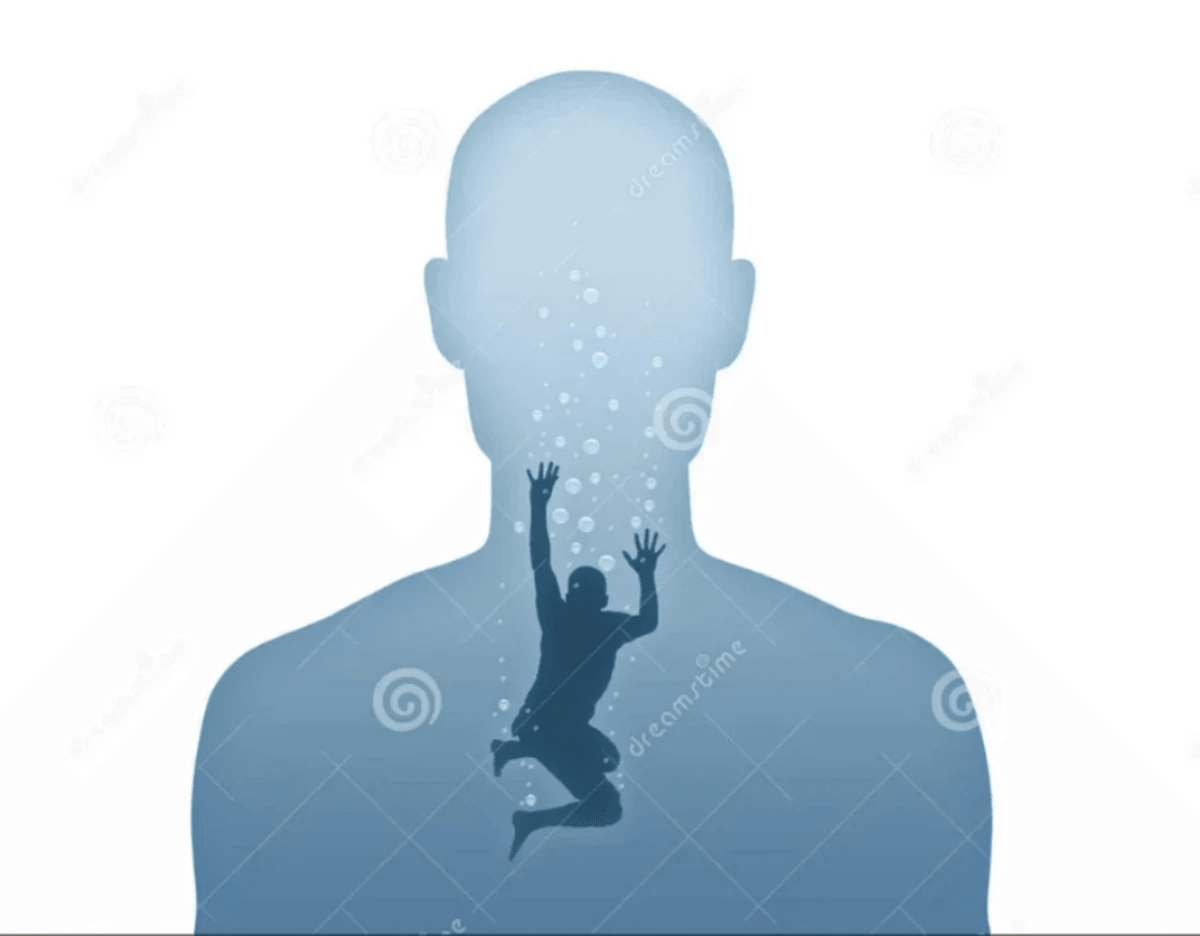
To Jung, this deep psychic field was not an encapsulated personal system. It was objective, vast, and open to the world. In waking consciousness, we usually experience ourselves as the subject who observes an object. But in the Collective Unconscious, this relationship is reversed. There, we become the object of every subject. We are no longer merely the one who sees; we are also the one being seen by the greater field of consciousness.
This is one of the deepest meanings of The Hanged Man.
On the Path of Mem, the personal “I” becomes suspended in the Universal Waters. The egoic self, the “Me,” is immersed in the deeper current of the “I AM.” What we thought was our identity is revealed to be a reflection. The true Self is not the reflected image in the mirror, but the consciousness that makes reflection possible.
Therefore, The Hanged Man is where the invisible becomes visible. The Soul, which is usually hidden behind the personality, begins to reveal itself through reversal, surrender, and meditative suspension.
The Path of Mem: From Hod to Geburah
The Path of Mem connects Hod to Geburah on the Pillar of Severity. Hod is the sphere of intellect, language, analysis, symbolism, and Mercurial structure. Geburah is the sphere of Mars, severity, discipline, spiritual courage, and active correction.
This means that Mem is not sentimental water. It is not passive emotionalism. It is the severe and initiatory Water that dissolves false structures. It washes away the artificial definitions imposed by culture, fear, dogma, and the false ego. It baptizes the intellect in a higher current of truth.
Geburah is fiery and severe, yet it stands upon the Pillar that descends from Binah, the Great Mother. Therefore, Geburah may be understood as the more active and corrective aspect of the Mother. It is the red power of purification. It cuts away illusion so that the Soul may stand naked in truth.
The Hanged Man is suspended between these forces. Hod’s intellect is drowned in Mem so that Geburah’s higher severity may burn away false perception. This is why the card feels both watery and severe. It is baptism by the Mother, but the Mother here is not indulgent. She is the womb and the tomb, the sea and the sword, the purifier of the false self.
The Hanged Man and the Womb of Binah
In the Thoth Tarot, the Hanged Man is suspended by one foot from the oval of the Ankh, the Egyptian symbol of life, immortality, divine androgyny, and infinite continuity. The oval of the Ankh resembles the womb, the yoni, and the Vesica Piscis. It suggests the Womb of Binah, the Supernal Mother, from whom all form descends and through whom all form must be transmuted.

The figure’s head points downward, as if submerged in the Maternal Waters. This is not merely punishment or helplessness. It is the position of gestation. It is the image of a child in the womb, being prepared for birth. It is also the image of Spirit descending into Matter so that consciousness may know itself through embodiment.
The Hanged Man is the Solar Self descending into the Lunar Sea.
The Soul sacrifices its heavenly perspective and enters the waters of form, feeling, time, and incarnation. It does this not because it is fallen, but because it seeks intimate knowledge of itself. The Divine does not merely wish to remain abstract. It wishes to become visible, tangible, emotional, and self-aware through experience.
This is the mystery of incarnation: Spirit hangs itself upon the Tree of Life so that it may know itself as Life.
The Meditator Becomes the Meditated Upon
On the Path of Mem, the aspirant experiences a great reversal. At first, the personality seeks the Soul. The lower self meditates upon the Higher Self, praying, invoking, visualizing, and aspiring upward.
But with the Hanged Man, this direction reverses.
The Soul begins meditating the personality into manifestation.
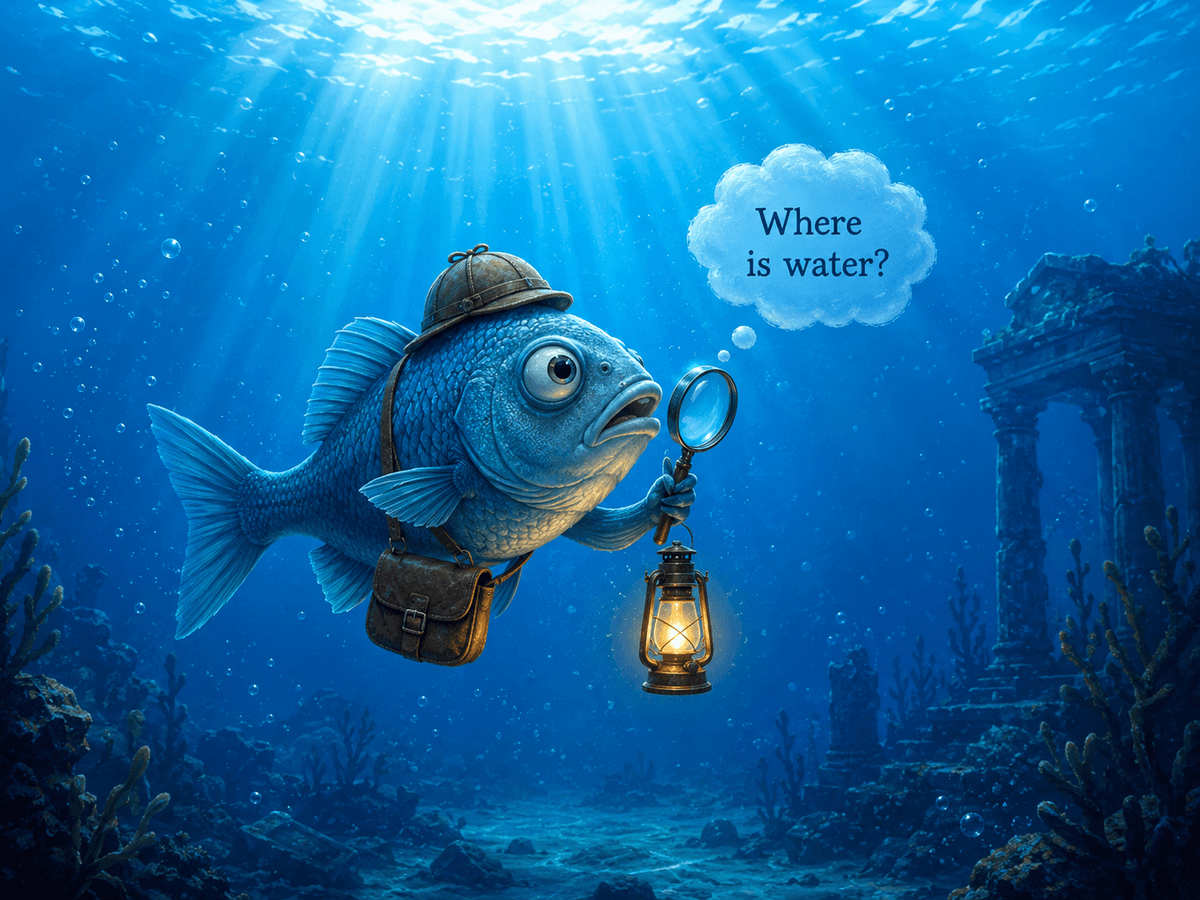
The aspirant discovers that the body and personality are not seeking Spirit as something absent. Spirit was never absent. Spirit is the original identity. The body is the visible experiment of that identity in Malkuth. To seek Spirit as if it were elsewhere is like a fish swimming through the ocean in search of water.
The Hanged Man reveals that the Soul is observing through the body. The personality is the reflection, but the Soul is the real image. The “Me” is the assumed identity; the “I AM” is the truth behind it.
This is why successful scrying or meditation upon this card can produce a reversal of perspective. One may suddenly realize: “I am not a body seeking a Soul. I am a Soul temporarily suspended in a body.”

Anima, Animus, and the Divine Hermaphrodite
The Path of Mem also reveals the mystery of the inner polarity. If one manifests outwardly as male, the Soul may appear inwardly as female. If one manifests outwardly as female, the Soul may appear inwardly as male. This is not a contradiction, but a revelation of psychic wholeness.

Jung called these inner polarities Anima and Animus. In Hermetic Qabalah, they may be understood as the magnetic and electric currents of the Soul: receptive and projective, lunar and solar, formative and dynamic.
The personality that truly belongs to the Soul is not the culturally manufactured ego, nor the socially programmed mask of gender, status, tribe, or dogma. It is a Mercurial consciousness, able to fly between Soul and body, carrying messages between the Higher Self and the incarnate personality.
This is the Divine Hermaphrodite — the androgynous wholeness of the true inner being. It is not confusion, but completion. It is the fusion of Anima and Animus into the Magical Child, the higher sensual Self, the awakened mediator between Above and Below.
The Hanged Man teaches that true magical ability is not based on domination. It arises when the personality becomes a clear vessel for the Soul. The Magus must be a mirror, not a manipulator.
Samadhi and the Reversal of Consciousness
The Hanged Man may also be compared to the yogic state of Samadhi, the deep absorption in which the meditator becomes one with the object of meditation. In ordinary consciousness, the mind divides experience into observer and observed. But in Samadhi, this division dissolves.
The Path of Mem produces a similar mystical suspension. The aspirant becomes absorbed in the Waters of consciousness until the separation between “I,” “object,” and “world” begins to dissolve.

The symbolism of inversion also recalls the yogic headstand, or Sirsasana, where the body is turned upside down to reverse circulation, alter perception, stimulate higher centers, and symbolically place the lower nature under the direction of higher awareness. The Hanged Man is not merely physically inverted. He is metaphysically inverted. His whole relationship to reality has been turned around.
He no longer asks, “How do I find Spirit?”
He realizes, “Spirit is imagining me
Fate, Destiny, and the Web of Timelines
The Hanged Man also teaches the difference between fate and destiny. Destiny is the fact that we are. Fate is what we choose to become.
Destiny is the fact that we exist. This primal destiny is rooted in Kether, whose Divine Name is Eheieh — “I Will Be.” Therefore, our deepest destiny is not something we chase; it is the original Divine declaration of Being itself. We are because the One Will-to-Be has emanated us into existence.
Fate, however, is what we choose to think ourselves to be. Fate is the pattern assumed by the “Me” after the “I AM” enters manifestation. It is woven by belief, imagination, memory, culture, fear, desire, and Will. Thus, destiny is the Divine fact of existence, while fate is the self-image we accept, create, or surrender to.
Destiny is “I Will Be.” Fate is “what I believe I am.”
Destiny belongs to Kether as Eheieh, the primal Divine utterance of existence. Fate belongs to the personality, for it is shaped by thought, imagination, choice, and identification. The Soul’s destiny is already accomplished in the fact of Being; but the personality’s fate is woven moment by moment by what it assumes itself to be. This is why the Great Work requires mastery of imagination: for the “I AM” is Divine truth, while the “Me” is the image formed in the Waters of consciousness.
The Hanged Man shows that there are moments when the web must be rewoven. A change of perspective can alter an entire life motion. A sacrifice of an old viewpoint can open a new timeline. An “Ah-ha” moment may be a baptism in Mem, where the personality is washed of its former assumptions and given a new angle of vision.
To be “born again” is not necessarily to join a religion. It is to experience a reversal of consciousness. It is to sacrifice a false identity so that a truer one may emerge.
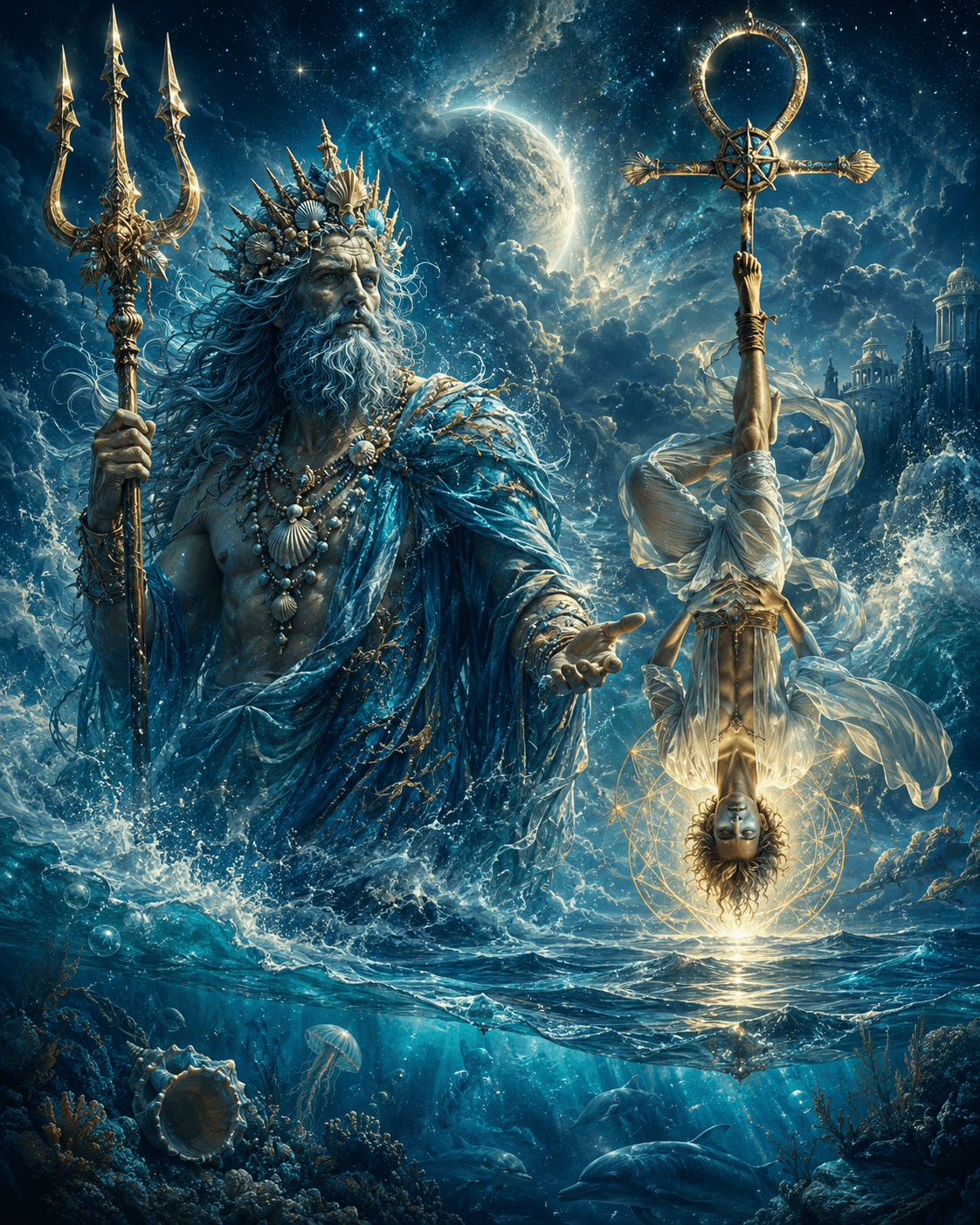
Neptune and the Hanged Man
The Hanged Man is also associated with Neptune, the planet of mysticism, dreams, illusion, imagination, sacrifice, oceanic feeling, spiritual sensitivity, and dissolution of boundaries.
Neptune can inspire art, compassion, devotion, and spiritual vision. But it can also produce confusion, glamour, delusion, escapism, addiction, and self-deception. This is the danger of the Waters of Mem. Water can baptize, but it can also drown. The imagination can liberate, but it can also enslave if captured by fear, propaganda, dogma, or the false ego.
Therefore, the Path of Mem requires discrimination. The aspirant must learn the difference between divine imagination and fantasy, mystical surrender and helplessness, spiritual sacrifice and self-pity.
The Hanged Man is not the card of weakness. It is the card of conscious surrender. It asks us to dissolve what is false, not to abandon responsibility. If the expectation of change becomes imprudent, passive, or self-indulgent, the blessing of Mem is profaned.
The Waters then become confusion rather than initiation.
Mem and the Wheel of Fortune
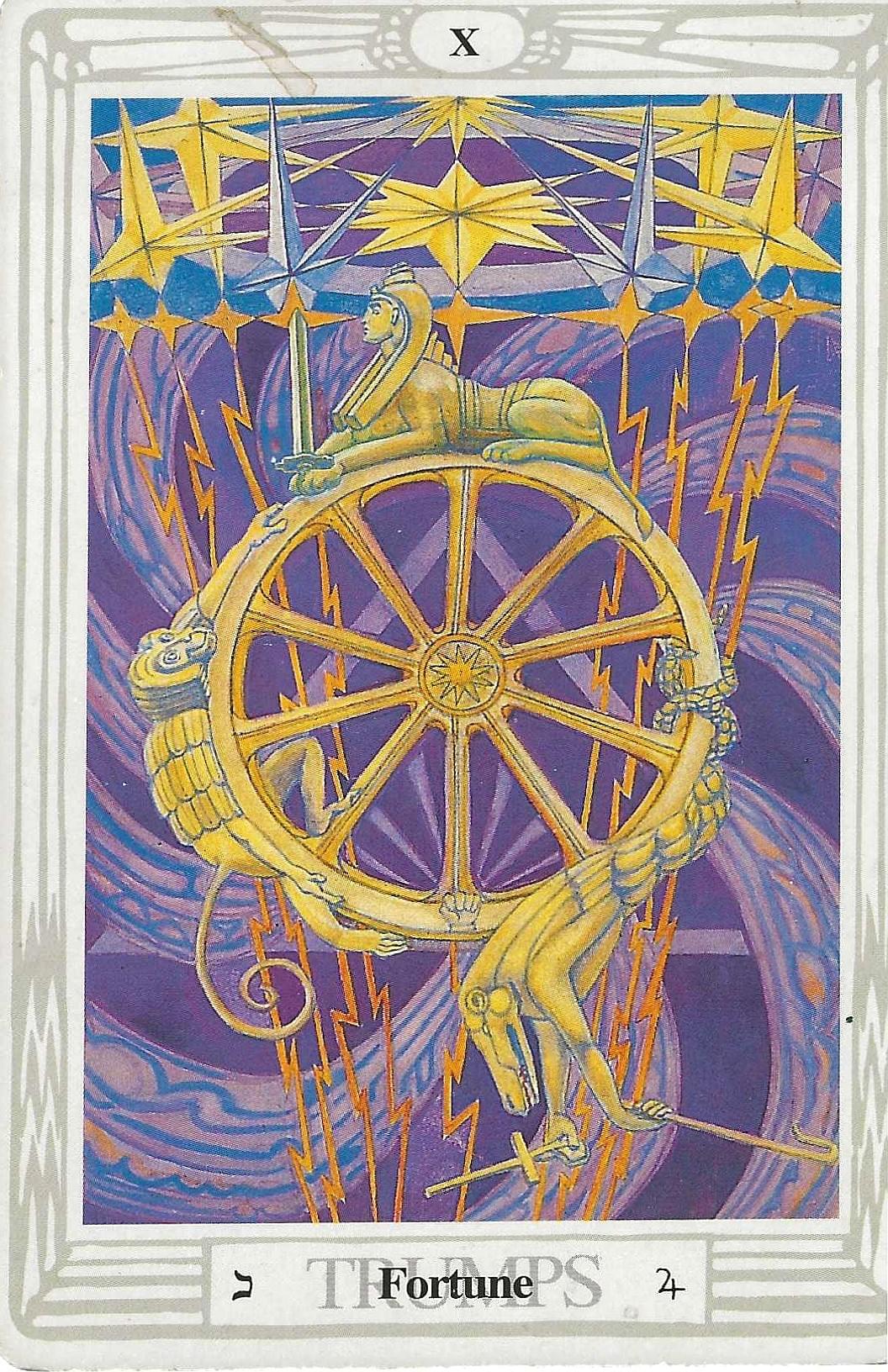
The Hanged Man is repose, while The Wheel of Fortune is activity. The Wheel spins; the Hanged Man suspends. The Wheel encloses Spirit in cyclic motion; Mem opens consciousness into unresolved possibility.
Together, they reveal the balance of movement and stillness, activity and passivity, becoming and suspension. Without movement, nothing manifests. Without repose, nothing becomes conscious of itself.
The Wheel of Fortune creates the patterns of experience. The Hanged Man arrests the motion so the Soul may understand the pattern.
The Path of Mem is therefore a path of eternal probabilities. It is openness without end. It is the moment before the wave collapses into form. It is the pause before destiny becomes “written in stone.”
The Dying God and the New Aeon
Crowley saw the traditional Hanged Man as a relic of the old myth of the Dying God — Dionysus, Osiris, Odin, Christ, and the sacrificed savior figure. In The Book of Thoth, he describes the card as a kind of cenotaph, a memorial to an old formula of spiritual sacrifice.
In the Age of Isis, Water ruled the religious imagination. Woman, womb, birth, and the mystery of the Mother were supreme. In the Age of Osiris, Air and sacrifice shaped the myth of the dying and resurrected god. Salvation was often imagined through suffering, martyrdom, and obedience.
But in the Aeon of Horus, the formula changes. The savior is no longer external. The Divine Child rises within. Humanity is no longer redeemed by submission to an outside authority, but awakened by the Solar Fire of the indwelling Self.
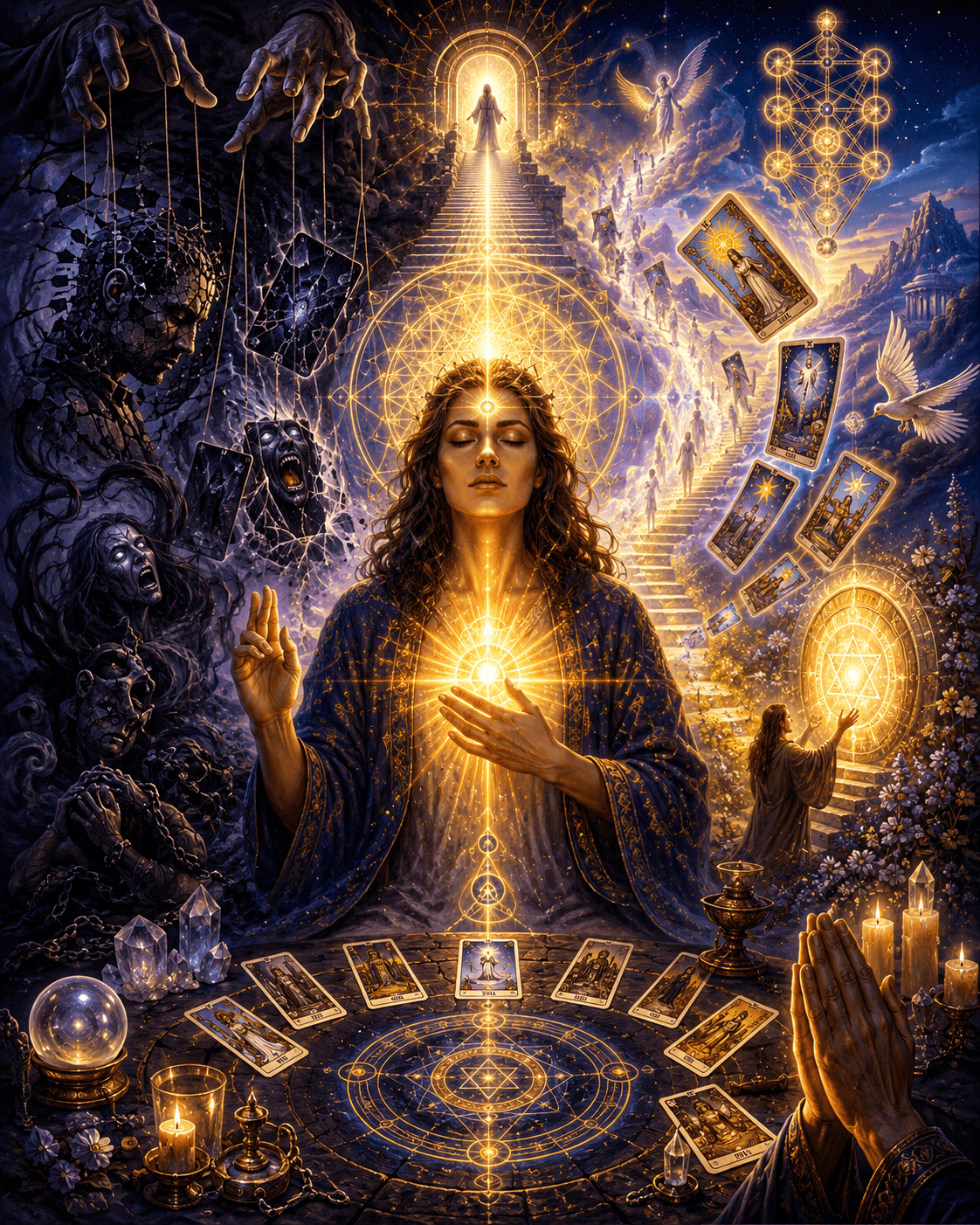
This does not make the Hanged Man useless. Rather, it transforms its meaning. The old formula of passive victimhood must be discarded, but the deeper formula of conscious surrender remains essential.
The New Aeon does not ask us to worship suffering. It asks us to surrender illusion.
The Hanged Man becomes the sacrifice of the false ego, not the destruction of the true Self.
The Cross, the Triangle, and the Descent of Light
In the Thoth image, the arms and legs of the figure form a cross surmounting a triangle. Crowley interprets this as the descent of light into darkness in order to redeem it. This is not redemption in the dogmatic sense. It is the illumination of unconscious matter by conscious Spirit.
The coiled serpent near the foot represents the creative and destructive force that operates all change. The serpent below represents the result of the Work: the stirring of the Divine Child in the darkness below.
This is alchemy. The Solar Self descends into the Waters. The ego dissolves. The inner Child is begotten in the Abyss. The false self dies, but the true Self is reborn.
The Rosy Cross and the Mystery of Sacrificial Rebirth
The Hanged Man also resonates with the symbolism of the Rosy Cross. The cross represents the intersection of Spirit and Matter, the vertical and horizontal axes of existence, the union of heaven and earth.
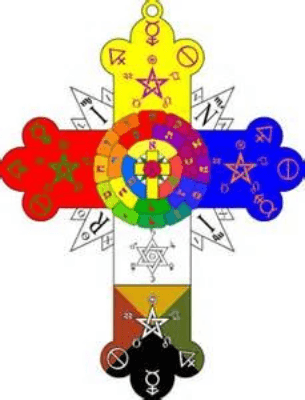
The rose represents the unfolding Soul, divine love, beauty, and spiritual awakening.
Together, the Rosy Cross reveals the same mystery as the Hanged Man: the Soul blooms through the cross of incarnation.
This is not the glorification of suffering. It is the transmutation of experience into wisdom. The rose does not reject the cross. It flowers upon it. In the same way, the initiate does not reject embodiment. The initiate learns how to turn embodiment into illumination.
The False Ego and the Control of Imagination
The deepest teaching of the Hanged Man concerns the imagination. If consciousness is the First Principle, and if the “Me” is an assumed identity within the greater “I AM,” then whoever controls imagination controls identity.
This is why dogma, propaganda, media hypnosis, fear, shame, and cultural programming are so dangerous. They define the “Me” from the outside. They install false images into the subconscious and then convince the personality that these images are self-created.
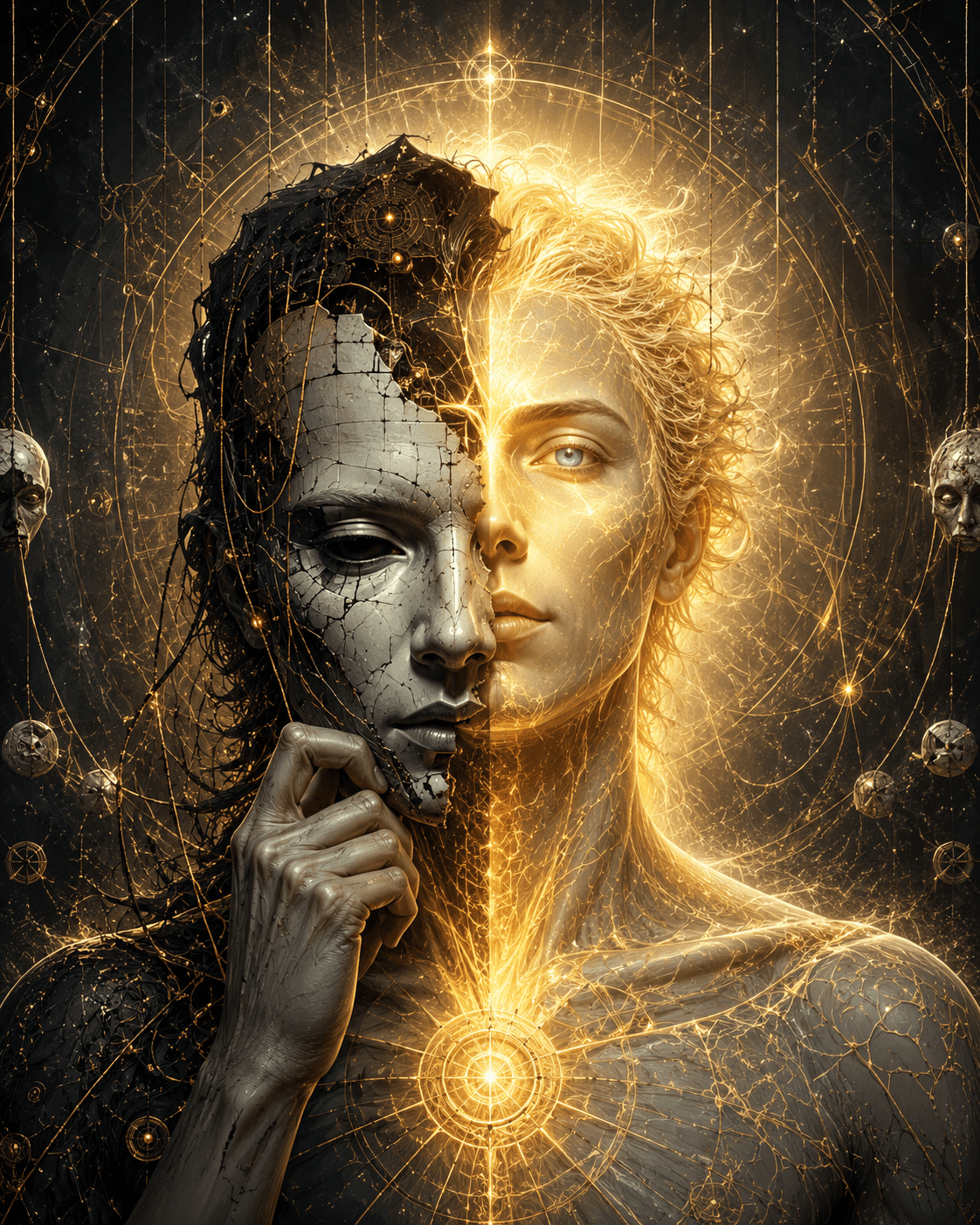
The false ego is not the true individuality. It is a programmed mask. It is a mind-virus that hides in the subconscious and reveals itself through addiction, self-harm, helplessness, obsession, depression, scattered thinking, and the repeated surrender of one’s Will to outside authority.
The Hanged Man reverses this spell.
It teaches the aspirant to stop identifying with the imposed image and return to the root declaration:
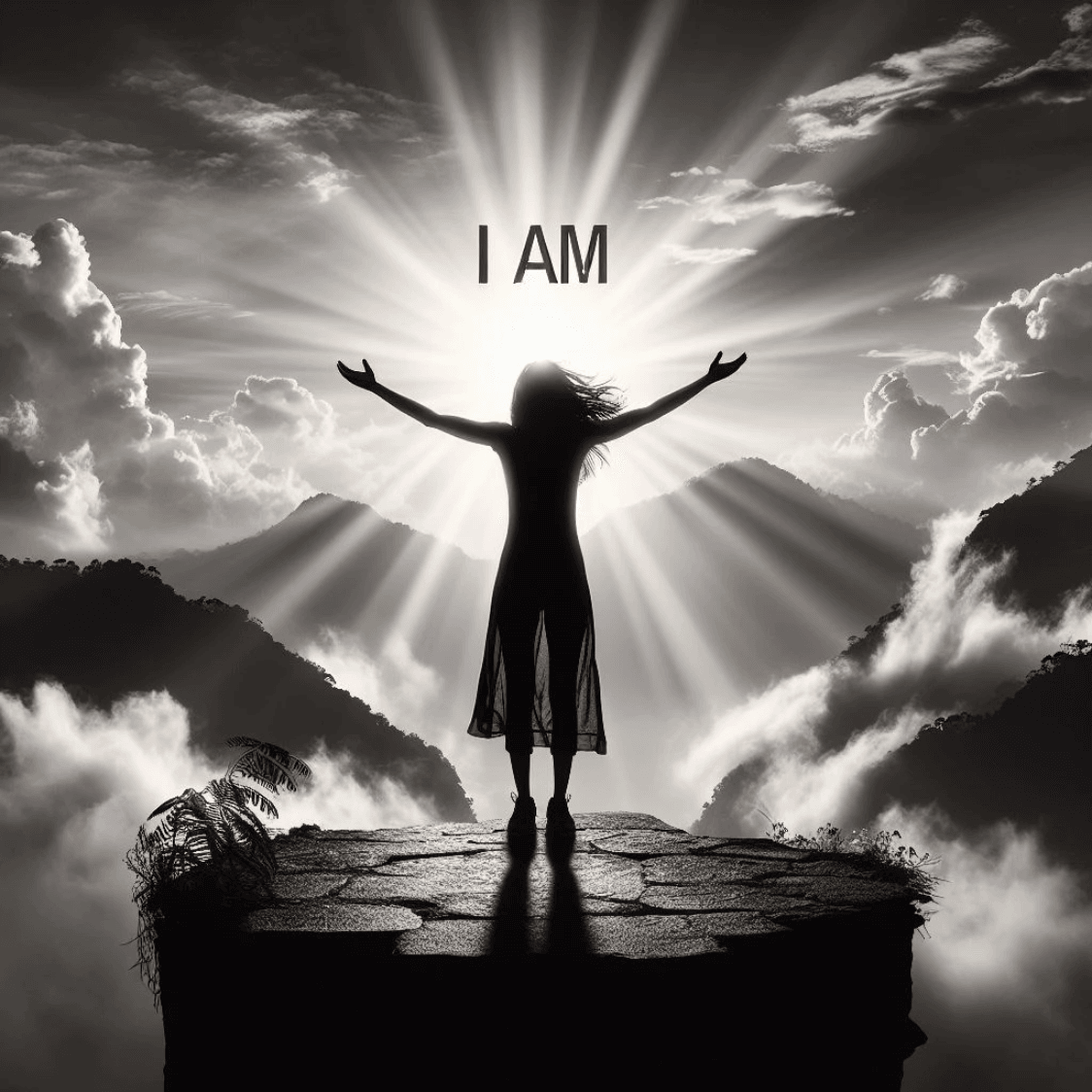
I AM.
The “I AM” is truth. The “Me” is the image shaped by imagination. Therefore, the Great Work is to take back the imagination and consecrate it to the Soul.
The Will of the One to Be
You are not a powerless body seeking Spirit. You are Spirit experiencing embodiment. You are the Will of the One to Be, expressed through Mind and Body as a living temple of consciousness.
The Hanged Man teaches that liberation does not always come by force. Sometimes it comes by stillness. Sometimes the old timeline must be suspended. Sometimes the personality must be baptized in uncertainty so that a deeper truth can surface.
The reversal is the revelation.
The Soul does not destroy the personality. It reorients it. It turns the “Me” upside down until it becomes transparent to the “I AM.”
Conclusion: The Still Waters Where God Is Seen
The Thoth Hanged Man is not merely a symbol of sacrifice, punishment, or delay. It is the mystery of the Soul suspended in manifestation. It is the Solar Self immersed in the Maternal Waters of Mem. It is the reversal of ordinary consciousness, where the seeker discovers that the Soul has been seeking through them all along.
This card teaches that true magic is not domination, but communion. True surrender is not weakness, but alignment. True sacrifice is not the loss of Self, but the dissolution of everything that was never truly Self.
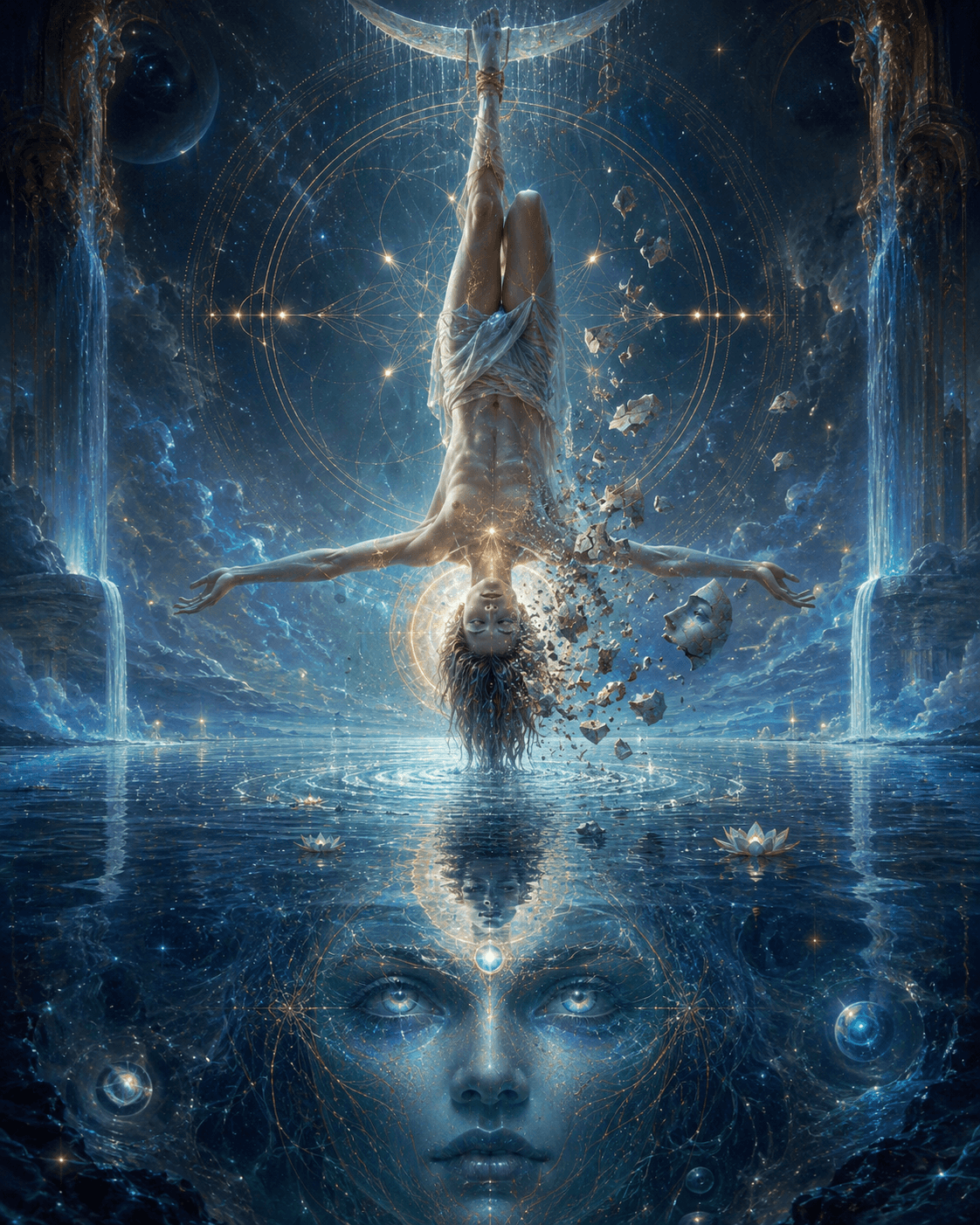
The Hanged Man is the baptism of the personality in the Great Sea of Consciousness. It is the moment when the false image dissolves, the inner waters become still, and the Divine gazes back from the depths.
Only in surrender can the Self be seen.
Only in silence can the Logos speak.
Only in inversion is the Light reborn
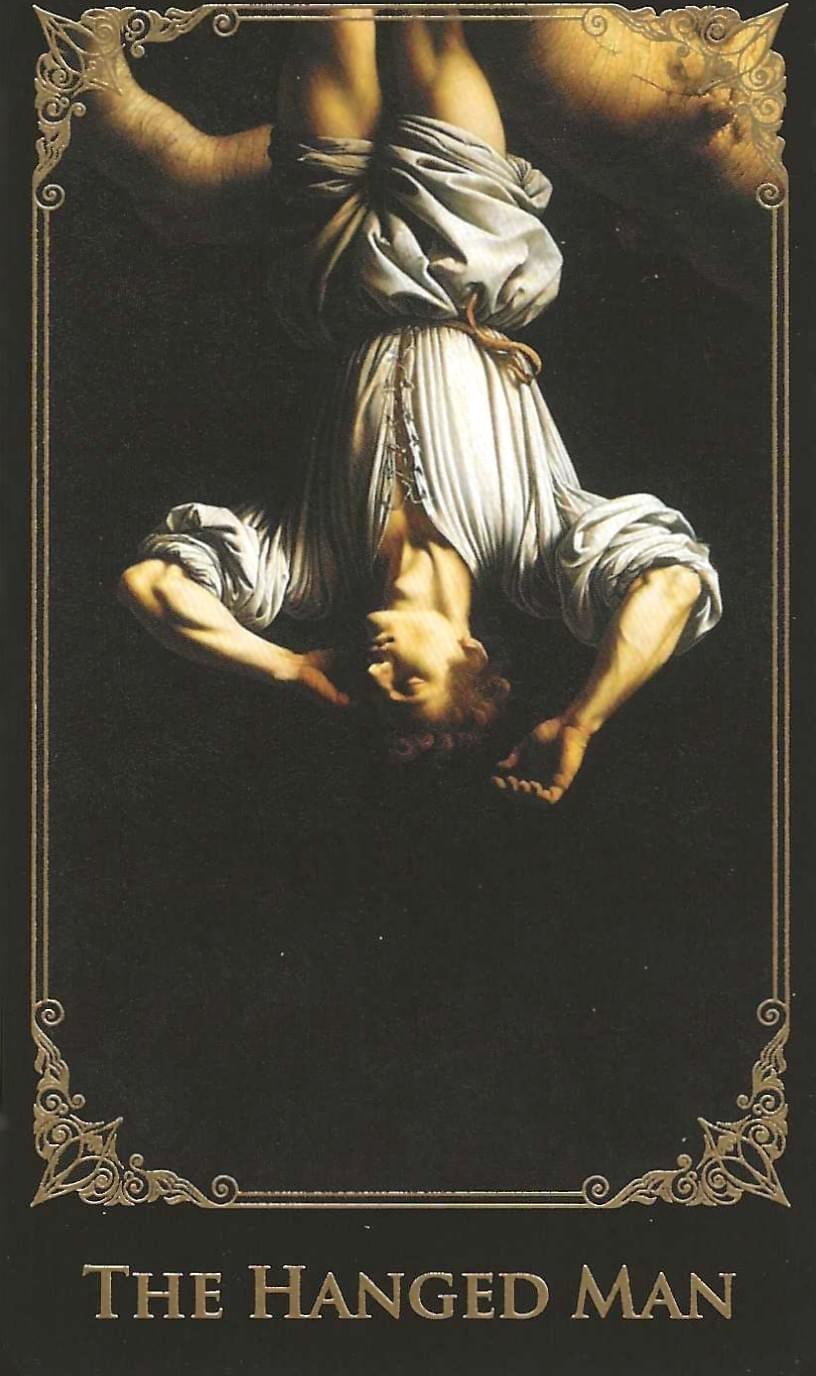
The Baroque Tarot — Key 12: The Hanged Man
The Baroque Tarot Key 12 — The Hanged Man — presents a stark and simple image: a man suspended upside down in darkness, appearing almost asleep. Unlike the Thoth Tarot, there are no obvious Hermetic symbols, no Tree, no cross, no Ankh, no serpents, and no dramatic occult scenery. The figure simply hangs, silent and motionless, like a sleeping bat in the womb of shadow.
This simplicity gives the card its meaning. The Baroque Hanged Man is not showing cosmic sacrifice, but suspension. He is the personality placed in a condition where ordinary action is impossible. Since he cannot move outwardly, he must turn inwardly. His apparent sleep suggests a withdrawal from the active world and a surrender into inner stillness.
In Western Hermetic terms, this still relates to the Path of Mem, the Water of consciousness. But here the Water is not shown by waves or symbols. Instead, it is implied by the dark, suspended state itself. The man hangs in the unconscious, in the unseen sea of the psyche, where the old viewpoint dissolves and a new perception may quietly form.
The absence of symbols is itself symbolic. The card does not explain the mystery; it places the viewer in it. It says: stop, suspend judgment, release the need to act, and allow the deeper mind to speak.
Upright Meaning
Upright, the Baroque Hanged Man suggests a voluntary pause, surrender, contemplation, and the need for a new perspective. It may indicate that stepping back from action will bring greater clarity. A sacrifice may be required, but not as punishment. Rather, something old must be released so that a wiser understanding can emerge.
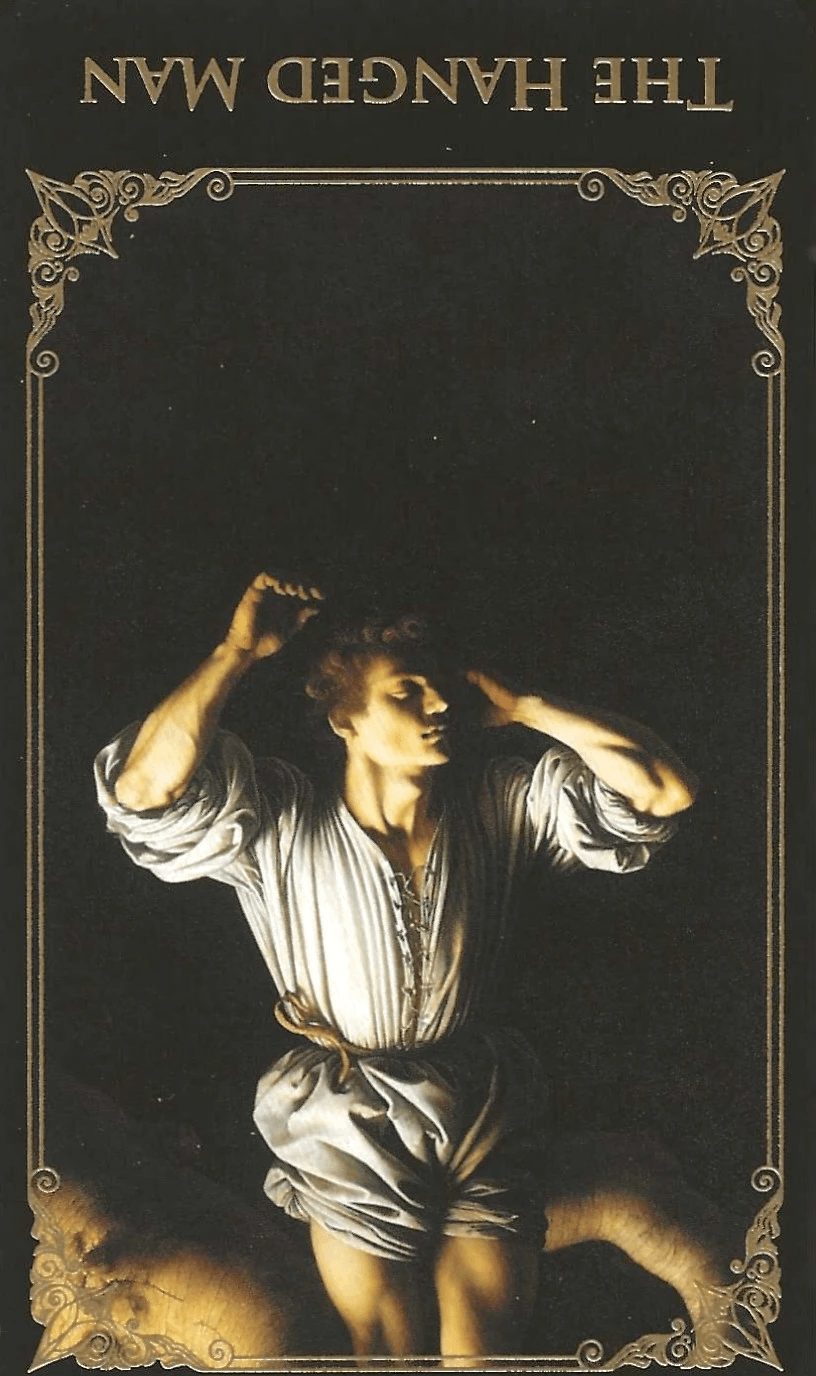
Reversed Meaning
Reversed, the Hanged Man may indicate resistance to surrender, refusal to change perspective, or unwillingness to make a necessary sacrifice. It can also suggest stagnation, helplessness, or remaining stuck in limbo because one refuses to pause consciously and learn from the suspension.
In essence, the Baroque Hanged Man teaches that stillness is not always weakness. Sometimes the Soul places the personality in suspension so that the false urgency of the world may fall silent, and the truth may rise from within.
When THE HANGED MAN-ATU 12 or Key 12-, is thrown during a reading,
- The querent will be or is, experiencing moments of enforced sacrifice, even punishment.
- Loss that is not voluntary and general suffering.
- This is the Principle of Surrender to break old patterns.
- A time when one must accept reversals.
- Attachment.
- Deep spiritual awareness.
- Independence.
- Developing new perspectives
- A reversal of past perspective.
- Sacrifice and surrender.
- Time out!
- Old grooves won't do.
- To flow somewhere new by taking a different path.
If ill defined by surrounding cards, it implies:
- Being overly influenced by outside ideas.
- Pressure to conform.
- Demands.
- Sacrificing something to get past hang-ups.
- Lack of purpose.
Thank you for your interest, your thoughtful comments, and your generous support.
Your donations help keep this work alive and accessible to all sincere seekers and invites a sacred blessing of prosperity.
May your generosity return to you in abundance. May you live long and prosper.
3 Western Hermetic Magick Websites Helping people become more magic and less tragic since 2010.
For more information concerning online, personal Thoth Tarot Readings and/or Western Hermetic Thoth Master Classes, log onto-elitarotstrickingly.com- and click on the Tarot Pricing page. Thank you.
Home page, tarot store and classes, nontraditional tarot card comparisons blog.
Traditional Tarot Card Comparisons blog and tarot reading store.
Western Hermetic Magick website, ritual invocations and magick blogs.

