
elitarotstrickingly.com
Above all things, know thyself.
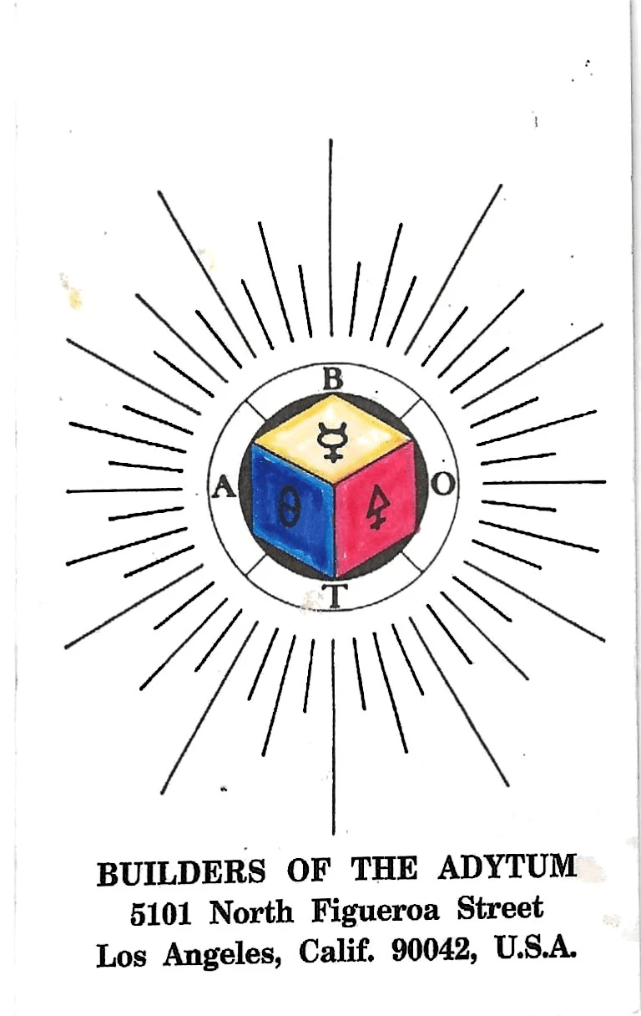
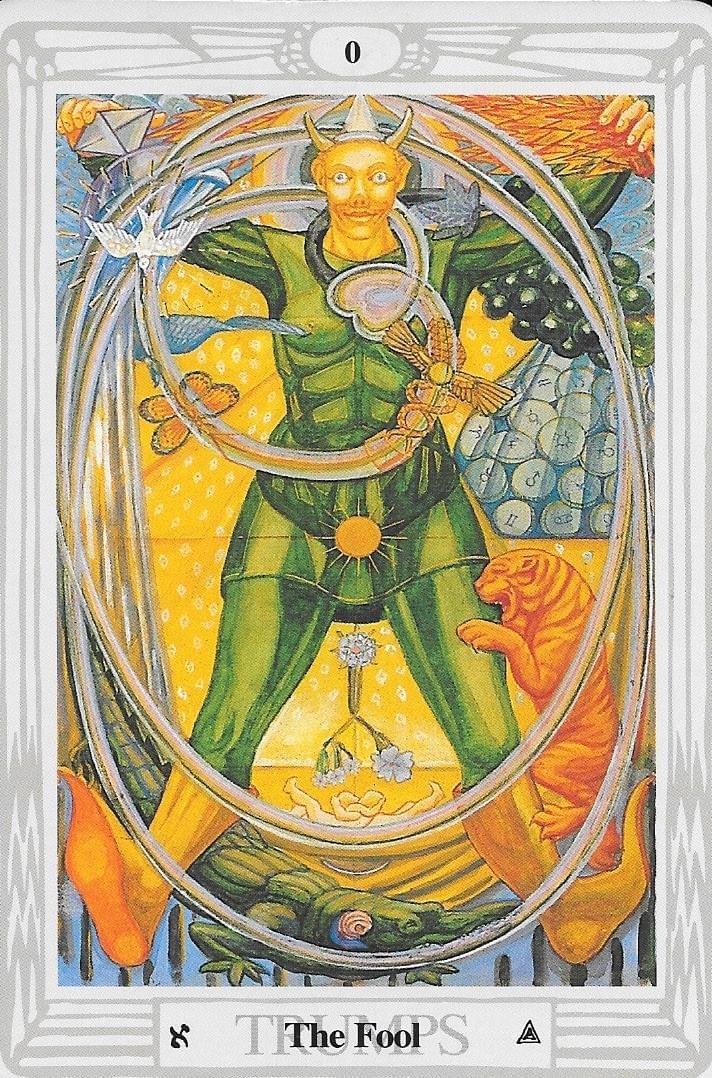
(Card Front illustration)
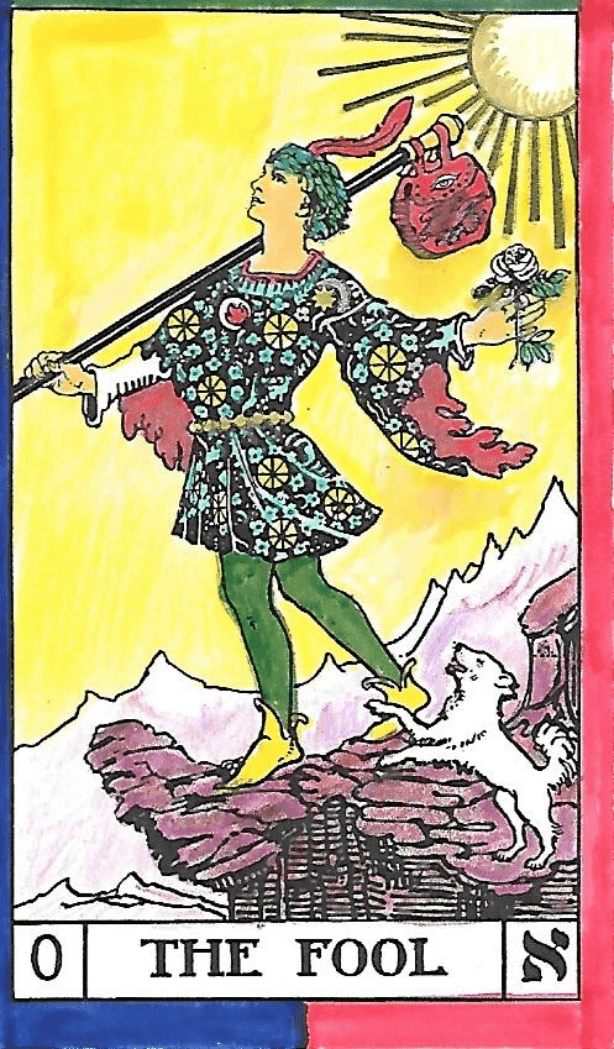
Builders of the Adytum-Key O-The Fool

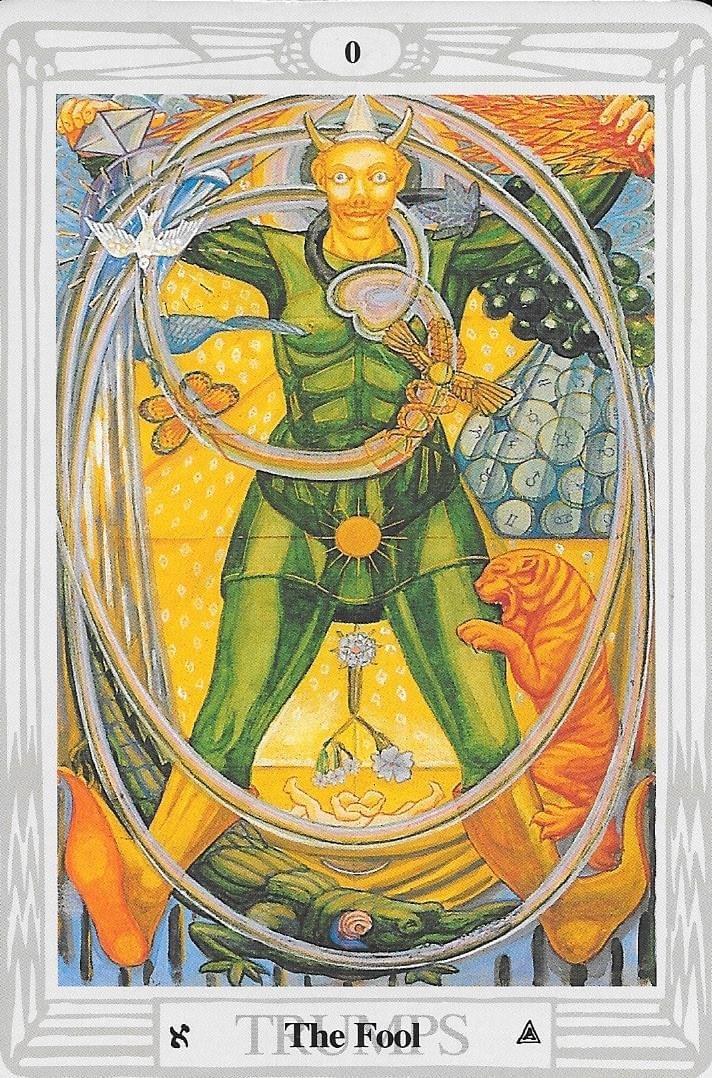
The Fool-ATU 0-The Thoth Tarot
[Both Thoth Tarot Decks and Book of Thoth sold in webstore]
The Fool — The Zero That Becomes Everything
Thoth Tarot — ATU 0 & Builders of the Adytum Tarot — Key 0
By Magus Eli — The Tarot of Eli, LLC
Keywords: New Journeys • Leaps of Faith • Holy Naïveté • Divine Innocence • Infinite Potential
Welcome to another Tarot card comparison from The Tarot of Eli, LLC, where we explore the Western Hermetic Qabalah through the magnificent symbolism of the Aleister Crowley Thoth Tarot and the Builders of the Adytum (B.O.T.A.) Tarot.
Today, we encounter THE FOOL, numbered Zero, the beginning that has no beginning and the ending that cannot end.
The Fool is not merely someone wandering toward an uncertain future. He is the Divine Creative Principle before manifestation, the limitless possibility from which all forms of consciousness emerge.
He is the original innocence of Spirit, untouched by the restrictions of experience, social programming, or the reasoning mind.
And what does he do with all that infinite wisdom?
He steps merrily toward a cliff!
Apparently, even God enjoys a little adventure.
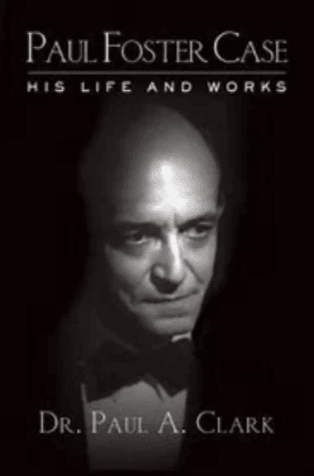
Paul Foster Case and the Builders of the Adytum — A Brief History
Paul Foster Case (1884–1954) was an American occultist, musician, Freemason, Qabalist, and influential teacher of the Western Mystery Tradition.
Born in Fairport, New York, Case developed an early interest in Tarot and pursued the relationship between its symbolism, Hebrew letters, numerology, and Hermetic philosophy.
He became associated with the Hermetic Order of the Golden Dawn's Alpha et Omega tradition, but eventually developed his own approach to practical occult instruction.
In 1922, Case founded Builders of the Adytum, commonly called B.O.T.A., a teaching order dedicated to Western Hermetic Qabalah, Tarot, meditation, and spiritual transformation.
The word Adytum comes from Greek and refers to the innermost sanctuary of a temple—the Holy of Holies.
Metaphysically, that sanctuary is within the aspirant.
Case believed that spiritual understanding should be developed through disciplined study, symbolic meditation, and personal experience rather than unquestioning acceptance of religious authority.
His influential writings include The Tarot: A Key to the Wisdom of the Ages and The Book of Tokens.
The B.O.T.A. Tarot was illustrated by Jessie Burns Parke, following Case's symbolism, and emerged in 1929. Its imagery closely resembles the Rider-Waite-Smith tradition while emphasizing Case's interpretations.
After Case's death in 1954, Ann Davies (1912–1975) continued and expanded the teachings of B.O.T.A., helping establish its international presence. The organization remains devoted to the Hermetic-Qabalistic tradition.
The historical details are documented by Builders of the Adytum and the Graduate Theological Union's Tarot collection.
Why Are the B.O.T.A. Cards Uncolored?
One of the most fascinating characteristics of the B.O.T.A. Tarot is that its traditional study cards are supplied as black-and-white illustrations for the student to color according to prescribed instructions.
This is more than an artistic exercise.
In Case's method, coloring the Tarot is an act of concentration, meditation, and symbolic incorporation.
The aspirant carefully applies colors corresponding to particular occult principles. Through repeated attention, the symbolic relationships become increasingly familiar to conscious thought and memory.
From a psychological perspective, this practice can be understood through attention, visual learning, and memory formation. Repeatedly engaging with an image can strengthen one's familiarity with its patterns.
From a Hermetic perspective, the practitioner is incorporating the Alphabet of the Soul into the living structure of consciousness.
The cards cease being merely pictures and become personally meaningful instruments of contemplation.
Or, as I would explain to my students:
A Tarot card you merely look at is information. A Tarot card you consciously experience becomes knowledge.
Naturally, coloring all 78 cards requires patience. Apparently, enlightenment sometimes comes with a box of colored pencils!
Why Crowley Called Them ATU Instead of Keys
Paul Foster Case called the Major Arcana Keys, reflecting their function as instruments for unlocking hidden understanding.
Aleister Crowley preferred Atu, a term he explained in The Book of Thoth as an Egyptian designation for a House or Key.
Crowley called the 22 Major Trumps the Houses of Wisdom, associating them with the 22 Hebrew letters and their corresponding Paths upon the Tree of Life.
Although the historical Egyptian etymology is less certain than Crowley's esoteric explanation suggests, his intended symbolism is clear.
The distinction between these two approaches offers a beautiful Hermetic analogy:
The Key opens the doorway of understanding.
The Atu represents the spiritual chamber whose mysteries are experienced.
The Initiate must ultimately become the living expression of what the symbolism reveals.
In other words, one system emphasizes the instrument of revelation, while the other vividly emphasizes the experience of entering the mystery.
Both describe aspects of the same Great Work.
The true Occultist does not merely collect Keys or admire impressive mystical architecture. The whole purpose is to enter the Temple!
Western Hermetic Qabalah — Aleph and the Eleventh Path
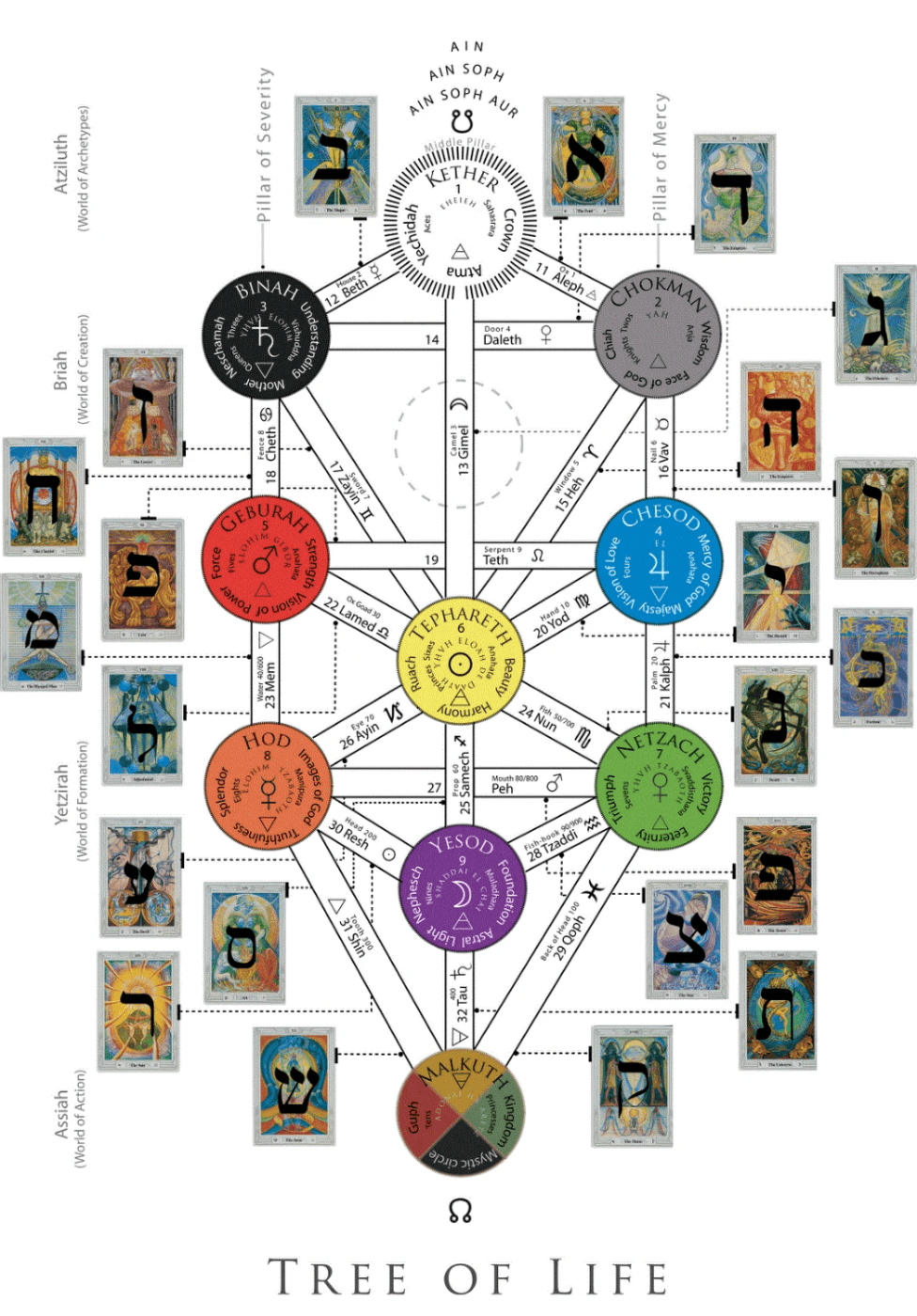
The Fool corresponds to the Hebrew letter Aleph (א), the Element of Air, and the Eleventh Path connecting Kether (Crown) with Chokmah (Wisdom).
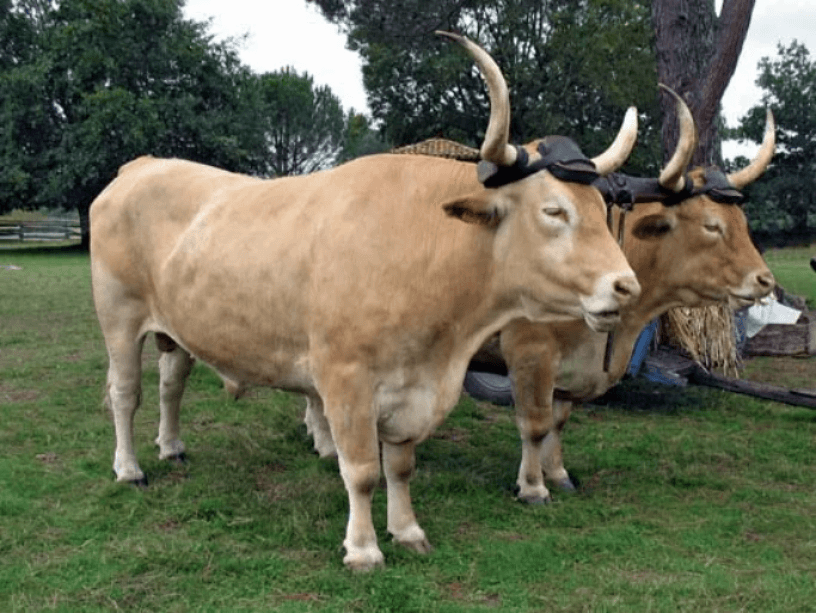
Aleph means Ox, the great creature of strength and endurance that prepares the field for cultivation.
Yet its deeper Hermetic attribution is Air—the Life-Breath.
Aleph represents the unspoken breath preceding the Word, the primordial movement of Spirit before manifestation receives definition.

Consider the supernal structure:
Kether — The Crown: The primal unity of Being, the first positive expression of the Infinite.
Chokmah — Wisdom: The dynamic outpouring of creative force, the Divine Father, the initial expression of polarity and motion.
Binah — Understanding: The receptive Supernal Mother through whom primordial force acquires organization, limitation, and the possibility of form.
The Fool's Path joins Kether and Chokmah, symbolizing the emergence of dynamic creative potential.
In the Qabalistic doctrine of the Thirty-Two Paths of Wisdom, the Eleventh Path is associated with the Scintillating Intelligence.
Scintillation suggests flashing, sparkling, or the first glimmer of light emerging from apparent darkness.
This is the luminous paradox of the Fool:
The Zero contains every possibility precisely because it is not confined to any particular manifestation.

The Fiery Darkness of Aleph
In metaphysical language, the Limitless Light of Ain Soph Aur exceeds every ordinary conception of illumination.
It is not literal electromagnetic darkness but the symbolic darkness of a reality that cannot be grasped by finite understanding.
This is the Fiery Darkness, the potential of consciousness before it becomes a particular experience.
The Fool represents that primordial openness, the creative Spirit that has not yet declared what it must become.
Before there is a thought, there is the potential for thought.
Before there is a word, there is the breath.
Before there is an identity, there is the mystery of I.
And before there is I AM, there is the limitless possibility of Being.

The Metaphysical Mystery of 0 = 2
In Crowley's Thelemic philosophy, the formula 0 = 2 expresses a profound metaphysical paradox.
The Undivided reveals itself through duality.
The One becomes the Many, not because it lacks something, but because differentiation makes possible relationship, distinction, and experience.
Consider the Monadic Self as limitless awareness.
To experience itself, it symbolically establishes two positions:
The Observer and the Observed.
The original I becomes conscious of AM.
Thus, the eternal Self-expresses itself as individualized centers of awareness—each a particular position within the imagined totality of Universal Consciousness.
This is how I interpret the mystery of incarnation:
The Infinite does not become finite by losing infinity. It experiences limitation through the living forms it creates.
The human being is therefore not a creature separated from the Divine Creative but a particular expression through which consciousness experiences its own possibilities.
The Fool is the original freedom behind every manifestation of identity.
We are not merely passengers in the dream of existence. We are participants in its unfolding.
Cosmology — The Divine Dream and the Birth of Form
The Fool invites comparisons with several ancient cosmological traditions.
The Orphic Egg represents the original cosmic potential from which ordered existence emerges.
The Hindu imagery of Vishnu in Yoga Nidra, resting upon the primordial waters, expresses the universe's relationship to a transcendent sustaining consciousness.
The Hermetic Ain Soph signifies limitlessness beyond ordinary conceptualization.
These traditions are not identical, but each offers a symbolic approach to the mystery of existence emerging from an undifferentiated source.
In my metaphysical interpretation, the universe may be imagined as Consciousness dreaming itself into sensual experience.
This provides a useful analogy with modern physics, although the analogy must not be confused with established scientific explanation.
Dark energy is the name physicists give to the unknown cause or description of the universe's accelerating expansion. Dark matter is inferred from gravitational evidence. Neither has been demonstrated to be primordial consciousness or the Qabalistic Limitless Light.
Likewise, quantum superposition provides an intriguing metaphor for potentiality, but it does not scientifically establish the existence of a universal Monadic Observer.
The Hermetic meaning remains valuable without demanding that physics certify theology.
The Fool does not require a laboratory to demonstrate the usefulness of his symbolism.
He invites us to investigate the mystery of our own awareness.
The Alchemy of the Fool — Solve et Coagula
Alchemy teaches that transformation occurs through the dynamic relationship between dissolution and formation.
Solve dissolves established structures.
Coagula brings new structures into existence.
The Fool represents a condition of radical openness before fixation into any particular form.
His Air is the freedom of possibility.
The Magus, attributed to Beth and Mercury, introduces direction, articulation, and conscious Will.
Thus:
Aleph — The Breath of Potential
Beth — The Word of Creative Expression
Gimel — The Lunar Vessel of Reflection
These three Paths lead toward Kether from the supernal architecture of the Tree.
The Fool is the potential to become.
The Magus articulates that potential through Will.
The Priestess reflects and transmits the mysteries of consciousness.
In alchemical symbolism, the Fool's primal creative force also transcends human sexual polarity.
The sacred phallic, yonic, masculine, and feminine images of the Mysteries describe creative relationships rather than restricting Divinity to human anatomy.

The One contains both projection and reception before they become distinguishable.
The Divine Androgyne is not the absence of creative polarity but its original unity.
The Fool may therefore be considered the unconditioned creative potential from which the later alchemical marriage becomes possible.
The Thoth Fool — Dionysus, the Crocodile, and the Ecstasy of Creation
Aleister Crowley and Lady Frieda Harris created their Thoth Tarot between 1938 and 1943.
Their Fool is a dazzling mixture of Greek, Egyptian, Qabalistic, and alchemical imagery.
Unlike the familiar traveler approaching a precipice, the Thoth Fool erupts into manifestation amid spiraling currents of creative vitality.
His principal symbols include:
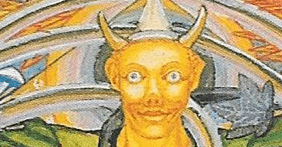
Dionysus Zagreus — The Divine Child
The Fool's horns evoke the ecstatic, creative symbolism of Dionysus Zagreus.
In Orphic mythology, Zagreus is associated with divine birth, dismemberment, and renewal.
Hermetically interpreted, his myth represents the One Life appearing as multiplicity while retaining an indestructible spiritual origin.
The dismemberment of Zagreus becomes an analogy for consciousness experiencing separation through material form.
His renewal symbolizes the recollection of unity.
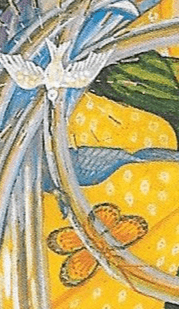
The Dove and Butterfly
The dove represents the Holy Spirit, creative breath, and the peaceful descent of divine inspiration.
The butterfly signifies transformation, movement, and the soul's emergence into new conditions of experience.
One suggests the descent of Spirit; the other, the perpetual transformation of life.
The Grapes and Green Garments
The Fool's green clothing reflects springtime, fertility, and the renewal of organic life.
His grapes recall the ecstatic mysteries of Dionysus—the intoxicating abundance of creation.
Here ecstasy is not merely pleasure but the overflowing vitality of existence itself.
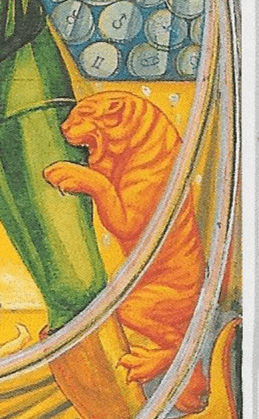
The Tiger — Fear and Instinct
The tiger embraces or attacks the Fool's leg, yet the Fool continues his ecstatic movement.
Symbolically, the animal represents instinctive intensity and the dangers accompanying unrestrained creative energy.
The Divine Fool is beyond ordinary fear, but the incarnate human must learn to distinguish spiritual freedom from irresponsible behavior.
After all, telling a tiger that it is merely an illusion may not improve one's immediate circumstances!
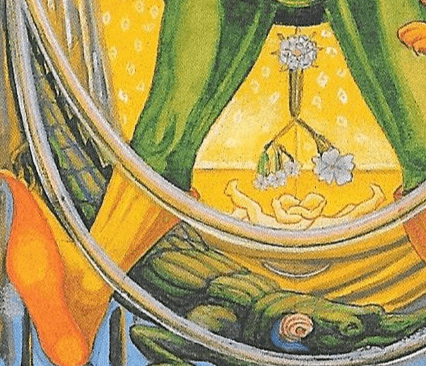
The Crocodile — Sebek and Primal Life
At the bottom of the card appears the Egyptian crocodile, associated with Sobek (Sebek).
The crocodile symbolizes primitive vitality, survival, fertility, and the ancient powers emerging from the waters of creation.
The sacred child and the primordial reptile reveal the Fool's paradoxical nature: innocence and instinct, spiritual youth and primeval life, united in one creative current.
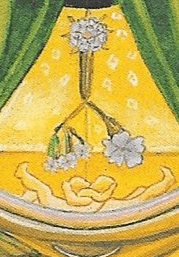
The Serpents, Flowers, and Spirals
The card's encircling spirals and serpent imagery express motion, polarity, fertility, and the unfolding of creative potential.
Its floral symbolism suggests the flowering of consciousness through successive levels of manifestation.
The entire design is an ecstatic celebration of Life becoming conscious of its own possibilities.
The B.O.T.A. Fool — The Eternal Youth of the One Life
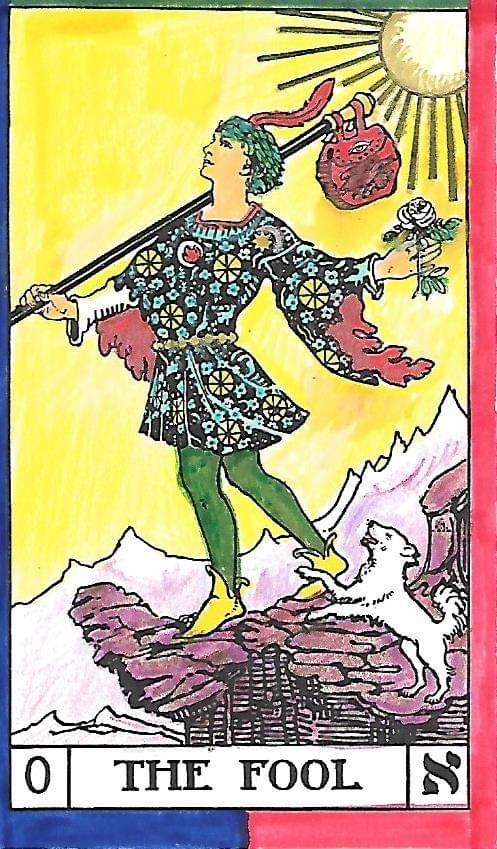
The B.O.T.A. Fool presents a more traditional image, closely related to the Rider-Waite-Smith design.
A youthful traveler stands near the edge of a precipice, gazing upward into the sunlight.
Behind him rise snow-covered mountains.
Beside him waits his little white dog.
Although the picture appears simple, Case constructed a remarkably concentrated Hermetic teaching.
The White Sun and Snow-Covered Mountains
The white Sun represents the One Life-Power, the universal source of illumination and vitality.
The snow-covered mountains signify abstract principles that may appear cold or remote to ordinary understanding.
Yet melting snow provides the water that nourishes the valleys below.
Likewise, metaphysical understanding must descend into practical experience before it becomes living wisdom.
Knowledge that never reaches the fertile valley of the body remains an interesting mountain of ideas.
The White Rose and the Traveling Bag
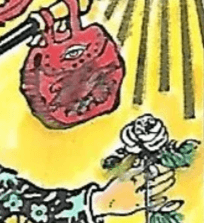
The Fool carries a white rose, representing purified desire and freedom from compulsive attachment.
The wand symbolizes Will, while the bag or wallet represents Memory—the experiences and accumulated patterns carried into manifestation.
The traveler possesses the instruments necessary for the journey, but his greatest resource is the limitless Life-Power flowing through him.
The Garments and Eight-Spoked Wheels
The Fool's garments carry meanings associated with wisdom, ignorance, passion, and action.
His outer garment is adorned with eight-spoked wheels, representing the perpetual whirling motion through which the One Force manifests.
The girdle bears twelve ornaments, seven visible, inviting contemplation of time and the astrological order.
Here, the Eternal enters the measured world of cycles, seasons, and changing conditions.
The Faithful White Dog
The little white dog represents the reasoning intellect.
He is a faithful and necessary companion, but he should not become the sovereign ruler of consciousness.
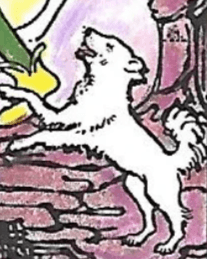
The intellect serves the greater Self by organizing experience, testing assumptions, and identifying consequences.
However, reason alone cannot contain the Infinite.
The Dog may accompany the Divine Fool, but he must not mistake himself for the Master.
Let us also remember that the Fool is standing beside a cliff. Sometimes the intellect deserves a little respect for noticing the drop!
Astrology — Uranus, the Great Awakener
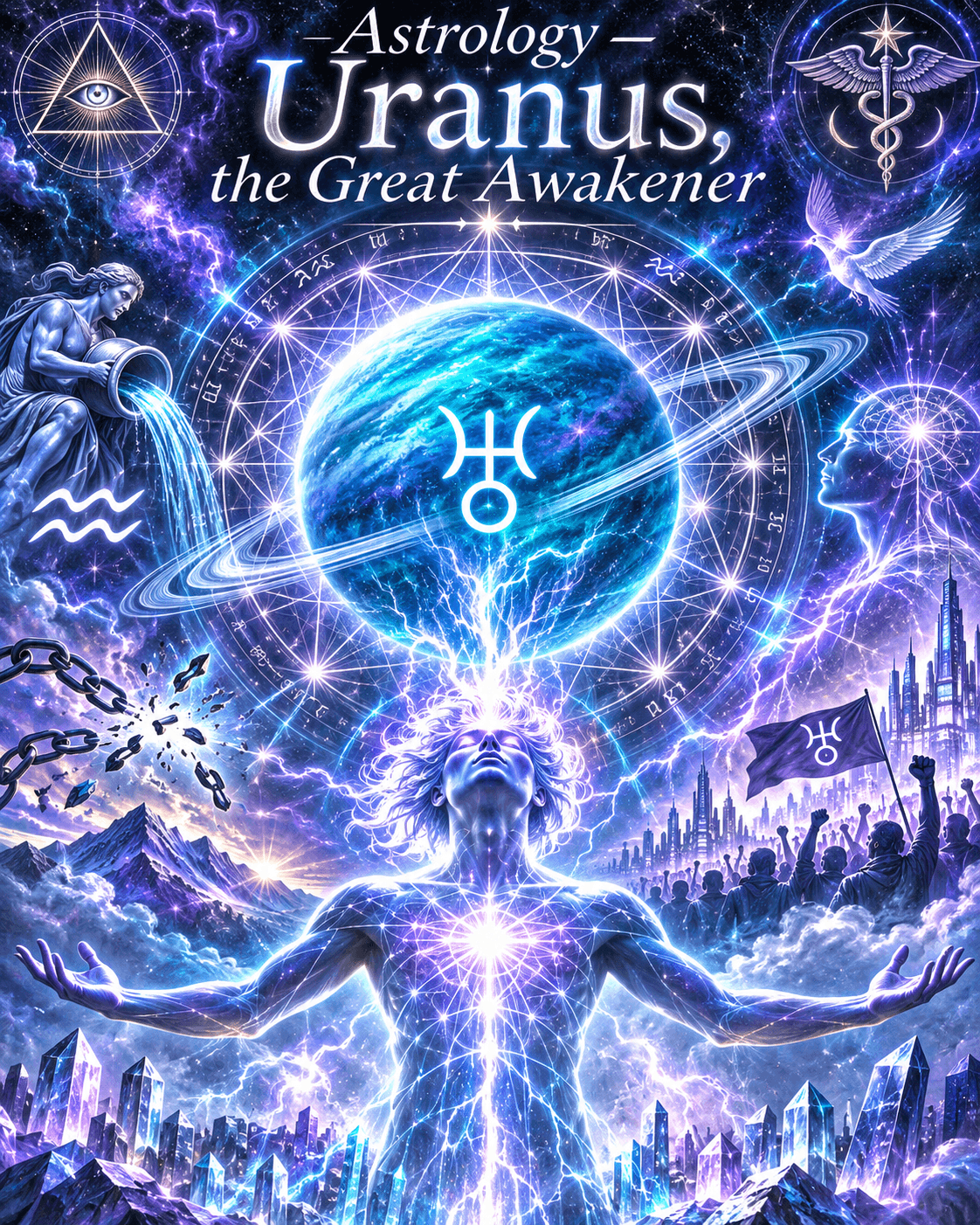
The Fool is traditionally attributed to the Element of Air, while B.O.T.A. and some modern Hermetic systems also associate Key 0 with Uranus.
These attributions are complementary within those systems, rather than universally identical across every Tarot tradition.
Uranus represents sudden awakening, originality, rebellion, independence, and revolutionary change.
Its symbolism includes:
Breaking obsolete patterns of thought.
Discovering unconventional solutions.
Taking unfamiliar paths toward personal freedom.
Experiencing sudden inspiration or unexpected change.
Recognizing the difference between individuality and conformity.
The Fool's Uranian influence expresses freedom from established identity.
However, freedom without awareness can rapidly become chaos.
Uranus encourages originality, not the abandonment of discernment.
The awakened individual can challenge convention without becoming enslaved to the compulsion to rebel against everything.
There is a considerable difference between an inspired visionary and someone who simply refuses to read the instructions!
Parapsychology — Intuition, Dreams, and the Hidden Mind
The Fool also provides a useful symbolic framework for contemplating intuition, dreams, and anomalous experiences.
Parapsychology has investigated phenomena such as telepathy, precognition, and apparently nonlocal awareness, although reliable evidence establishing these abilities remains scientifically contested.
From a metaphysical perspective, the Fool may represent the unconditioned awareness preceding ordinary intellectual interpretation.
Dreams demonstrate how consciousness can produce elaborate experiences without the usual constraints of waking perception.
Intuition, meanwhile, may arise through unconscious pattern recognition, accumulated experience, or processes not immediately accessible to deliberate thought.
The Hermetic aspirant examines such experiences with openness and discrimination.
Not every unexpected feeling is a revelation, and not every remarkable coincidence is evidence of cosmic intervention.
Yet dismissing all inner experience without examination is equally unhelpful.
The Fool invites curiosity.
The Magus demands that curiosity become disciplined investigation.
Theology — The Divine Child and the Sacred Stranger
Across religious and mythological traditions, the innocent child, wandering stranger, holy fool, and divine trickster frequently embody truths that established authority fails to recognize.
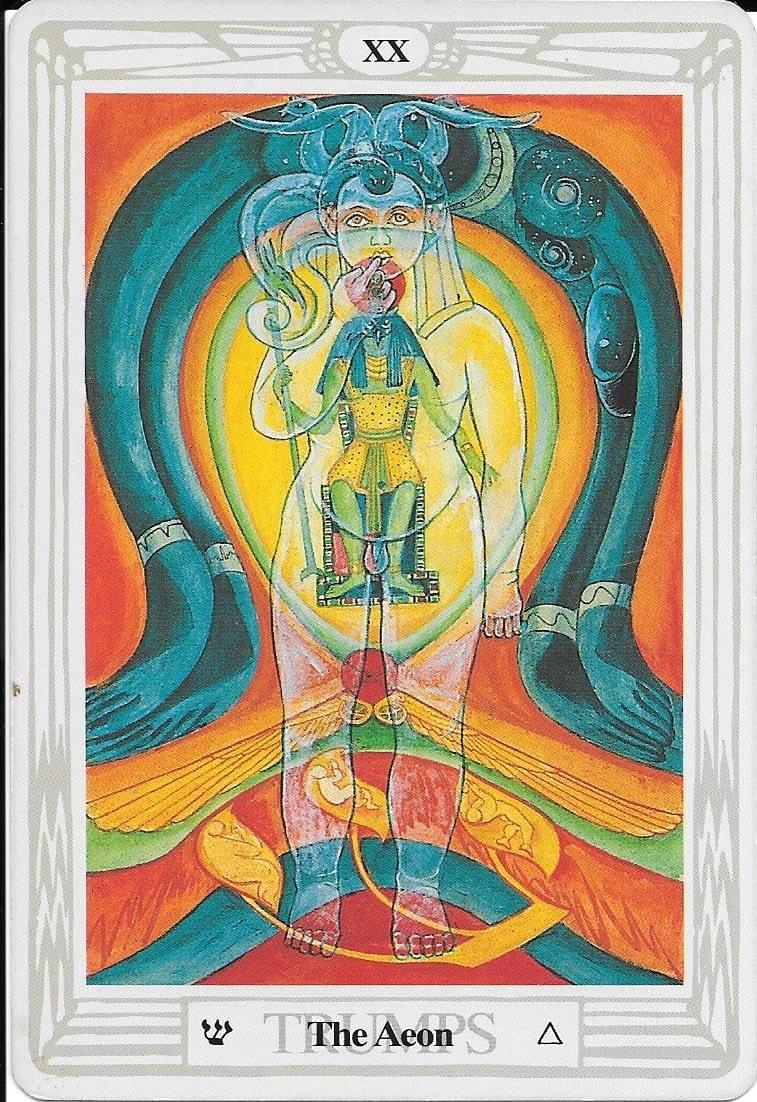
Hoor-Pa-Kraat (Harpocrates), the divine child associated with silence, offers an especially meaningful parallel.
His finger raised to his lips signifies the mystery preceding speech.
The Fool is likewise the silence before the Word.
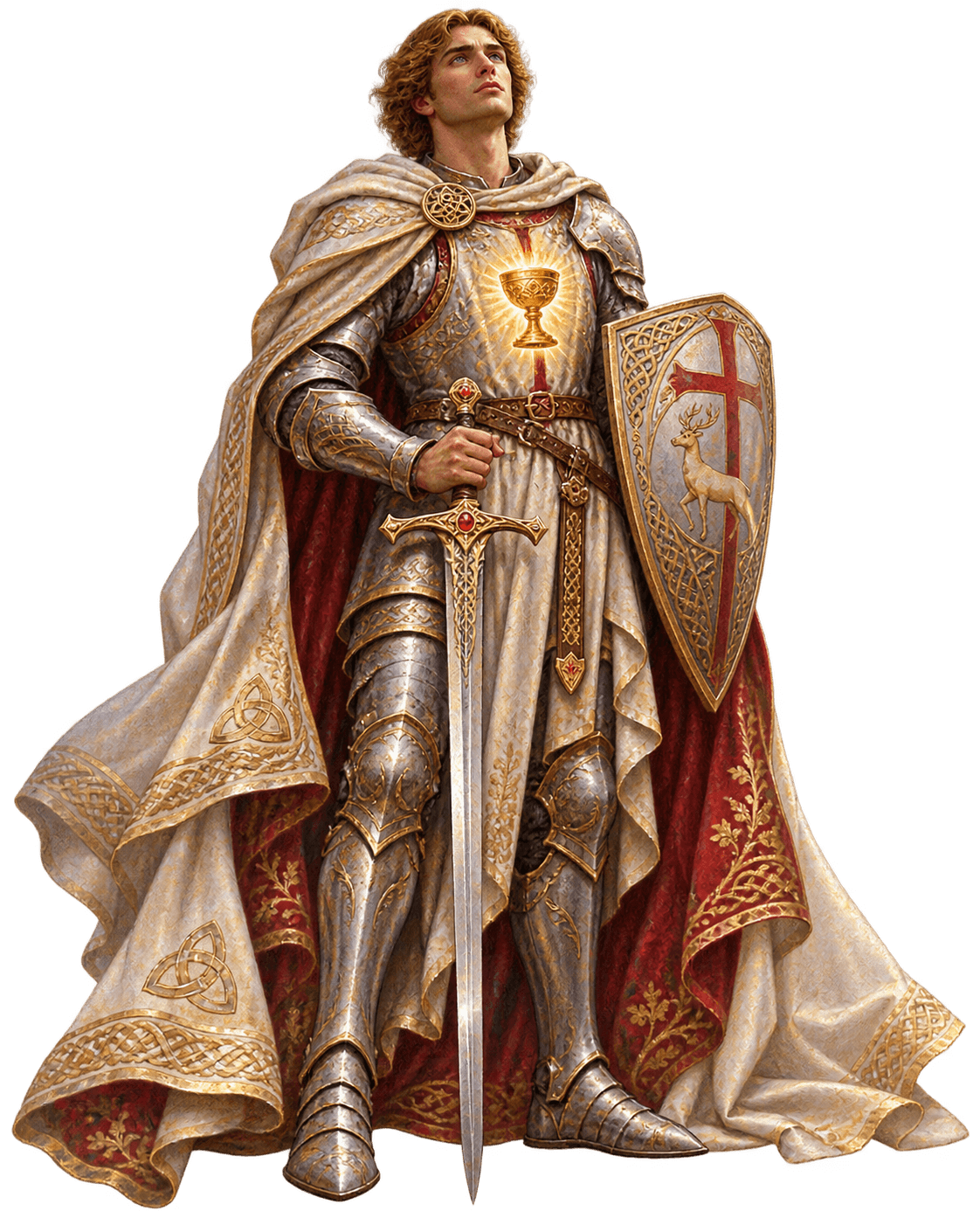
Percival, the innocent seeker of the Grail, provides another beautiful analogy.
His lack of worldly sophistication initially limits him, yet his eventual transformation requires compassion and genuine understanding rather than mere intellectual accomplishment.
The sacred Fool also recalls the spiritual ideal of releasing attachment to status and becoming receptive to a reality greater than one's established personality.
This is not the glorification of ignorance.
It is the wisdom of remaining teachable.
Divine innocence is not stupidity. It is awareness unburdened by unnecessary prejudice and fearful conditioning.
And occasionally, it is the courage to admit that the universe may know something the ego has not yet figured out.
The Lemniscate — The Fool, the Lovers, and Art
The number 0 is the circle of unlimited potential.
The lemniscate ∞ offers a beautiful symbol of that potential unfolding through polarity and perpetual circulation.
Within the Tarot, three cards provide an illuminating sequence:
The Fool — Aleph: Undifferentiated creative potential.
The Lovers — Zain: Differentiation, relationship, and the union of apparent opposites.
Art — Samekh: Reconciliation, blending, and alchemical transformation.
The Fool becomes conscious of polarity through the Lovers.
The Lovers' differentiated forces are recombined through Art.
Thus, the circle of potential becomes the endless rhythm of creation and transformation.
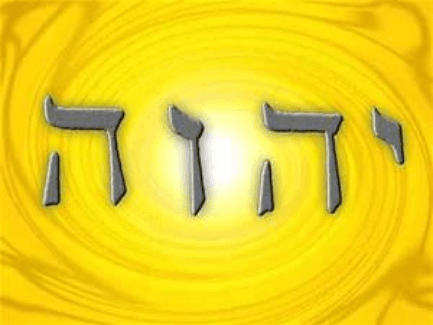
In the symbolism of the Tetragrammaton (YHVH), this same process appears as Father, Mother, Son, and Daughter—the creative current continually reproducing and renewing itself.
The One becomes Many without ceasing to be One.
Change is the movement through which continuity becomes experience.
The Tarot Fool in a Reading
When The Fool appears in a Tarot spread, its meaning depends upon the question, position, and surrounding cards.
In my practice, I do not require reversed cards to reveal difficult or shadowed meanings. The larger pattern of the spread provides the necessary context.
Constructive Expressions
The Fool frequently indicates:
A new beginning, adventure, journey, or unexpected opportunity.
Creative originality and freedom from restrictive habits.
Trust, spontaneity, curiosity, and renewed enthusiasm.
Spiritual openness and willingness to embrace unfamiliar experience.
Release from old identities and inherited limitations.
Courage to enter a new phase of personal development.
Challenging Expressions
When the surrounding cards suggest instability or poor judgment, The Fool may indicate:
Recklessness and inadequate preparation.
Avoidance of commitments or responsibilities.
Naïveté that becomes vulnerability to manipulation.
Impulsiveness mistaken for genuine spiritual guidance.
Escapism, unrealistic expectations, or unnecessary risk.
Rebellion motivated by reaction rather than conscious Will.
The Fool's essential lesson is that innocence must be accompanied by awareness.
A new journey demands openness, but it does not prohibit preparation.
If you are about to leap into the unknown, checking whether you have packed a parachute is not necessarily an insult to your spiritual development!
The Shared Lesson of the Thoth and B.O.T.A. Fool
Although these decks present strikingly different images, they speak of the same fundamental mystery.
The Thoth Fool emphasizes the ecstatic eruption of Divine Creativity—the unrestrained vitality of the One becoming the Many.
The B.O.T.A. Fool emphasizes the limitless Life-Power entering experience through innocence, aspiration, and the disciplined awakening of consciousness.
Crowley's Fool is the cosmic dance.
Case's Fool is the conscious journey.
One illustrates the overflowing mystery of manifestation; the other invites the aspirant to incorporate that mystery through study and practical transformation.
Both reveal that the human personality is not the totality of the Self.
The personal me is a temporary expression of a vastly greater potential.
The Fool stands before identification, before expectation, and before the accumulated limitations of experience.
He asks a simple but profoundly unsettling question:
Who would you become if you were no longer confined to everything you have been taught to believe you are?
This is the beginning of genuine initiation.
Not the rejection of reason, but its proper relationship to the greater field of consciousness.
Not the denial of embodiment, but the recognition that the living body is a sacred vehicle of experience.
Not an escape from the world, but an awakening within it.
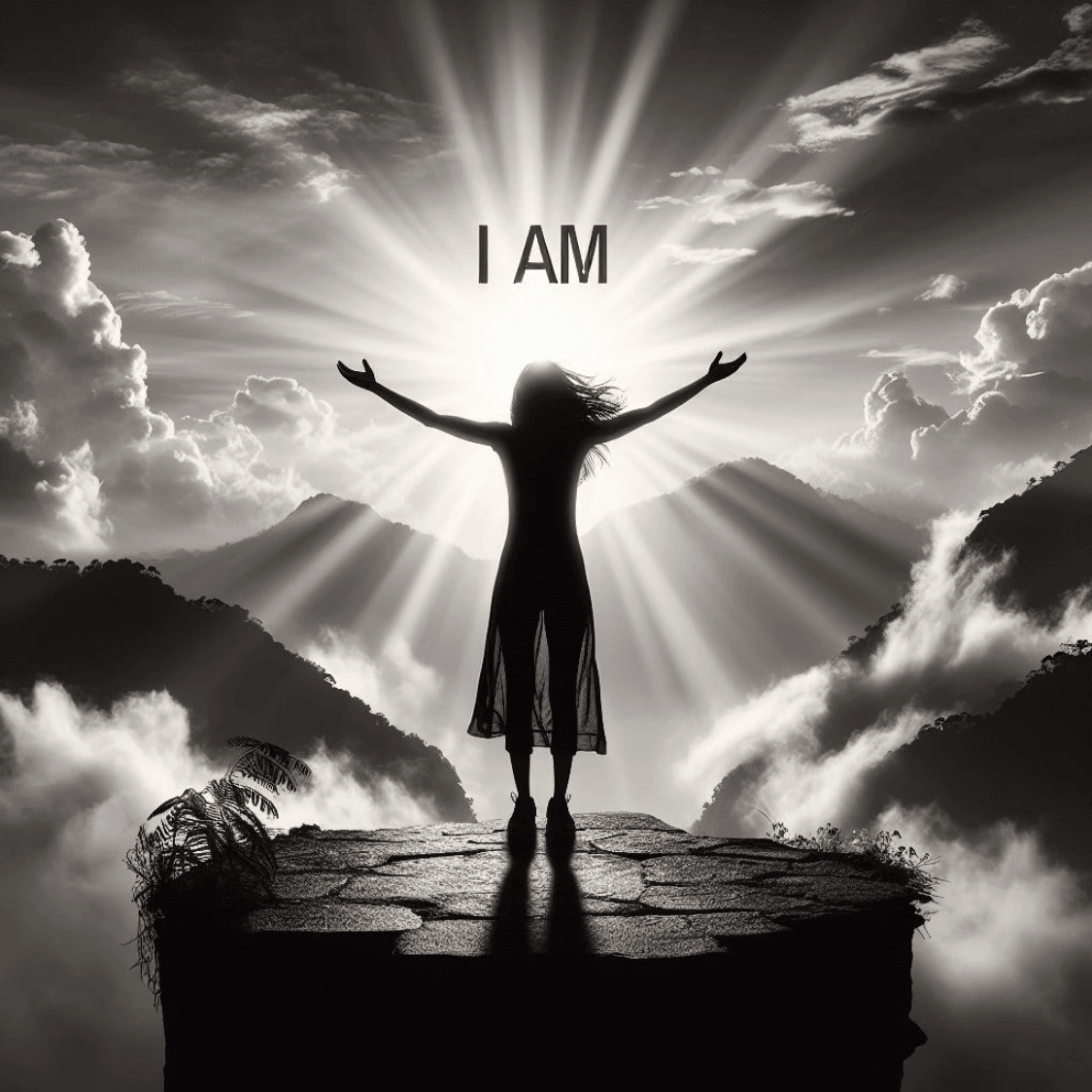
The Eternal Zero becomes the living I AM.
And the Fool discovers that the journey was always occurring within the limitless Self.
Meditation — The Breath of Aleph
Sit comfortably and become aware of your breathing.
Allow your attention to settle without forcing thoughts to disappear.
As you inhale, imagine the limitless Light of Kether descending through the Breath of Aleph.
As you exhale, imagine that Light flowing into the living awareness of your heart.
Contemplate the difference between the awareness that observes and the thoughts that appear within it.
Then silently affirm:
I AM the Breath of the Eternal.
I AM the Freedom to Become.
I AM the Observer and the Experience.
I AM the One Life expressing itself through the Many.
I AM the Sacred Fool, forever new, forever becoming.
Remain in quiet contemplation, allowing the symbolism to develop its own personal meaning.
The purpose is not to force a supernatural experience but to cultivate awareness, receptivity, and conscious relationship with the mysteries of Being.
A Final Reflection from Magus Eli
The Fool reminds us that existence is not a destination awaiting completion.
It is a living expression of limitless potential.
Each of us is an individualized expression of the Monadic Self, participating in the mystery of consciousness becoming experience.
We are the travelers, the journeys, and the awareness through which those journeys become known.
The Fool has not forgotten wisdom.
He has simply refused to let yesterday's experience become tomorrow's prison.
Above all things, know thyself.
And remember: the Divine Creative may be infinitely wise, but judging from The Fool, it also possesses an excellent sense of humor!

Thank you for your interest, thoughtful comments, and generous donations. May the Breath of Aleph fill your sails, may the Light of Kether illuminate your journey, and may the eternal innocence of the Divine Fool keep your heart forever young.
May you live long and prosper!
— Magus Eli
The Tarot of Eli, LLC
If you have any questions about this blog, or about Tarot cards , Tarot readings and/or Western Hermetic Thoth Tarot classes just click on the below chat button for expert answers.
3 Western Qabalistic Tarot and Magick websites assisting people in becoming more magick and less tragic since 2010.
