
elitarotstrickingly.com
Above all things, know thyself.

[ Thoth Tarot Cards and Book of Thoth sold in my webstore]
Thoth-7 of Cups-Debauch
Lord of Illusionary success.
#7-Living from that Will, supported by its unfailing Wisdom and Understanding, mine is the Victorious life.
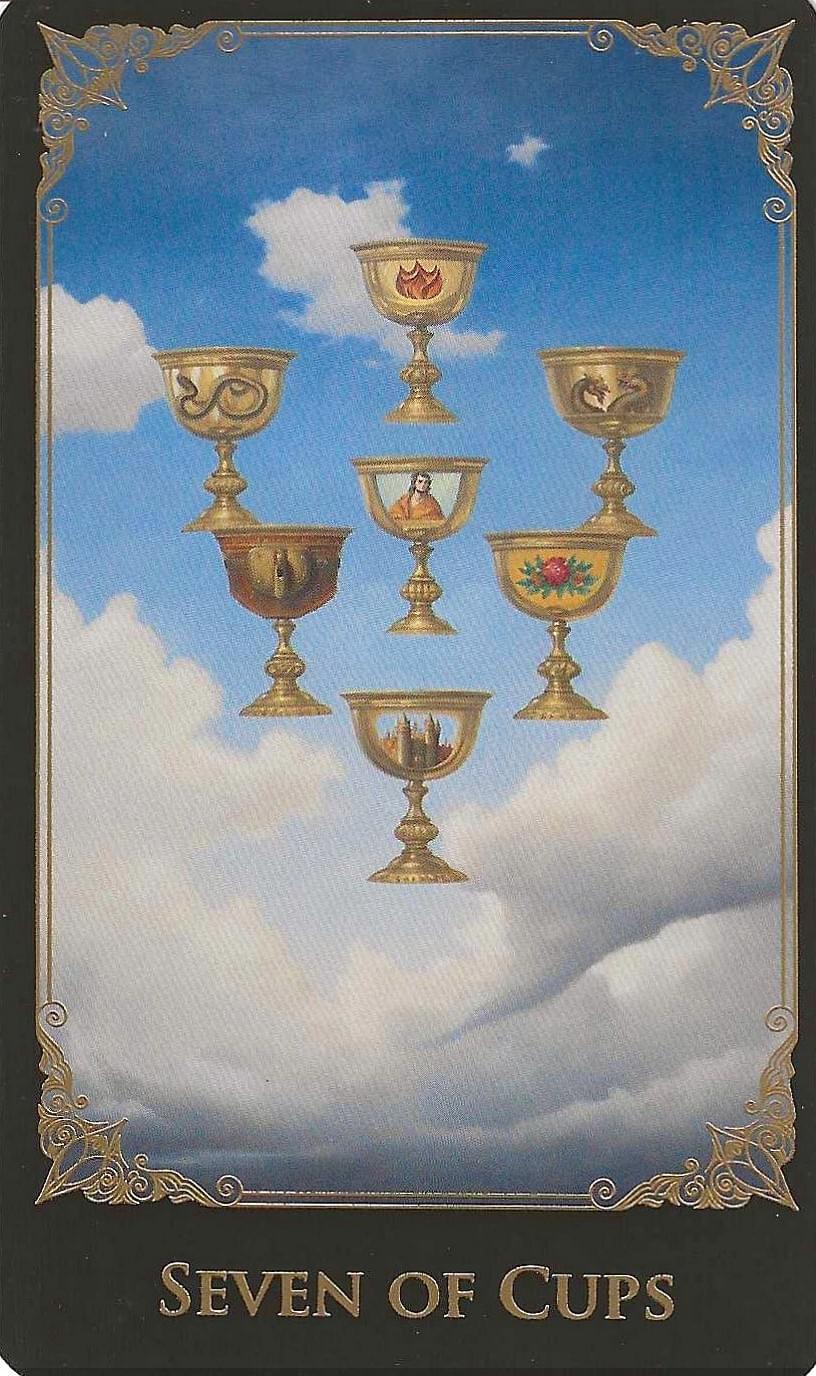
The Baroque Tarot-Seven of Cups

Thoth 7 of cups-Debauch
Minor Arcana: Thoth Tarot Seven of Cups – Debauch & Baroque Tarot Seven of Cups
Venus in Scorpio: When Sacred Pleasure Becomes Emotional Intoxication
Western Hermetic Qabalah, Astrology, Alchemy, Metaphysics, Parapsychology, Cosmology, and the Mysteries of the Soul
From the Sacred Pleasure of Six to the Intoxication of Seven
What a remarkable descent! We move from the radiant spiritual ecstasy of the Thoth Six of Cups – Pleasure directly into the murky emotional swamp of the Seven of Cups – Debauch.
One moment, Venus is dancing in the sacred waters of Love; the next, she is searching for her shoes, wondering where her dignity went, and blaming Scorpio for the entire evening!
Yet this apparent fall reveals an essential principle of Western Hermetic Qabalah: The same energy that liberates consciousness can imprison it when directed by an unbalanced ego.
Both cards belong to Scorpio, the fixed Water sign of passion, sexuality, transformation, and regeneration. However, their planetary influences differ.
Six of Cups – Pleasure: Sun in Scorpio; Tiphareth in Briah.
Seven of Cups – Debauch: Venus in Scorpio; Netzach in Briah.
In the Six, the Sun illuminates the emotional waters, establishing harmony between desire and the Solar Self. In the Seven, Venus enters Scorpio's passionate depths, where attraction can become obsession and pleasure can deteriorate into dependency.
The Sun is not astrologically exalted in Scorpio—its traditional exaltation is Aries—but its solar symbolism beautifully reinforces the Six's Qabalistic relationship with Tiphareth.
Thus, the Six represents pleasure aligned with conscious Will, while the Seven warns of desire becoming detached from that Will.
The difference is not pleasure versus sin. It is conscious enjoyment versus unconscious enslavement.
The Universe did not create pleasure as a punishment. That peculiar interpretation seems to be a human invention!
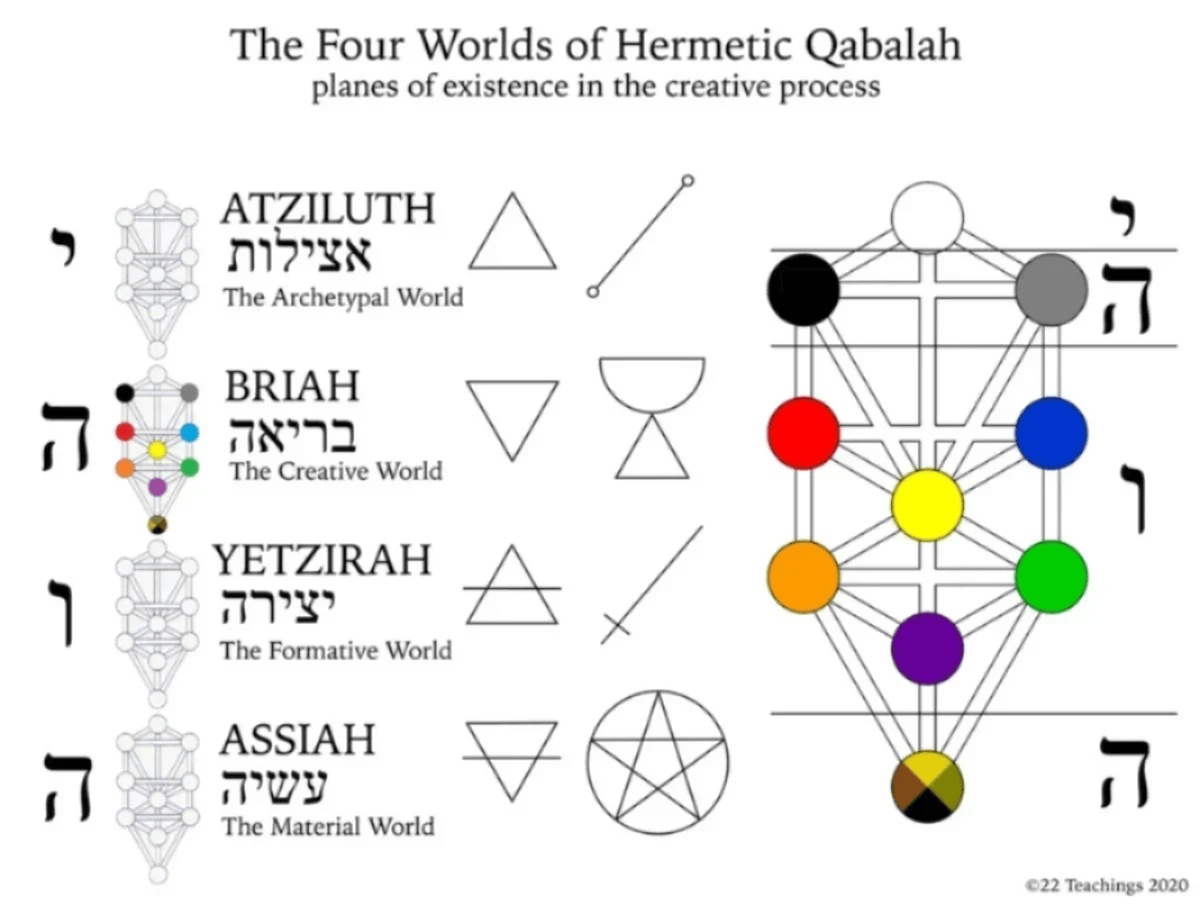
Western Hermetic Qabalah: Netzach in Briah
The Seven of Cups represents Netzach, the Seventh Sephirah, operating within Briah, the World of Creation and the elemental realm of Water.
Netzach means Victory and is traditionally associated with Venus, beauty, attraction, desire, imagination, and emotional expression.
Briah is the creative world associated with the Water element in the Four Worlds of Hermetic Qabalah.
Consequently, Netzach in Briah represents desire functioning through the creative waters of consciousness.
Here lies the difficulty: desire is an extraordinary creative force, but it does not necessarily possess the discrimination required to determine whether its object is beneficial.
Desire simply declares, "I WANT!"
It is the task of consciousness to ask, "Why?"
In the Six of Cups, the balancing influence of Tiphareth—the Sixth Sephirah, Beauty—brings the emotional nature into harmony with the Solar Self.
In the Seven, Netzach operates below that central equilibrium. Emotion may temporarily overwhelm discernment.
The personality begins to confuse intensity with truth, attraction with love, and gratification with fulfillment.
This is the Qabalistic condition represented by Debauch: emotional energy circulating without sufficient conscious direction.
It is not that Venus has become evil. She has simply forgotten that she is a goddess and is behaving as though the entire Universe were her personal cocktail lounge.

Astrology: Venus in Scorpio — The Beautiful Goddess in the House of Mars
Venus rules Taurus and Libra, where her powers of pleasure, attraction, harmony, and relationship traditionally find natural expression.
Scorpio, however, is traditionally ruled by Mars.
Therefore, Venus in Scorpio is considered astrologically in detriment—a technical term indicating that her natural qualities must operate under challenging conditions.
This does not mean that people born with Venus in Scorpio are destined for emotional disaster.
Quite the contrary!
In a balanced natal chart, this placement may express profound loyalty, emotional courage, transformative intimacy, psychological insight, and remarkable creative passion.
However, the Thoth Seven of Cups explores the unbalanced expression of this planetary combination.
Its shadow includes:
Passion becoming possessiveness.
Love becoming emotional dependency.
Intimacy becoming a struggle for control.
Pleasure becoming compulsive repetition.
Imagination becoming self-deception.
Emotional intensity being mistaken for spiritual revelation.
Scorpio is traditionally associated by natural-house analogy with the Eighth House, whose subjects include shared resources, death, sexuality, inheritance, and transformation. However, Scorpio and the Eighth House are not interchangeable in every horoscope.
In its higher expression, Venus in Scorpio teaches that authentic intimacy requires courage, honesty, and transformation.
In its lower expression, Venus whispers:
"If I cannot possess what I love, perhaps I can become intoxicated enough to forget it!"
Unfortunately, the emotional hangover is usually more persistent than the physical one.

The Alchemy of Venus: Copper, Desire, and the Poisoned Cup
In Western alchemy, Venus corresponds to Copper, a beautiful, conductive metal that gradually develops a patina through chemical reactions with its environment.
Copper's changing appearance makes an excellent Hermetic metaphor.
Beauty requires conscious maintenance, just as relationships require honesty, emotional circulation, and attention.
When the waters of consciousness stagnate, desire can become contaminated by unresolved emotional experiences.
This is the alchemical condition of the Seven of Cups.
The emotional vessel continues receiving new experiences without processing what already fills it.
Past disappointments, jealousies, fantasies, resentments, and dependencies accumulate.
Eventually, the individual is no longer responding to the present moment but to a swamp of unresolved emotional history.
The past becomes the poison poured into the present.
The alchemical remedy is not repression but purification.
Through the symbolic stages of the Great Work:
Nigredo – Blackening: Recognize the corruption, illusion, and emotional dependency.
Albedo – Whitening: Purify desire through introspection, honesty, and discrimination.
Rubedo – Reddening: Reintegrate passion with conscious Will, transforming emotional energy into creative vitality.
The alchemist does not destroy Venus. The alchemist restores her sovereignty.
After all, the Goddess of Love deserves something better than being imprisoned in yesterday's emotional leftovers!
The Thoth Seven of Cups: Welcome to the Emotional Swamp
Aleister Crowley's Seven of Cups presents seven vessels receiving an unhealthy-looking flow from drooping lotuses.
Instead of the refreshing waters of the Six, we encounter a dark, stagnant, almost poisonous environment.
The image suggests pleasure that has exceeded its nourishing purpose.
Here, the swamp is a powerful metaphor for the accumulation of unresolved emotions.
When past feelings are continually rehearsed without reflection, they reinforce familiar psychological patterns.
A person may repeatedly choose relationships, pleasures, or situations that reproduce earlier suffering.
In modern psychological language, this can involve conditioned responses, emotional reinforcement, rumination, and maladaptive coping.
The Hermeticist interprets the same condition symbolically as consciousness becoming entangled in the lower expressions of Netzach.

Venus and the Seven Drams of Debauch
Consider Venus enjoying an evening with her favorite single-malt Scotch.
First dram: A delightful warmth! Pleasure awakens.
Second dram: Companionship, laughter, and emotional harmony.
Third dram: Abundance! Everyone is fascinating.
Fourth dram: Luxury! Surely another drink will improve the evening.
Fifth dram: Disappointment. The original pleasure is fading.
Sixth dram: She attempts to recapture the earlier delight.
Seventh dram: Debauch! Venus discovers that the porcelain throne is considerably less romantic than the throne of the Empress.
This humorous progression illustrates an important psychological principle: Repeated gratification does not necessarily produce increasing fulfillment.
What initially creates pleasure can eventually generate diminishing returns, compulsive repetition, and distress.
The problem is not the first enjoyment but the failure to recognize when enjoyment has become enslavement.
The Seven of Cups reminds us that the appetite of the personality can become insatiable when it attempts to replace the fulfillment of the Soul.
Parapsychology and the Danger of Spiritual Intoxication
The Seven of Cups also contains an important lesson for students of the Western Mysteries.
Experiences during meditation, ritual, pathworking, mystical contemplation, or altered states of consciousness can feel extraordinarily powerful.
Within esoteric traditions, sensations of ascending energy, profound unity, heightened awareness, and inner luminosity are sometimes described through the symbolism of Kundalini or Serpent Fire.
These are traditional spiritual interpretations of subjective experiences; they are not, by themselves, scientific proof of supernatural energies.
Nevertheless, the psychological impact of such experiences can be significant.
The aspirant may feel expanded beyond ordinary personal identity, encountering what appears to be a more universal state of consciousness.
Yet without discrimination, the personality may become intoxicated by the experience itself.
The aspirant begins pursuing extraordinary sensations rather than genuine transformation.
Even more dangerously, the student may project the experience of inner divinity onto the teacher, mentor, or spiritual guide.
The teacher then becomes the imagined source of the student's awakening.
This is the spiritual expression of Debauch: Mistaking the messenger for the Divine Self whose message has awakened within us.
Psychologically, this resembles transference and idealization, in which profound personal expectations or emotional needs become attached to another individual.
A responsible spiritual teacher must maintain ethical boundaries, avoid exploiting emotional or sexual dependency, and continually direct students toward their own understanding and autonomy.
The true teacher is a mirror—not an idol.
Remember, the light reflected in the mirror is not necessarily produced by the mirror!
The Solar Self belongs to the student, not to the personality of the instructor.
Theology: Sacred Passion Is Not Sin
The Seven of Cups is frequently misunderstood as a condemnation of sexuality, desire, and physical pleasure.
From a Hermetic perspective, this misses the essential lesson.
The body is not the enemy of Spirit.
Matter is not necessarily a prison, nor is pleasure inherently profane.
Indeed, Western Hermetic philosophy often views manifestation as an expression of the One Life through differentiated forms.
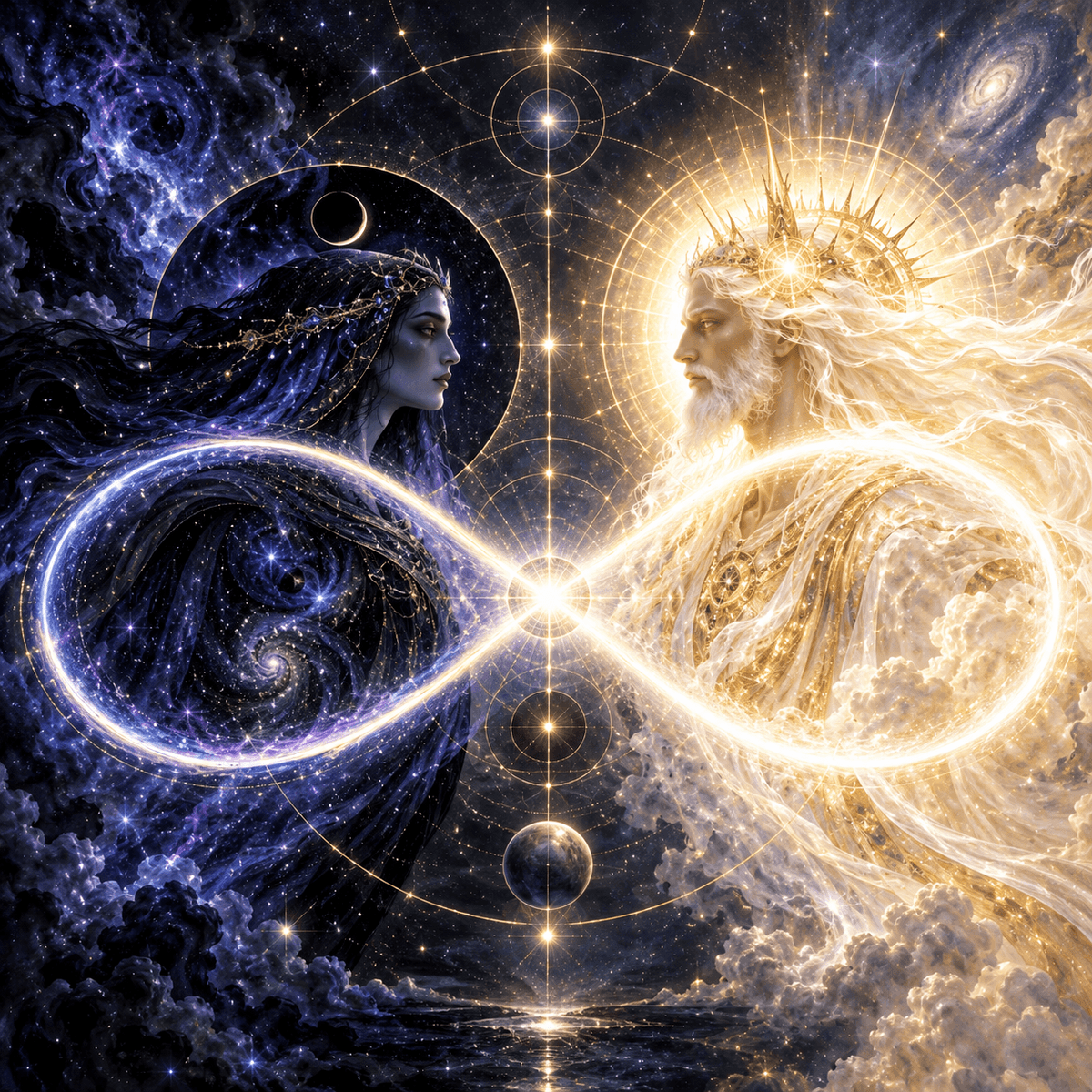
The formula 0=2 symbolizes the paradoxical emergence of polarity from an undivided source.
The One becomes Two, allowing relationship, contrast, experience, and the possibility of conscious reunion.
In this symbolic understanding, the Creatrix and Creator are complementary expressions of one underlying reality.
Their union is not simply sexual; it symbolizes the dynamic interaction of force and form, consciousness and manifestation.
The trouble begins when the conditioned personality becomes convinced that fulfillment exists exclusively outside itself.
It searches endlessly for another person, another sensation, another possession, or another ecstatic experience.
This is the underlying theology of Debauch: forgetting the divine center while becoming fascinated with its reflections.
The remedy is not rejection of the body, but reconciliation of Spirit, Soul, and Body.
For the Hermeticist, the sacred task is to unite the inner masculine and feminine principles—the symbolic Animus and Anima—within the temple of one's own consciousness.
The alchemical marriage restores balance to desire.
Venus may dance as passionately as she pleases, provided she remembers who is conducting the orchestra!

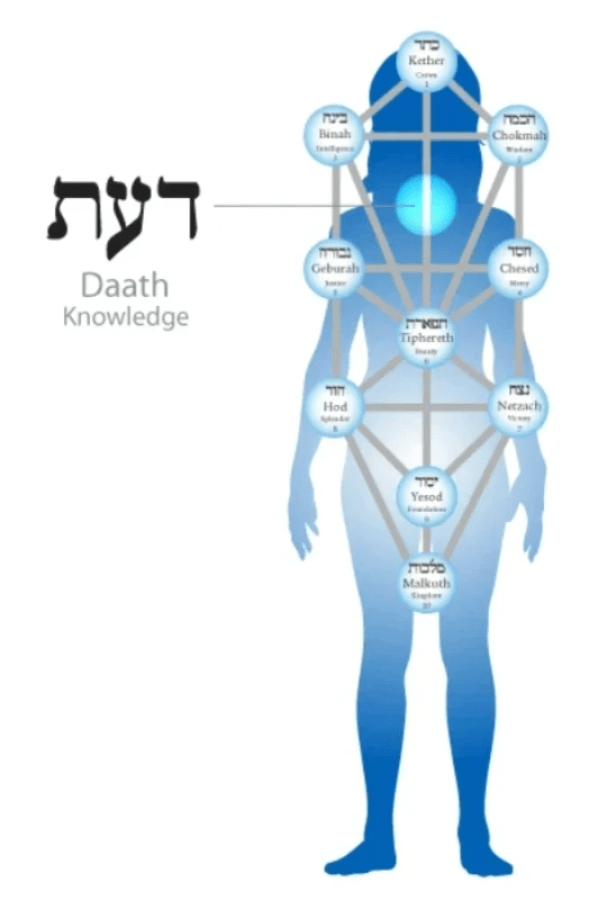
From the perspective of Western Hermetic Qabalah, the human body is not profane; it is the living temple through which consciousness experiences its own creation.
To declare the body shameful, sinful, or inherently impure is to establish an artificial conflict between Spirit and Matter—between the Creator and the very manifestation of Creation.
I have a term for this conditioning: “flesh-o-phobic society” which is particularly useful for describing cultural conditioning that teaches individuals to distrust their own physical nature.
Consider the Hermetic implications:
Malkuth is the Kingdom, not a spiritual mistake. It is where the invisible becomes visible and the potential becomes experience.
Yesod is the Foundation, through which the formative powers of consciousness find expression in physical existence.
Tiphareth is the Solar Self, whose harmonizing influence can reconcile instinct, emotion, intellect, and spiritual aspiration.
Binah is the Great Mother, the formative principle through which limitless potential receives definition and structure.
In this interpretation, the flesh is not the opposite of Spirit. It is one of Spirit's expressions.
Sexuality is not inherently debauchery. Pleasure is not inherently corruption. Desire is not inherently enslavement.
Debauch begins when consciousness loses its sovereignty over desire—not when consciousness enjoys its physical existence.
That distinction is essential to our Seven of Cups discussion.
The Thoth Seven of Cups does not condemn Venus for being sensual. It illustrates what happens when her desire becomes unbalanced and compulsive.
The human body is not profane. To declare it so is a product of social conditioning within a flesh-o-phobic culture that has learned to fear the very vessel through which consciousness experiences Creation.
In Western Hermetic Qabalah, the body is the living temple of the Soul, and Malkuth is the sacred Kingdom of manifestation—not a prison from which Spirit must escape. The true profanation is not the enjoyment of the flesh but the psychological division that teaches Spirit to despise its own expression. We are not here to condemn the body; we are here to awaken consciousness within it.
And I would add one of your favorite Hermetic principles:
“Above all things, know thyself.”
That includes knowing yourself as Spirit, Soul, and Body.
After all, if the Divine Creative intended manifestation to be shameful, why go to all the trouble of creating a Universe?

The Great Work is not escaping the flesh. It is awakening the Divine within it.
Cosmology: The Infinite Flow and the Formula of 0=2
Within Hermetic cosmology, the Universe may be contemplated as an unfolding field of consciousness expressing itself through complementary polarities.
This is a metaphysical model rather than an established scientific description of the cosmos.
The Macrocosm and Microcosm mirror one another in the Hermetic teaching As Above, So Below.
The same symbolic relationships that govern cosmic creation can therefore illuminate individual psychological experience.
The infinite movement between apparent opposites is represented by the Lemniscate, the figure-eight symbol of continuous circulation.
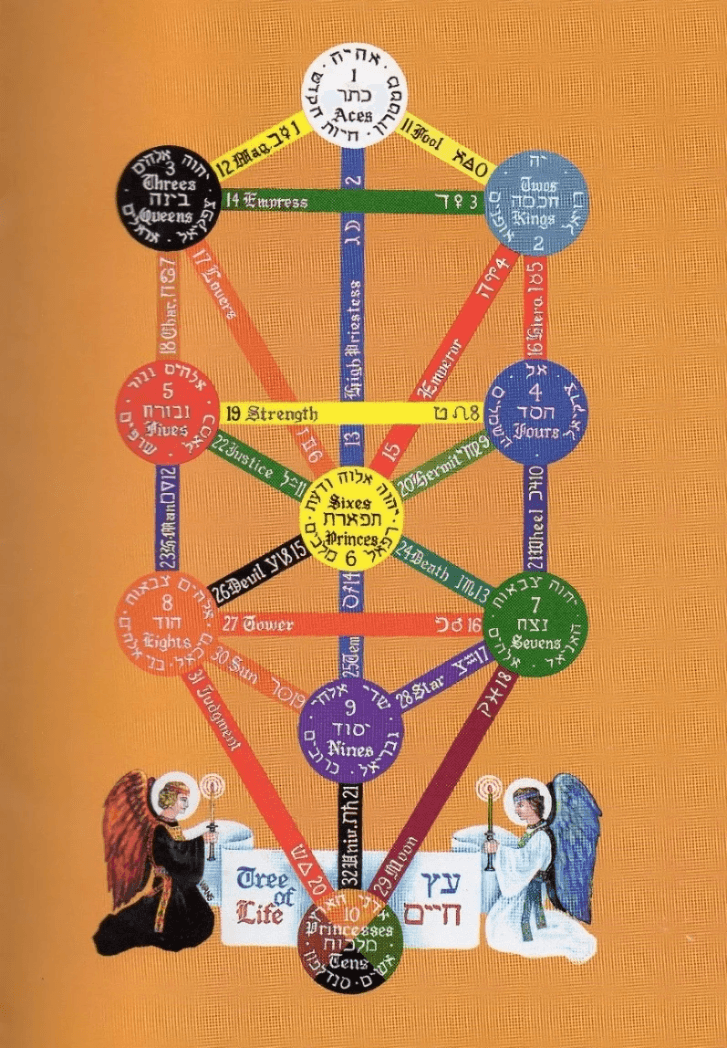
When the polarity of desire operates harmoniously, creative energy circulates and renews itself.
When the personality attempts to possess and immobilize that movement, the symbolic flow becomes stagnant.
The Seven of Cups represents this interruption.
Its lesson is beautifully simple:
Love must circulate. Desire must evolve. Consciousness must remain awake.
The goal is not to extinguish Scorpio's passion but to illuminate its depths through Tiphareth—the radiant Solar Self.
Only then can the swamp of Debauch become the sacred spring of Pleasure.

The Baroque Tarot Seven of Cups: Seven Visions, Seven Choices
Unlike Crowley's disturbing portrayal of emotional corruption, the Baroque Tarot Seven of Cups follows the more traditional imagery of seven mysterious vessels suspended among clouds.
Each cup offers a different symbolic possibility.
Here, the central lesson concerns illusion, fantasy, temptation, and the necessity of discernment.
The cups illustrate how imagination presents consciousness with multiple possible realities, not all of which can—or should—be manifested.
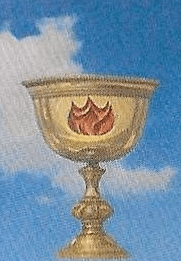
Let us examine the seven symbols described in this card.
1. The Flaming Cup — Spiritual Fire and Ambition
The uppermost cup contains flames.
Fire represents Will, vitality, purification, inspiration, and spiritual transformation.
In its elevated expression, this cup symbolizes illumination and the awakening of purposeful consciousness.
In its shadow, it can represent ambition, rage, obsession, or the ego's desire for power.
The important question is whether the fire illuminates the Soul or merely inflames the personality.
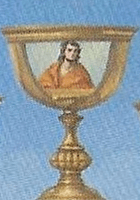
2. The Cup of Christ — Divine Love and Redemption
The second cup contains the image of Christ.
Within a Western Hermetic interpretation, Christ may represent the Solar Logos—the principle of divine consciousness associated with Tiphareth.
This cup symbolizes compassion, sacrifice, spiritual awakening, and the possibility of redemption.
It is also a reminder that authentic spiritual knowledge requires integration into daily life.
The shadow appears when religious images become objects of projection rather than instruments of inner transformation.
It is much easier to worship the image of illumination than to practice its teachings!
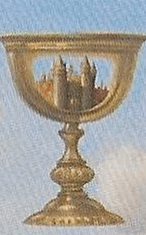
3. The Castle — Security, Dominion, and Material Achievement
The third cup displays a castle.
The castle represents stability, property, authority, accomplishment, and the protected structures of personal identity.
Its constructive expression concerns establishing a secure foundation for manifestation.
Its shadow is attachment to status, possessions, and the illusion that material security alone guarantees happiness.
A castle may protect the body, but its walls cannot guarantee peace of mind.
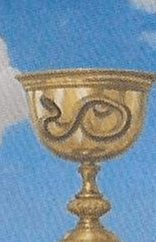
4. The Serpent — Wisdom, Sexuality, and Transformation
The fourth cup contains a serpent.
The serpent is one of the oldest symbols of regeneration, instinctual vitality, hidden knowledge, and transformative power.
In Hermetic imagery, it may represent the life force moving through manifestation and the cycles of renewal associated with shedding one's skin.
Its higher expression is wisdom gained through transformation.
Its shadow is manipulation, jealousy, temptation, and compulsive desire.
The serpent itself is neither good nor evil. Its meaning depends upon the level of consciousness directing its power.
After all, a serpent shedding its old skin is practicing transformation—not shopping for another identity!
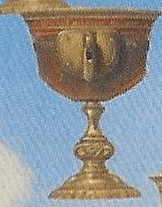
5. The Locked Cup — Secrets and Concealed Potential
The fifth cup displays a lock.
This unusual symbol suggests secrecy, restriction, guarded knowledge, and hidden possibilities.
Metaphysically, the lock can represent psychological defenses or mysteries that require preparation before they can be understood.
It also invites a question:
What part of yourself have you locked away because you fear discovering its power?
In its higher expression, the lock represents discretion and sacred protection.
In its shadow, it represents repression, secrecy, emotional isolation, or the illusion that concealed knowledge automatically confers wisdom.
The key, of course, is conscious self-knowledge.

6. The Twin Dragons — Polarity and the Alchemical Marriage
The sixth cup contains two dragons facing one another.
This provides a striking image of polarity.
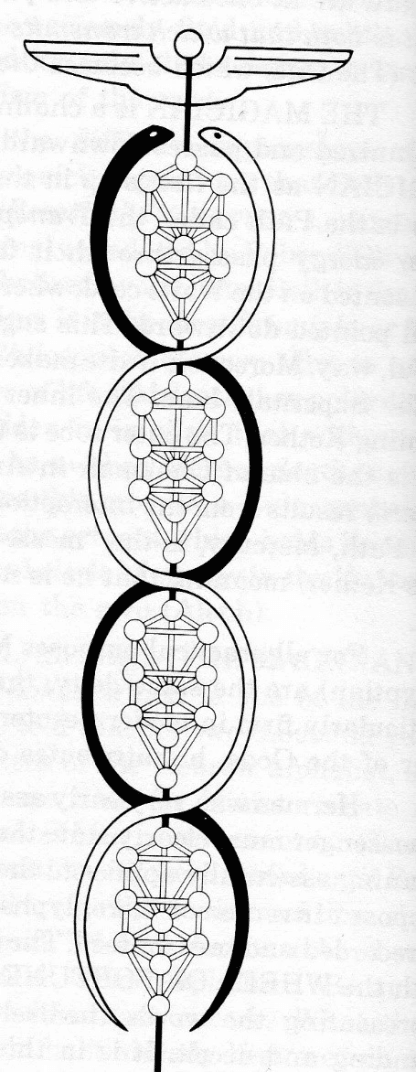
In Western Hermetic symbolism, dragons frequently represent primordial power, elemental forces, transformation, and the challenges of the Great Work.
Two confronting dragons may symbolize the apparent opposition of:
Masculine and feminine.
Solar and lunar.
Conscious and unconscious.
Spirit and matter.
Their reconciliation recalls the alchemical marriage, in which opposing forces are integrated into a greater unity.
This is the dynamic mystery of 0=2.
In its shadow expression, however, the same polarity produces conflict, domination, jealousy, and the exhausting struggle to control another.
The dragons must learn that cooperation generates far more creative fire than constantly biting one another!

7. The Red Rose — Love, Beauty, and the Opening Heart
The seventh cup contains a red rose.
In Western esoteric symbolism, the rose is associated with love, beauty, unfolding consciousness, and the mysteries of spiritual realization.
Within Rosicrucian symbolism, the rose also evokes the flowering of spiritual consciousness through the experiences of embodied existence.
Its red coloration suggests passion, vitality, desire, and the transformative power of Love.
Yet even this beautiful symbol possesses a shadow.
Love may become possessiveness; devotion may become obsession; beauty may become vanity.
The rose teaches that genuine love requires both openness and discernment.
Its petals unfold naturally. Forcing them open merely destroys the flower.
Thoth and Baroque Seven of Cups: Two Faces of the Same Mystery
| Thoth Seven of Cups – Debauch | Baroque Seven of Cups |
|---|---|
| Emotional excess and intoxication | Fantasy, choices, and temptation |
| Stagnant waters of unresolved emotion | Seven symbolic possibilities among clouds |
| Desire detached from conscious Will | Imagination detached from practical judgment |
| Psychological dependency | Indecision and seductive appearances |
| Purification through self-awareness | Discernment through conscious choice |
| Central lesson: Do not drown in desire | Central lesson: Do not mistake fantasy for reality |
Both cards reveal the difficulty of allowing imagination and desire to operate without sufficient conscious discrimination.
The Thoth deck emphasizes the consequences of emotional overindulgence.
The Baroque deck emphasizes the confusing abundance of possibilities that can seduce consciousness away from its true purpose.
Together, they express a central Hermetic principle:
Imagination creates possibilities, desire supplies energy, but Will must determine directio
Numerology: The Sacred Seven and the Test of Victory
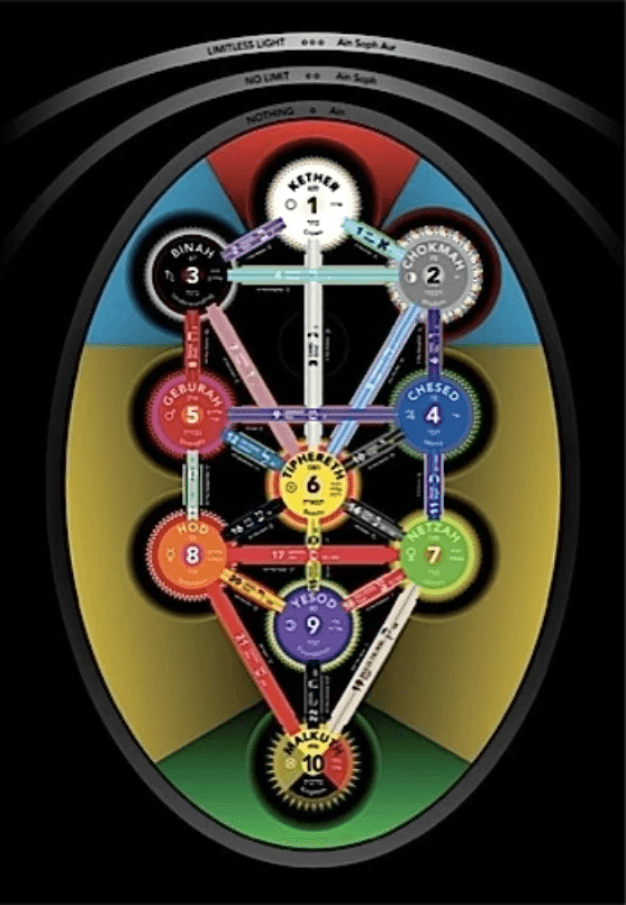
In Western Hermetic Qabalah, Seven corresponds to Netzach—Victory.
Yet victory does not necessarily mean conquest over others.
Its higher meaning concerns the mastery and harmonious expression of desire.
Seven also carries sacred associations with the traditional seven planets, the sevenfold structures of many mystical systems, and the stages of spiritual development.
However, the Seven of Cups demonstrates that numerical symbolism must always be interpreted through its Sephirah, element, planetary attribution, and surrounding cards.
When Netzach operates through the emotional world of Briah without sufficient balance, victory may become merely apparent.
The individual believes a desire has been fulfilled, only to discover that the achievement has generated another appetite.
This is the traditional theme of Illusionary Success.
One wins the prize, yet somehow loses oneself in the celebration.
When the Seven of Cups Appears in a Tarot Reading
The Seven of Cups asks the querent to examine emotional desires, fantasies, expectations, and attachments.
Depending upon surrounding cards, it may suggest:
Attractive opportunities that require careful examination.
Emotional confusion or unrealistic expectations.
Promises that may not be fulfilled.
Temporary gratification mistaken for lasting success.
Repetitive emotional habits or unresolved disappointments.
Excessive indulgence, compulsive behavior, or escapism.
Jealousy, possessiveness, or unhealthy relationship dynamics.
Vanity, complacency, or spiritual self-importance.
The need to distinguish authentic love from emotional dependency.
An invitation to release illusions and reclaim personal sovereignty.
In difficult combinations, the card may also prompt questions about coercive or harmful relationship patterns, but a Tarot card alone cannot establish that abuse, addiction, or violence has occurred.
When Ill-Dignified by the Surrounding Cards
I do not use reversed Tarot cards; a card turned upside down is a handling error, not a second Tarot system!
The shadow expression is revealed by the surrounding cards and the querent's circumstances.
When particularly ill-dignified, the Seven of Cups may indicate:
Self-deception and denial.
Emotional dissipation.
Betrayal or dishonesty in relationships.
Obsessive desire or unhealthy attachment.
False promises and seductive distractions.
Avoidance of necessary decisions.
Dependency upon external validation.
Hidden emotional problems becoming apparent.
An increasing need for honest self-examination.
Conversely, with supportive cards, the Seven may describe the moment illusion becomes visible.
The querent recognizes the difference between genuine opportunity and seductive fantasy.
This recognition begins the liberation of consciousness.
The Hermetic Remedy: Return Venus to the Solar Self
The Seven of Cups does not instruct us to abandon pleasure, reject sexuality, or suppress passion.
It teaches the necessity of conscious participation in our own emotional lives.
To transmute Debauch into Pleasure:
Recognize the illusion. Ask whether a desire arises from authentic Will or an unconscious emotional habit.
Purify the waters. Examine unresolved experiences without continually recreating them.
Reclaim the Solar Center. Bring desire into harmony with the conscious Self symbolized by Tiphareth.
Practice discrimination. Distinguish temporary excitement from enduring fulfillment.
Unite the inner opposites. Reconcile instinct and intelligence, passion and compassion, freedom and responsibility.
Allow Love to circulate. Release the demand to possess what can only be appreciated through conscious relationship.
The essential lesson is that spiritual evolution does not require the destruction of desire.
It requires its transformation.
Venus must not be imprisoned in Scorpio's swamp.
She must become the conscious mistress of its regenerative waters.
Final Hermetic Meditation: The Cup of the Living Soul
Imagine yourself standing before seven cups.
Each offers a different promise: pleasure, power, wisdom, security, mystery, passion, or divine love.
Yet none can provide lasting fulfillment when approached through an unconscious hunger for completion.
The true Holy Grail is not merely an external vessel.
In Hermetic contemplation, it is also the awakened consciousness capable of receiving, containing, and expressing the creative Life Force.
The Seven of Cups reminds us that the vessel must be purified before its contents can nourish the Soul.
When the false ego ceases its frantic pursuit of external salvation, the waters settle.
Within that stillness, the radiant image of the Solar Self can once again be recognized.
Know Thyself, and desire becomes your servant rather than your master.
The One becomes Two for the joy of conscious relationship, and the Two discover their essential unity through Love.
That is the living mystery of 0=2.
Let Venus dance within your heart. Celebrate her beauty, her passion, and her creative fire.
Just remember to invite Tiphareth to the party.
Someone must keep the Sun shining when Scorpio decides to turn out all the lights!
Thank you for your interest, thoughtful comments, and supportive donations. Your generosity helps keep the Light of Western Hermetic wisdom shining for those who seek greater knowledge of themselves.
May the waters of your consciousness remain clear, may the fire of your passion illuminate rather than consume, and may the beauty of Venus forever dance in harmony with the radiant Sun of your Soul.
Above all things, know thyself.
May you live long and prosper!
Magus Eli
The Tarot of Eli, LLC
3 Western Hermetic Tarot and magick websites helping people become more magick and less tragic since 2010
Home page, Tarot Store page, Master Tarot Classes, Thoth Tarot deck, book of Thoth, and nontraditional Tarot Blog.
Traditional Tarot Blog and tarot store, RWS Tarot Cards and books.
Western Hermetic Magick ritual and invocation website and Magick blog.
