
elitarotstrickingly.com
Above all things, know thyself!
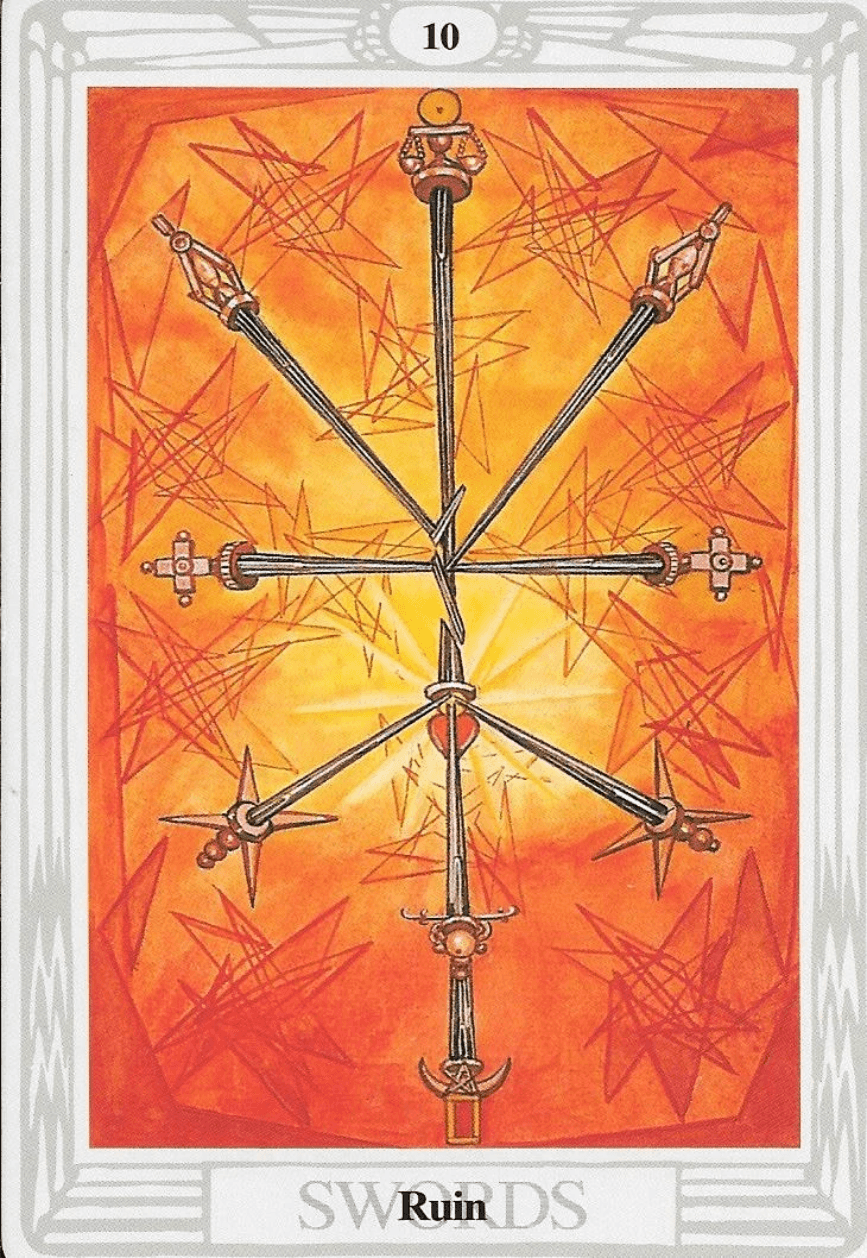
Thoth- 10 of Swords-Ruin
#10. The Kingdom of Spirit is embodied in my flesh.
[Can be purchased in website Tarot store]
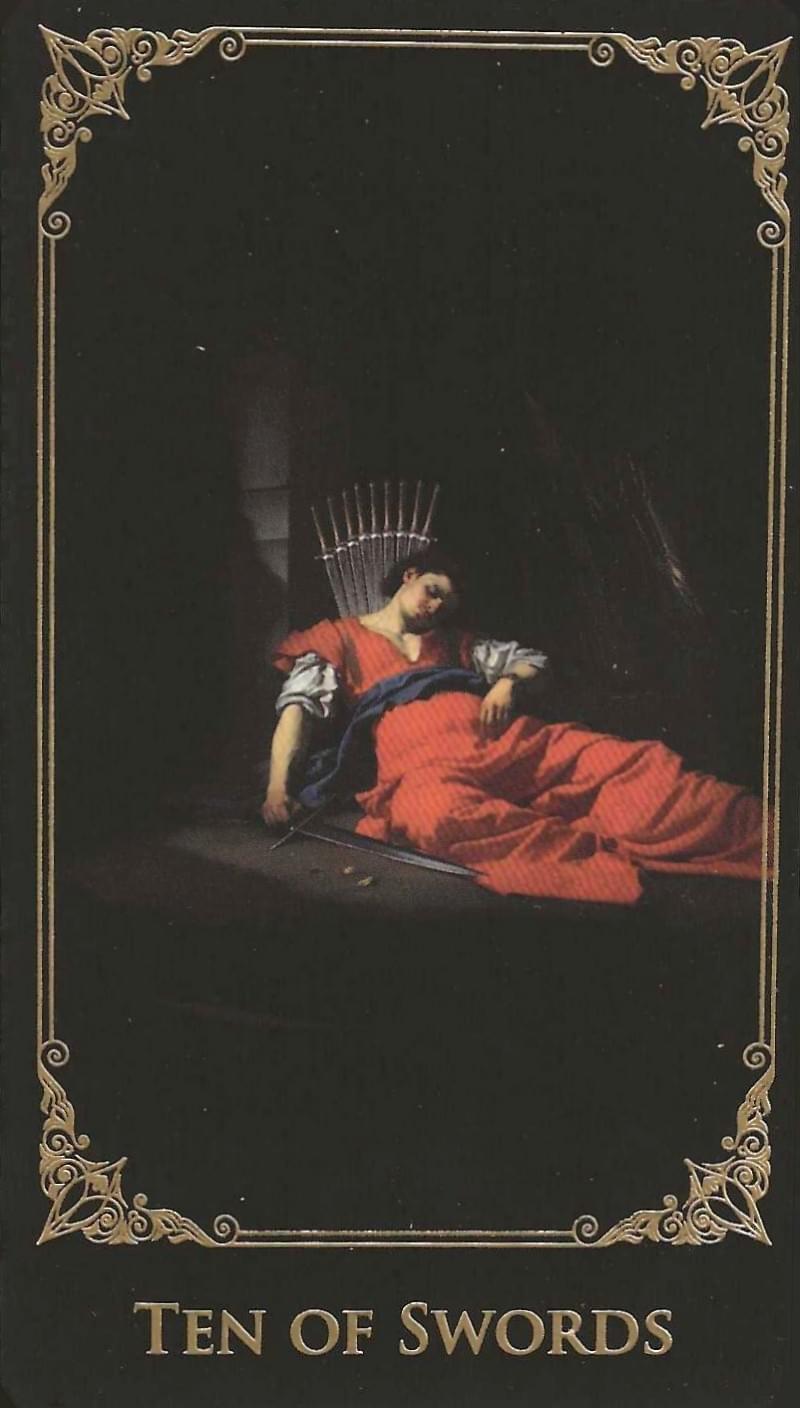
The Baroque Tarot- Ten of Swords

Thoth- 10 of Swords-Ruin
Thoth Tarot — 10 of Swords: Ruin & Baroque Tarot — Ten of Swords
Malkuth in Yetzirah — Sun in Gemini — The End of an Exhausted Mental Cycle
Both the Thoth Tarot 10 of Swords — Ruin and the Baroque Tarot Ten of Swords reveal the same essential mystery: ruin through exhaustion, followed by the possibility of renewal.
The Ten is the final expression of a suit. In Swords—the element of Air, intellect, language, analysis, and discrimination—it represents a mental structure that has reached the end of its usefulness. An idea, worldview, relationship to oneself, or way of interpreting reality can no longer sustain itself.
Something has to give.
And usually, it is the idea we were absolutely certain was correct.
Hermetically, this is a form of nigredo: the blackening stage of alchemy in which the old form decomposes so that a new one may eventually arise. Ruin is therefore not merely destruction. It can also be the demolition of what has become false.
Sometimes enlightenment arrives wearing work boots and carrying a wrecking ball.
The Thoth 10 of Swords — Ruin
Crowley and Harris present Ruin as the final disintegration of the mental forces expressed throughout the suit of Swords.
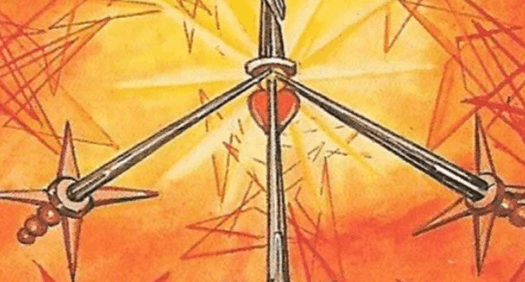
Yet amidst the violence of the image appears a blazing Solar center. Esoterically, this can be contemplated as the Light of Tiphareth, the inner Sun, shining even while the intellectual structures surrounding it collapse.
The personality may be exhausted.
The opinions may be shattered.
The plans may fail.
But the deeper center of consciousness remains.
This is one of the great secrets of the card: the destruction of a mental construction is not necessarily the destruction of the Self.
What dies may simply be something we mistook for ourselves.
The Ten of Swords can therefore indicate a conclusion long resisted: the moment when intellect finally admits that a particular strategy, belief, expectation, or interpretation has run its course.
The sword has cut until there is nothing left to cut.
What remains is Truth stripped of decoration.
The Heart and the Scales
Within the Thoth imagery we also find symbols suggesting two particularly powerful areas of human anxiety:
The Heart — relationships, emotional expectations, affection, and disappointment.
The Scales — balance, exchange, material security, business, and financial concerns.
Love and security are two places where the survival mind becomes remarkably talented at forecasting catastrophe.
The Ten of Swords asks whether the event itself is creating the suffering—or whether the mind's insistence upon controlling the event has multiplied it.
Fear says:
“What if everything goes wrong?”
The Solar Self quietly asks:
“And what if this ending is clearing the road?”
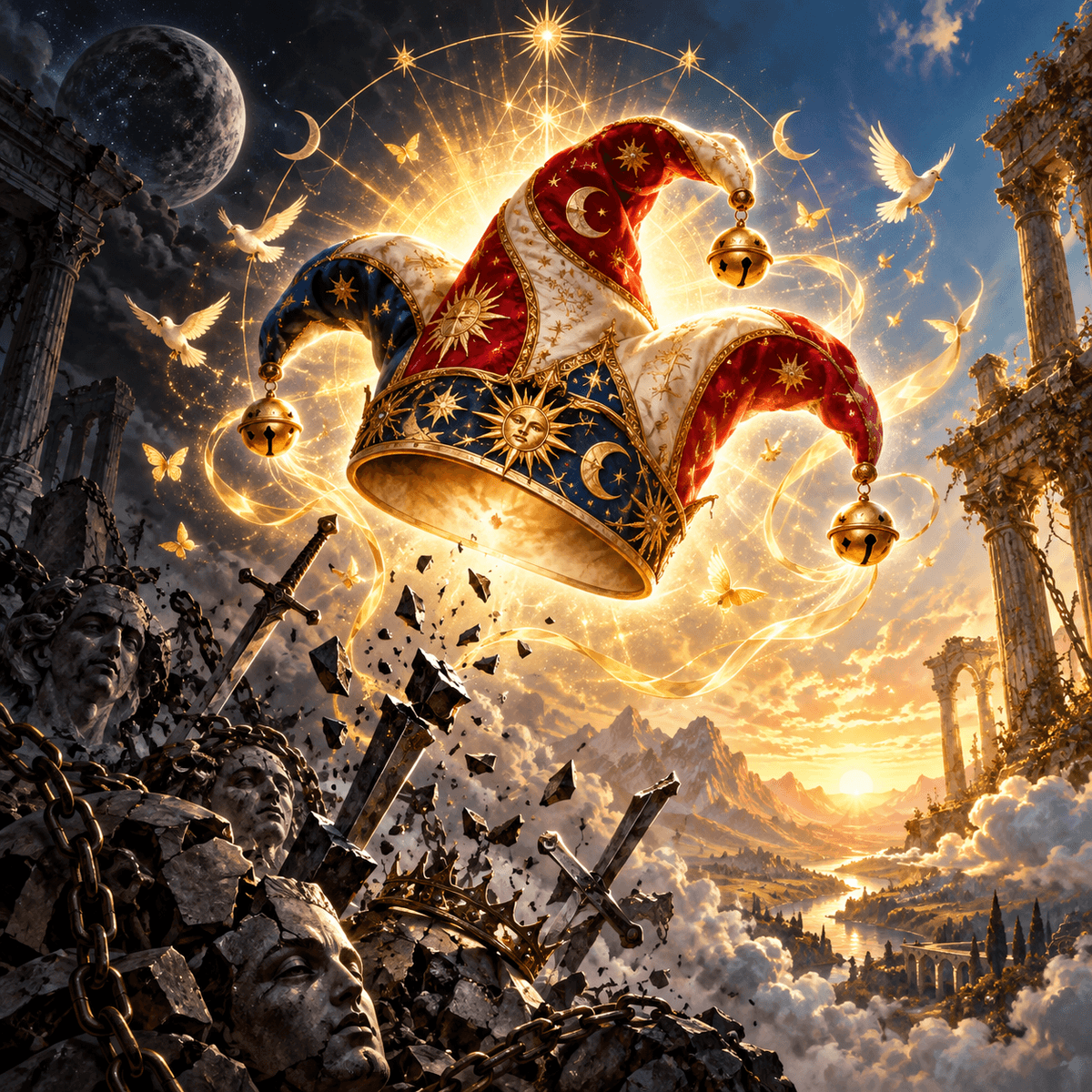
The Fool's Cap — Liberation Through Laughter
One of the best medicines for Ruin is the wisdom of The Fool.
The Fool understands something the exhausted intellect has forgotten: the Infinite cannot be completely contained inside an explanation.
Sometimes the appropriate response to the collapse of our carefully constructed certainty is laughter.
Not mocking laughter.
Liberating laughter.
The laugh that suddenly realizes:
“Good heavens—I actually believed every thought going through my head.”
The Fool stands beyond the tyranny of excessive seriousness. His sacred humor breaks the enchantment of the false personality and opens consciousness once again to possibility.
Thus, Ruin may become Revelation.
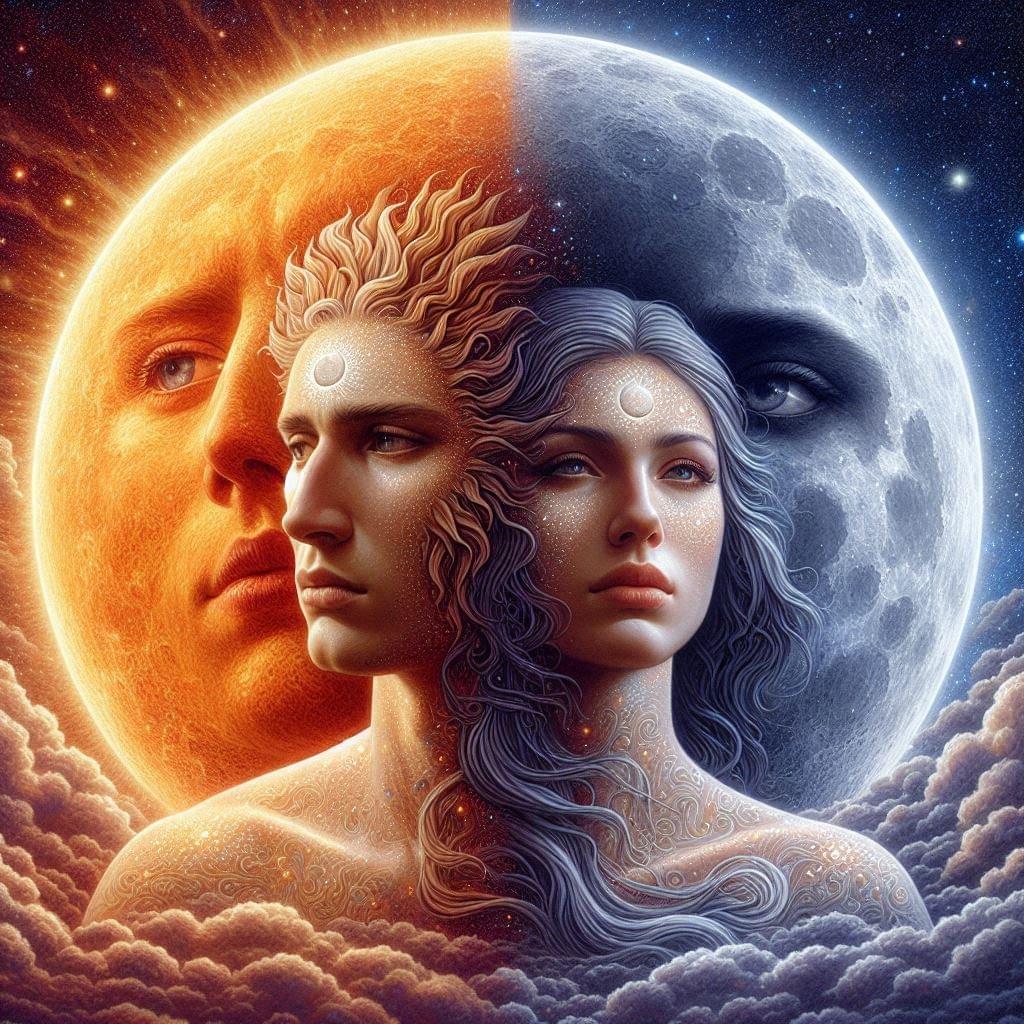
Sun in Gemini — The Solar Mind Divided
Astrologically, the Thoth 10 of Swords corresponds to Sun in Gemini.
The Sun represents centered identity, vitality, purpose, and coherence. Gemini, ruled by Mercury, multiplies perspectives, possibilities, words, arguments, questions, and interpretations.
At its best, Sun in Gemini can symbolize:
mental versatility, curiosity, communication, adaptability, humor, and the ability to perceive several sides of an issue.
But every virtue carries a shadow.
The same mind capable of seeing ten possibilities can suddenly imagine eleven disasters.
Here the Solar center becomes scattered through Mercurial multiplicity.
Instead of:
I AM.
The mind begins:
What if?
But perhaps…
On the other hand…
Yes, but…
And soon the Solar Will has been buried beneath a committee meeting inside the skull.
This is the astrological paradox of Ruin: brilliant thought becomes destructive when it loses contact with its center.
The remedy is not less intelligence.
It is centered intelligence.
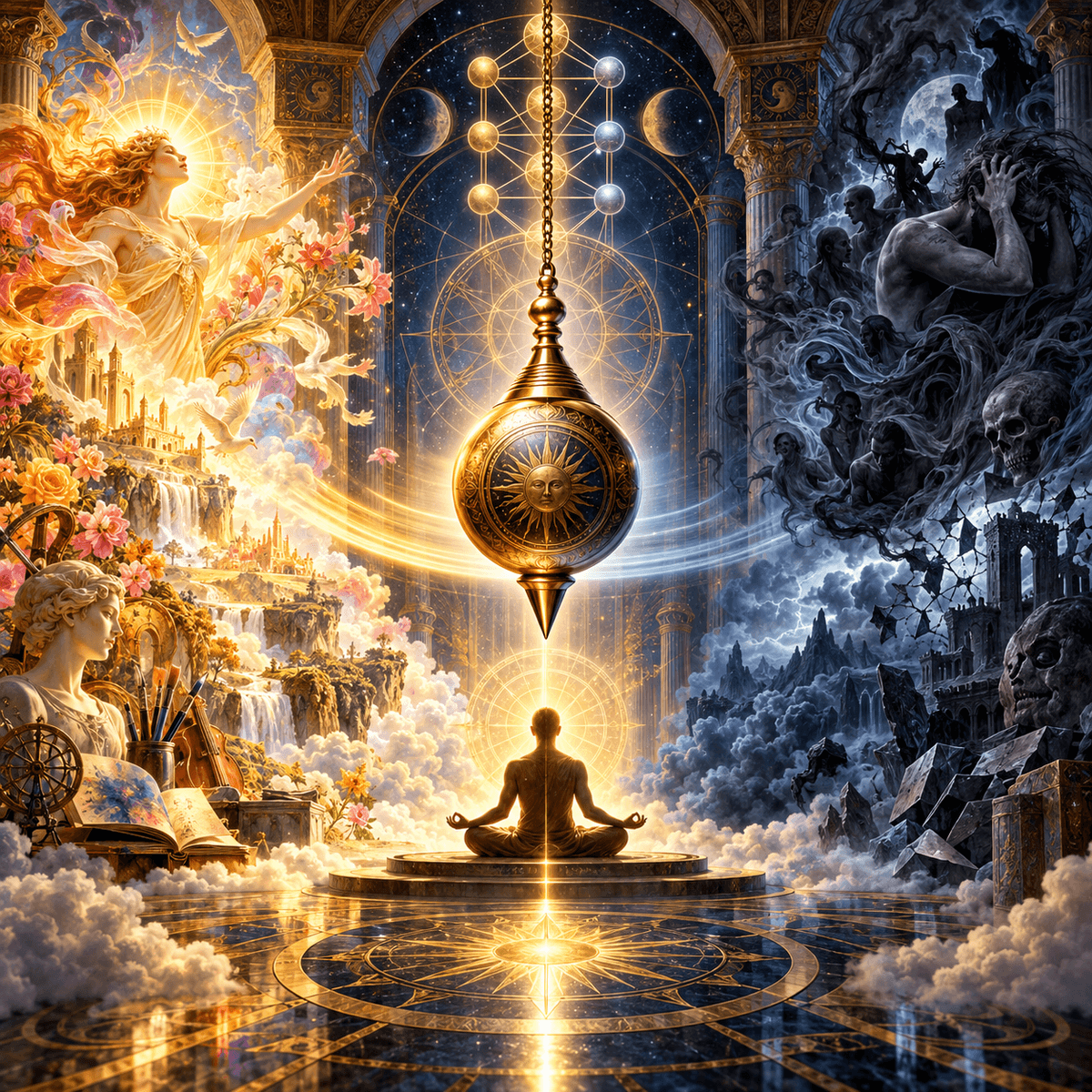
The Creative Pendulum
Creative, magical, intellectual, and artistic personalities often experience a powerful psychological pendulum.
At one extreme:
inspiration, confidence, vision, enthusiasm.
At the other:
doubt, fear, exhaustion, and imagined failure.
The more powerful the imagination, the more spectacular the disasters it can invent.
This is why emotional discipline must accompany intellectual power.
The magician must learn to distinguish between imagination serving Will and imagination serving fear.
The Ten of Swords warns against feeding mental images of failure until they become the only future the mind can imagine.
The task is to return consciousness to the center.
Not denial.
Not forced optimism.
Equilibrium.
Malkuth in Yetzirah — Thought Reaching Its Limit
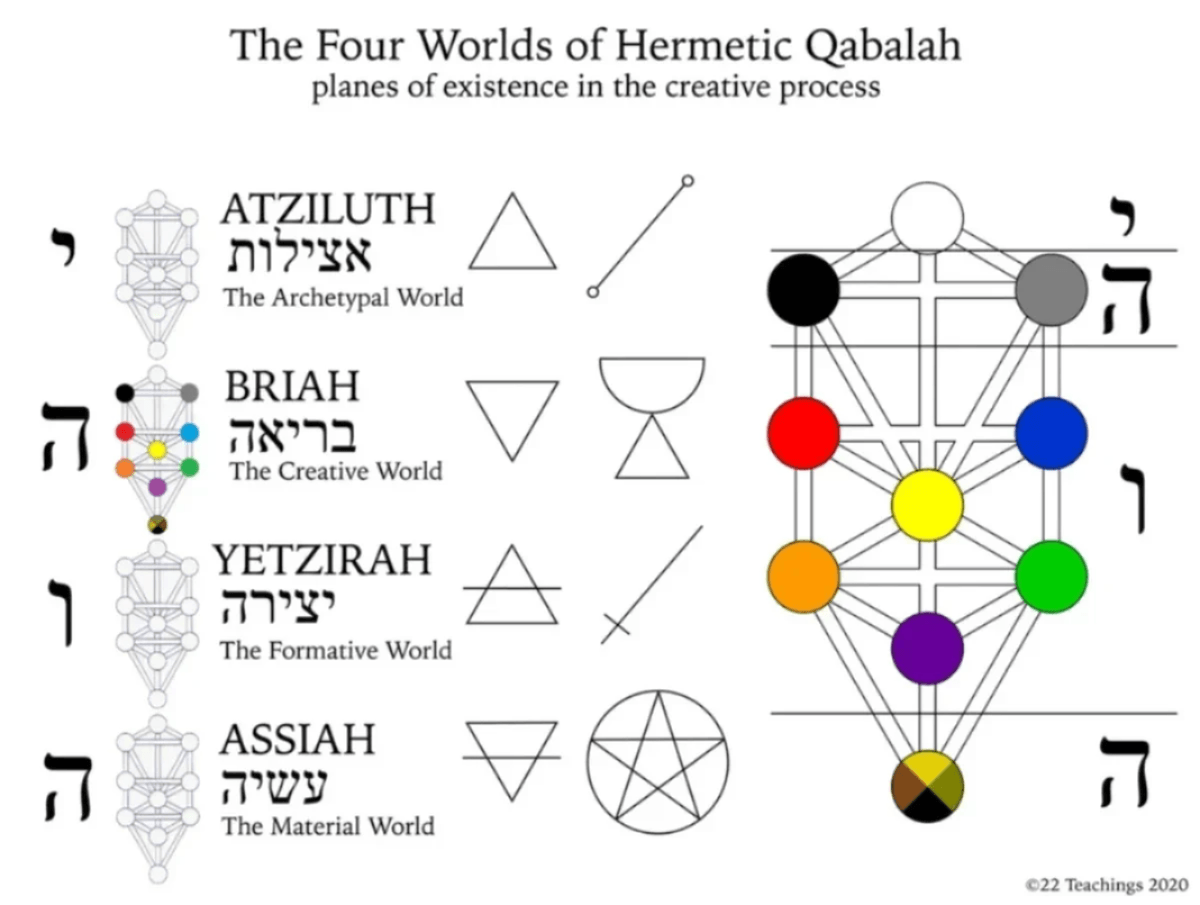
Qabalistically, the Ten of Swords corresponds to Malkuth in Yetzirah.
Malkuth is the Kingdom: culmination, manifestation, completion, and the final crystallization of force.
Yetzirah is the World of Formation, traditionally associated in Hermetic Qabalah with the formative and astral dimensions through which patterns take shape before their densest material expression.
Thus, the Ten represents the final manifestation of the Sword current within Yetzirah.
The thought-form has reached its conclusion.
There is nowhere further for it to go.
The entire mental pattern must either dissolve or begin again on another level.
This is why the Tens are never truly final.
Ten returns symbolically toward One.
10 → 1 + 0 → 1
The completed cycle contains the seed of another beginning.
What reaches Malkuth prepares the way for another emanation from Kether.
The Ten therefore stands at an extraordinary threshold:
completion below and potential renewal above.
Ruin and the Death of Dreams
Traditionally, the Thoth card carries severe meanings such as:
ruin, collapse, failure, exhaustion, and the destruction of an established mental pattern.
But I would distinguish this carefully from ATU XIII — Death.
Death represents profound transformation, transition, and the clearing away of exhausted forms through the current of Nun.
The Ten of Swords is more specifically the collapse of an intellectual construction.
It may certainly feel personal because the personality tends to identify strongly with its opinions, expectations, and plans.
When a cherished idea dies, the ego often behaves as though civilization itself has ended.
Usually, civilization survives.
The Broken Circuit — Ruach Without the Higher Light
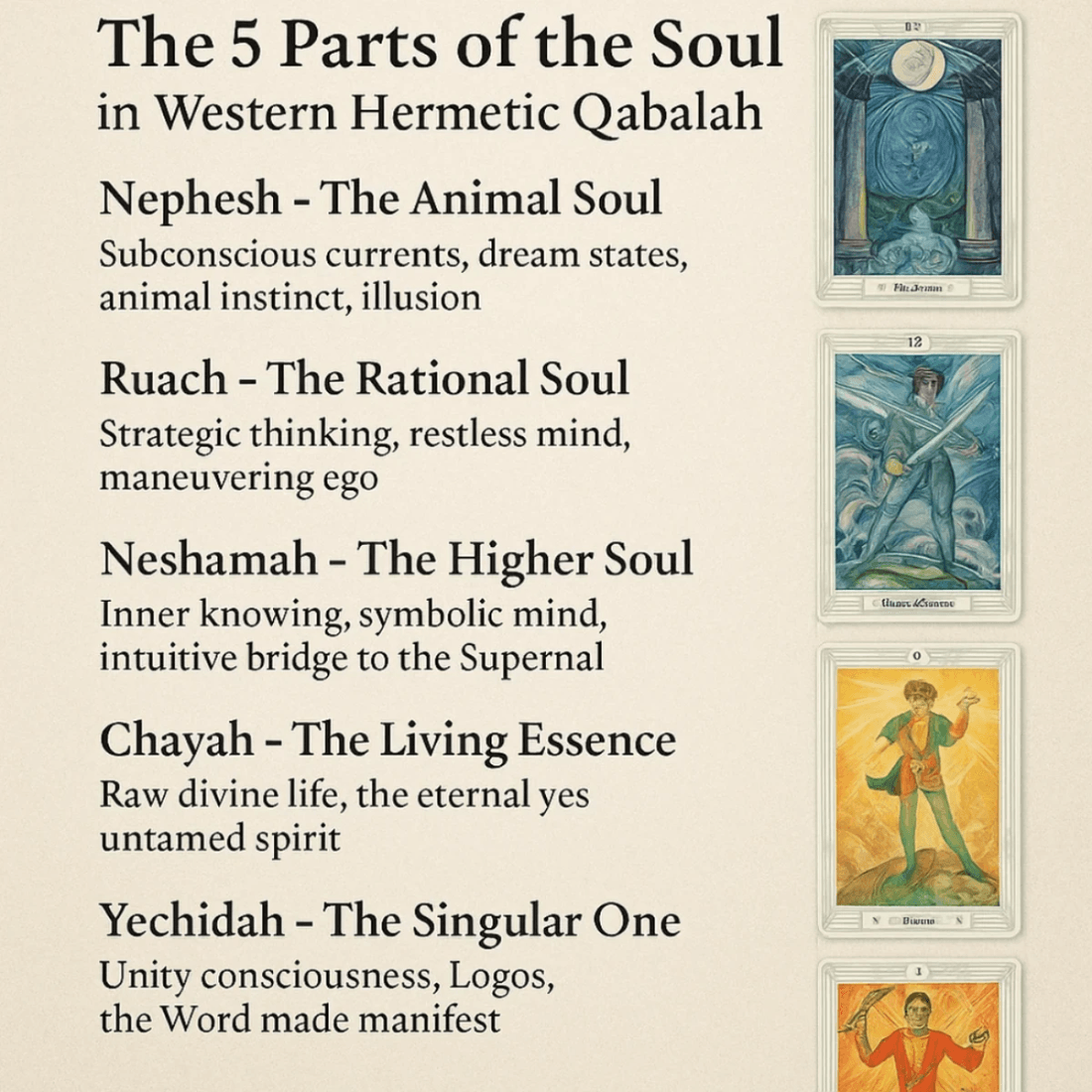
The deeper spiritual problem of Ruin arises when the Ruach, the reasoning mind, behaves as though it were the supreme authority.
Reason is magnificent.
But reason disconnected from intuition, Spirit, and the deeper Self becomes a closed circuit.
It thinks about its thinking.
Then thinks about why it was thinking about its thinking.
Then worries that perhaps it was thinking incorrectly.
Welcome to the Ten of Swords.
In the Western Hermetic model, the Ruach must ultimately be illuminated by that which transcends it.
The mind is an instrument.
It is not the Absolute.
When intellect loses contact with the Solar center of Tiphareth, thoughts that were meant to serve consciousness can become its jailers.
Above All Things, Know Thyself
The ancient admonition remains:
Above all things, know thyself.
Much of the suffering represented by the Ten of Swords comes from confusing the conditioned personality with the whole Self.
The personality is useful.
The ego is useful.
The body is sacred.
The reasoning mind is indispensable.
But none of them alone constitutes the totality of consciousness.
In Hermetic language we might describe the hierarchy symbolically as:
Spirit → Soul → Mind → Body
The higher informs the lower.
When this relationship is reversed, the temporary personality attempts to govern the entire kingdom.
Then every criticism becomes a threat.
Every disappointment becomes catastrophe.
Every ending becomes death.
To know oneself is to rediscover the deeper center from which these changing conditions can be observed, understood, and transformed.
You are not merely the storm of thought.
You are also the consciousness witnessing the storm.
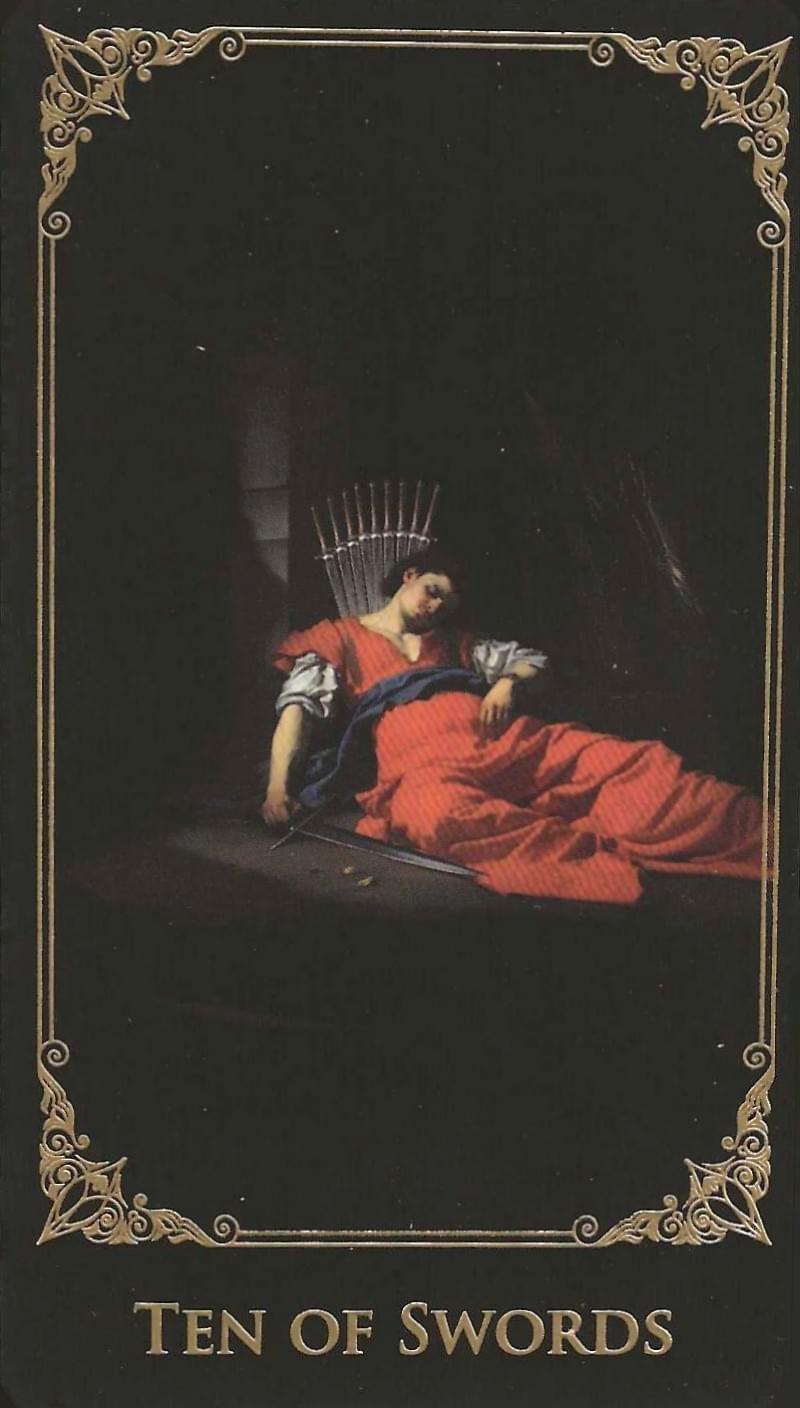
The Baroque Tarot — Ten of Swords
The Baroque Tarot Ten of Swords presents this mystery much more mundanely.
A woman dressed in red lies completely exhausted. Her head rests against nine swords arranged almost like an uncomfortable headboard, while her hand loosely touches the tenth sword.
She appears utterly spent—almost corpse-like.
Here the meaning is wonderfully direct:
Enough.
The struggle has reached its limit.
The nervous system wants rest.
The argument is over.
The old strategy has exhausted itself.
The card can indicate surrender, a low point, the conclusion of a difficult cycle, or the necessity of accepting something that can no longer be avoided.
Yet surrender is not always defeat.
Sometimes surrender is simply the intelligence to stop wrestling with yesterday.
The Baroque image therefore emphasizes exhaustion before recovery.
The person lies down because the old mode of operation cannot continue.
And that very stillness creates the possibility of renewal.
Light and Shadow
| Aspect | Light | Shadow |
|---|---|---|
| Thoth Tarot | Revelation through collapse; release of exhausted ideas; return to Solar consciousness | Mental ruin, fear fixation, despair, self-sabotage |
| Baroque Tarot | Rest, surrender, acceptance, recovery, resilience | Exhaustion, bitterness, collapse, inability to continue |
| Sun in Gemini | Adaptability, insight, communication, ability to reconcile paradox | Fragmentation, overthinking, divided intention |
| Malkuth in Yetzirah | Completion of a mental cycle and preparation for renewal | Thought-forms hardened into destructive patterns |
Ten — Completion and Return
The number 10 carries tremendous symbolic significance.
On the Tree of Life there are Ten Sephiroth, completing the descent from Kether to Malkuth.
In Pythagorean symbolism, the Tetractys expresses the sacred completeness of:
1 + 2 + 3 + 4 = 10
And numerologically:
10 → 1
Completion returns toward beginning.
Therefore, every Tarot Ten contains an implicit Ace.
The cycle is finished—but consciousness is not.
The page turns.
From Ruin to Renewal
Before developing night terrors because the Ten of Swords appears in a reading, remember:
Tens are transitional.
They represent culmination.
A pattern has reached maximum expression and can no longer continue in precisely the same manner.
The Ten of Swords may therefore ask:
What belief has completed its usefulness?
What fear am I repeatedly feeding?
What expectation must I release?
What truth have I resisted because it threatens my established identity?
What would happen if I simply stopped arguing with reality?
Often the first ray of recovery appears when the mind stops demanding that yesterday continue tomorrow.
Divinatory Meaning
When well-defined, the Ten of Swords may indicate:
Completion of a painful cycle.
Mental exhaustion.
A long struggle reaching its conclusion.
Recognition that an old strategy no longer works.
The collapse of unrealistic expectations.
Acceptance of an unavoidable ending.
Release from destructive thinking.
Recovery beginning after a low point.
A need to laugh at assumptions once treated as absolute truths.
The possibility of rebuilding upon clearer foundations.
The card can also caution against catastrophic thinking:
“This will never work.”
“Everything is ruined.”
“There is no way forward.”
These statements may describe the emotional state of the moment, not objective reality.
The future remains responsive to choice, circumstance, insight, and action.
When Ill-Defined
When surrounded by difficult cards, the Ten of Swords can emphasize:
Ruin.
Exhaustion.
Collapse.
Bitter endings.
Severe disappointment.
Obstacles and limitation.
An inability to continue along the same path.
Self-defeating expectations.
Resistance to an ending that has already occurred psychologically.
With the Thoth Tarot, I do not use card reversals; the surrounding cards determine whether Ruin manifests primarily through its destructive or liberating expression.
With decks traditionally read using reversals, a reversed Ten of Swords is often interpreted as recovery, survival, resilience, or the realization that the worst phase has passed.
A Note on Health
Because the Ten of Swords visually suggests exhaustion, collapse, and extreme stress, it can serve as a useful reminder to pay attention to physical and psychological well-being.
However, Tarot cannot diagnose illness.
If actual symptoms, unusual fatigue, chest discomfort, mental distress, or other health concerns are present, those symptoms—not the card—are the reason to consult an appropriate healthcare professional.
The Tarot can point consciousness toward an area deserving attention.
Diagnosis belongs to medicine.
Even the Magus knows when to call the doctor.
Tarot — The Aleph-Beth of the Soul
Tarot can be understood as a symbolic language of consciousness.
The 22 Major Arcana correspond, in the Western Hermetic system, with the 22 Hebrew letters and Paths of the Tree of Life.
They form an archetypal alphabet.
The Minor Arcana then show those greater forces operating through the elements and Sephiroth in everyday experience.
Thus:
The Major Arcana are letters.
The Minor Arcana become words and conditions.
A spread becomes a sentence.
A reading becomes dialogue.
Tarot is therefore not merely fortune-telling.
It is a symbolic grammar through which the conscious mind may converse with deeper strata of psyche.
Aleph — The Breath Before Creation
Aleph, attributed to ATU 0 — The Fool, is especially important.
Before speech comes breath.
Before manifestation comes potential.
Before the magician declares anything, there is silence.
The inward breath can be contemplated through the Divine Name of Kether:
Eheieh — אהיה — “I Will Be.”
Potential gathers inwardly.
Then comes expression.
The magician exhales intention into word, gesture, symbol, and action.
Thus, magical creation follows a rhythm:
Inhale — receive and gather.
Exhale — express and manifest.
The Fool therefore stands not merely for foolishness but for the limitless potential preceding form.
And this brings us back to the Ten of Swords.
When the old mental universe collapses, consciousness returns momentarily toward Fool-like openness.
The old sentence ends.
A new Word may now be spoken.
Meditation on the Ten of Swords
Sit quietly and imagine ten swords representing exhausted thoughts, fears, assumptions, and obsolete judgments.
Do not fight them.
Simply observe them.
With each exhalation, see one sword dissolve into light.
Then inwardly declare:
I AM the consciousness that observes thought.
I release the fear of endings.
I welcome the wisdom revealed through completion.
Visualize a golden Solar Light arising in the center of the darkness.
Let the mental noise subside.
Then smile.
Because somehow, after all that dramatic swordplay—
the Sun is still shining.
“The Kingdom of Mind is coagulated in the Flesh. All is Mind.”
— Tarot of Eli
The Essential Teaching
The Ten of Swords does not merely say:
Everything is ruined.
It asks a far more useful question:
What must be allowed to end so that consciousness may become free again?
Ruin becomes revelation when we stop worshiping the ruins.
Above all things, know thyself.
Thank you for your interest, comments, and supportive donations. Your generosity blesses you and helps keep this blog alive. May you live long and prosper.
3 Western Hermetic Tarot and Magick websites helping people become more magick and less tragic since 2010.
For more information about a Western Hermetic Thoth Tarot reading or Master Tarot Classes, Recommended Tarot Decks and books, just log onto my website-elitarotstrickingly.com- and click on the Tarot Pricing Page tag. Thank you.
Traditional Tarot Card Comparisons, Tarot store and blog-Rider-Waite-Smith and RWS Tarot decks and books etc.
Western Hermetic Magick ritual and invocation and blog.
