
elitarotstrickingly.com
Above all things, know thyself.
Easter, Equinox, and the Mystery of Rebirth
A Western Hermetic, Qabalistic, Cosmological, and Parapsychological Reflection
Before Easter became fixed in Christian devotion, spring itself was already a theater of sacred meaning. Across many cultures, the season of returning light, fertile earth, and renewed life gave rise to myths of death and resurrection, goddesses of generation, and gods who die only to rise again. In that wider sacred landscape, Easter may be viewed not only as a Christian feast, but also as part of a far older current of rebirth symbolism that humanity has long used to describe the restoration of life after darkness. The themes you shared—Good Friday, Freya, Eostre, the dying gods, the hare, the egg, and the Great Mother—form an esoteric tapestry of renewal, one that can be read through Western Hermetic Qabalah, metaphysics, astrology, gematria, cosmology, and parapsychology
The Spring Equinox and the Cosmology of Return
Cosmologically, the Spring Equinox marks a moment of balance: light and darkness stand in temporary equality before the solar current begins its visible triumph. This is not merely a seasonal event. In Hermetic thought, it is a revelation of universal law. The cosmos moves in rhythms. Expansion and contraction, descent and ascent, death and regeneration, concealment and manifestation all belong to one living pattern. Spring is therefore not just weather changing; it is the visible reminder that life is structured through cyclical intelligence.
The ancient world encoded this truth in myth. Vegetation gods, underworld descents, mourning rites, sacred marriages, and resurrection festivals all dramatized one principle: life is never annihilated, only transformed. Winter is not the end of life, but its concealment. Spring is not a new creation ex nihilo, but a revelation of what was hidden in latency. In metaphysical terms, rebirth is the re-emergence of form from the invisible matrix of potential.
This is where Easter becomes profoundly important. Whether approached devotionally, symbolically, or comparatively, Easter announces that death is not final. In Hermetic language, form dissolves and recomposes. In alchemical language, nigredo yields to albedo and finally rubedo. In cosmological language, the universe itself appears to operate by recurring fields of death and renewal. Thus Easter, at its deepest level, is the ritualization of the universe’s own grammar.

Good Friday and the Mystery of Sacred Descent
Good Friday, in Christian theology, commemorates the crucifixion. But esoterically it can also be read as the mystery of sacred descent: spirit entering matter, consciousness entering limitation, and light entering apparent defeat. The cross itself has long functioned as a universal symbol, not solely a Christian one. It marks the intersection of vertical and horizontal, spirit and matter, eternity and time, heaven and earth. In that sense, the crucifixion image can be read as a glyph of incarnation.
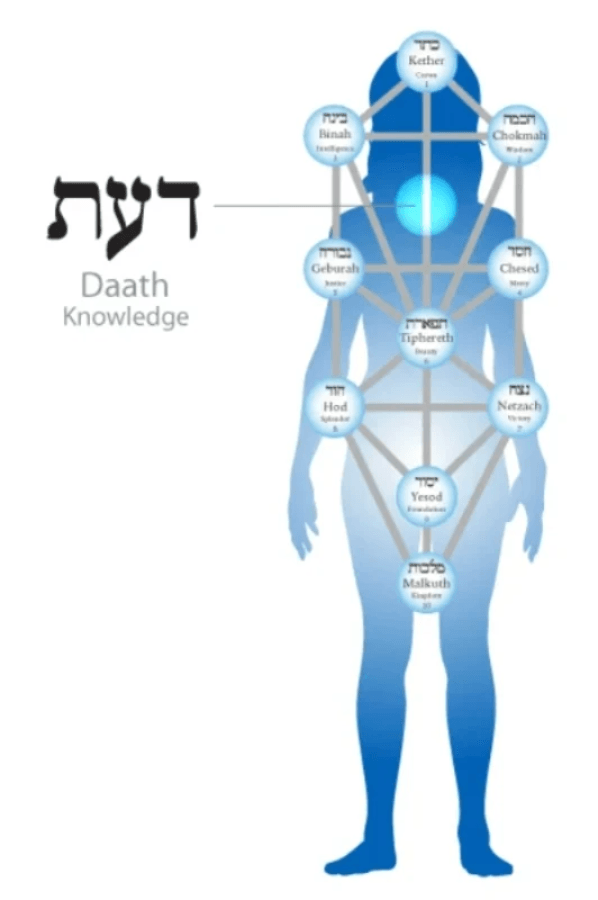
From a Qabalistic perspective, this symbolism resonates strongly with the descent of divine force through the Tree of Life into manifestation. Adam Khadmon, the primordial human, is often envisioned as the cosmic pattern through which divine energies become embodied. In Hermetic contemplation, the “crucified god” is not merely a historical figure but an image of consciousness extended into the world of limitation. The soul is nailed to time, space, memory, and flesh. Yet this descent is not a punishment alone. It is also the necessary condition for awakening.

The six hours of suffering on the cross acquire an additional Hermetic significance when viewed through the number 6. Six is the number of Tiphareth, the sixth Sephirah, the sphere of Beauty, harmony, sacrifice, and the Solar Self. Tiphareth is the center of redemption on the Tree. It is the seat of the god-man, the reconciler, the sacrificed king, the illumined heart, and the principle that mediates between the Supernal and the personal soul. Thus the crucifixion drama, in Western Hermetic terms, mirrors the Tiphareth mystery: the radiant center must enter suffering in order to redeem the lower nature.

The Dying God as Universal Archetype
The ancient world knew many stories of gods who die and return: Osiris, Tammuz, Adonis, Dionysus, and others. These figures are often associated with grain, seasonal fertility, descent into the underworld, and restoration. Their stories do not all mean exactly the same thing, and it is too simple to say that one is merely copied from another. Yet the persistence of the pattern suggests that human beings across civilizations encountered the same spiritual truth and clothed it in different symbolic languages.

From a metaphysical standpoint, the dying god is the image of life entering form, becoming subject to time, and then overcoming apparent dissolution. From a parapsychological standpoint, these myths express deep structures of the psyche and perhaps of the psychic field itself. Human beings do not merely invent symbols at random. We seem to participate in imaginal patterns that arise again and again in dream, ritual, mystical vision, and collective myth. The dying-and-rising god may therefore be read as an archetype not only of agriculture or kingship, but of consciousness itself.
This is why the comparison between Christ and earlier dying gods remains so compelling. The similarities do not require a reductionist conclusion. Christianity may indeed have developed in a distinct Jewish context, yet it also emerged in a world saturated with sacred dramas of seasonal death and return. The resurrection motif had deep mythic resonance long before the Church formalized its doctrine. Hermetically, this is no surprise. Truth often descends into history clothed in the symbols already alive in the collective soul.

Friday, Venus, and the Feminine Current
The esoteric reading places Friday in relation to older goddess traditions, particularly Freya and Venus. Whether one takes every etymological strand literally or symbolically, the broader Hermetic point is clear: Friday belongs to the Venusian current. Venus is the planetary intelligence of attraction, beauty, harmony, affection, fertility, pleasure, and relational magnetism. In astrology, Venus binds what would otherwise remain separate. She is the power that gathers, adorns, magnetizes, and makes life fruitful.

In Western Hermetic Qabalah, Venus corresponds to Netzach, the seventh Sephirah, sphere of desire, victory, beauty, instinct, creativity, and enduring force in nature. Netzach is not merely sentimental love. It is the compelling force of life seeking expression. In spring rites, goddess festivals, flower symbolism, fertility charms, and even the old customs surrounding fish, eggs, and hares, one can discern the Venusian logic of abundance and generative power.
Thus Friday, viewed esoterically, is not only a weekday. It is a station of consciousness. It carries the mystery of love embodied, beauty flowering, and life asserting itself through attraction. When patriarchal systems feared or demonized the feminine sacred, they were often reacting to the uncontrollable fact that life itself comes clothed in form, blood, sexuality, fertility, and cyclical power. Hermetically, that fear is a misunderstanding. Form is not the enemy of spirit. Form is the vessel by which spirit becomes knowable.
Binah, the Great Mother, and the Womb of Form
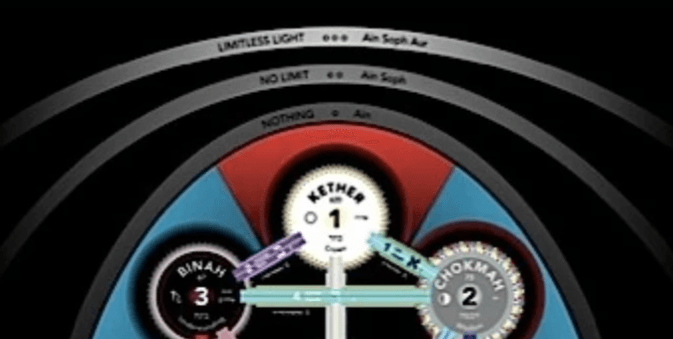
If Easter and spring belong outwardly to fertility and renewal, inwardly they belong to Binah. Binah, the third Sephirah, is the Great Mother, Understanding, the Sea, the womb of form, and the matrix in which force becomes structure. In the language of our own insight, Binah is the “Will-to-Form.” She is not merely a sentimental mother-image. She is the profound intelligence that gives shape, limit, gestation, and lawful manifestation to potential.

This is why the feminine current matters so much in any esoteric reading of Easter. Rebirth is impossible without a womb. Resurrection requires a matrix. Renewal demands a container within which the old form can die and a new form can emerge. Binah is that sacred containment. She is the dark water from which all new life is drawn. In this sense, every spring festival, every resurrection myth, and every image of the egg, cave, tomb, earth, grave, or underworld is secretly Binah working.
The Great Mother is therefore not merely historical goddess worship, nor only an outer deity. She is also a cosmic principle. She is the architecture of manifestation itself. To honor the rebirth currents of Easter through a Hermetic lens is to acknowledge that consciousness becomes embodied through form, and that form itself is holy.
Gematria, Number, and the Architecture of Rebirth
Gematrically and numerically, this season is rich with symbolism. The number 6, as noted, belongs to Tiphareth and the Solar mystery. It is therefore the number of the sacrificed and resurrected center, the Son, the Sun, and the harmonized soul. When the Christ pattern is read Hermetically, it is the Tiphareth pattern of radiant consciousness descending, suffering, redeeming, and rising.

The number 13 also bears importance in esoteric interpretation. Thirteen is often linked to lunar cycles, transformation, death, and renewal. In many traditions it marks the passage from one form to another. Reduced to 4, it evokes stability, form, structure, and manifestation. In the Western esoteric mind, 4 may be associated with the Tetragrammaton, the four elements, and the architecture of created existence. Thus 13 may be read as the transformative passage through cyclical death into renewed embodiment.
The number 7, too, is significant. Seven is the number of the classical planets, the sacred rhythm of creation, the week, the completion of a cycle, and the linking bridge between heaven and earth. When rebirth is expressed through sevenfold symbolism, it indicates not merely private renewal but a reintegration into cosmic order.
Numbers are never dead abstractions in Hermeticism. They are intelligible powers. Easter, Good Friday, Equinox, lunar calendars, sacred weekdays, and goddess numbers all remind us that ritual time is structured by number because number is the hidden skeleton of manifestation.

The Hare, the Egg, and the Lunar Field
The rabbit or hare is not a childish symbol when read esoterically. It is lunar, fertile, elusive, and liminal. It belongs to threshold states. In Western Hermetic terms, this places it naturally in relation to Yesod, the ninth Sephirah, the sphere of the Moon, dream, psychic imagery, reflection, instinct, and generative patterning. The hare is a messenger of the astral field. It moves quickly, appears suddenly, vanishes mysteriously, and carries the charge of renewal.
The egg is even more transparent in symbolism. It is the primordial world-seed, the enclosed totality of life before emergence. The egg contains latent form, hidden being, and the promise of manifestation. In metaphysical language, it is potential not yet differentiated. In cosmological language, it echoes the world-egg myths found in many cultures, where creation hatches from a sealed wholeness into articulated existence.
Together, hare and egg speak to the secret of spring: life is already present before it is visible. The subtle precedes the dense. The astral precedes the material. The imaginal precedes the sensory. This is also a parapsychological principle. Many psychic impressions, intuitions, dreams, and inner promptings begin as “eggs” in consciousness before they hatch into felt reality. Spring symbolism therefore mirrors psychic process itself.
Parapsychology and the Rebirth of Consciousness
Parapsychologically, Easter can be understood as a season in which the psyche becomes especially receptive to images of survival, continuity, and renewal. Humans have always intuited that consciousness is not exhausted by material decay. Myths of resurrection, journeys through death, and return from the underworld arise not only from agriculture but from lived experiences of dream, mourning, trance, mediumship, symbolic vision, and altered states.

The persistence of rebirth imagery suggests that the human psyche is structured to experience death not only as cessation but as transition. Whether one interprets that transition literally, spiritually, or psychically, the pattern remains. Something in us knows how to descend, break, gestate, and emerge. Initiatory systems preserve this truth by ritualizing symbolic death so that greater awareness may be born.

In that sense, Easter is not merely about one event in one calendar. It is about the recurring psychic law that new life is usually born through surrender, darkness, dissolution, and waiting. The tomb is an interior state as much as a religious image.
A Balanced Esoteric View
A balanced view avoids simplistic claims. It is too easy either to dismiss Easter as merely borrowed mythology or to deny all continuity with older sacred traditions. The deeper truth is more subtle. Religious forms evolve, absorb, reinterpret, and sanctify older patterns. Mythic symbols migrate across civilizations because they answer perennial needs of the soul. Resurrection, spring, the goddess, the solar son, the underworld, the egg, the moon hare, and the sacred day all belong to a shared human language of transformation.

Western Hermeticism is especially useful here because it neither demands sectarian blindness nor collapses all differences into sameness. It teaches correspondence. It sees distinction within unity. Osiris is not Christ; Freya is not Venus in every detail; Eostre is not simply Ishtar; yet all may participate in related archetypal currents. What matters is not flattening them into one dogma, but perceiving the pattern moving through them.
Conclusion
Easter, the Spring Equinox, and the cycles of rebirth invite us to contemplate a profound truth: the universe is not static but regenerative. Light returns. Seeds awaken. the soul renews itself through descent and ascent. Whether one approaches Easter through Christianity, goddess traditions, Western Hermetic Qabalah, astrology, cosmology, or parapsychology, the central revelation remains the same. Life is stronger than dormancy. Spirit survives enclosure. Consciousness can rise from its own tomb.

In the language of Qabalah, Binah gives form, Yesod dreams the pattern, Tiphareth redeems the center, and Netzach causes life to bloom again. In the language of astrology, the solar current rises while the Venusian and lunar powers clothe it in fertility and manifestation. In the language of metaphysics, form dies only to be reorganized at a higher turn of the spiral. In the language of the soul, spring is the annual reminder that nothing true is ever finally lost.

Above all things, know thyself—then you shall know the mystery of death, rebirth, and the Sun within.
Happy Istar/Eostre/Binah/Springtime everybody!
Thank you for your interest, comments, subscriptions (free) and supportive donations. Your generosity blesses you. May you live long and prosper.
3 Western Hermetic Tarot and Magick websites helping people become more magick and less tragic since 2010
Thoth Tarot Card comparisons, Thoth layout Tarot Store, and Western Hermetic Blog.
Traditional Tarot Card Comparisons, tarot layout store, and blog.
Western Hermetic Magick invocation and ritual and Magick blog.
